
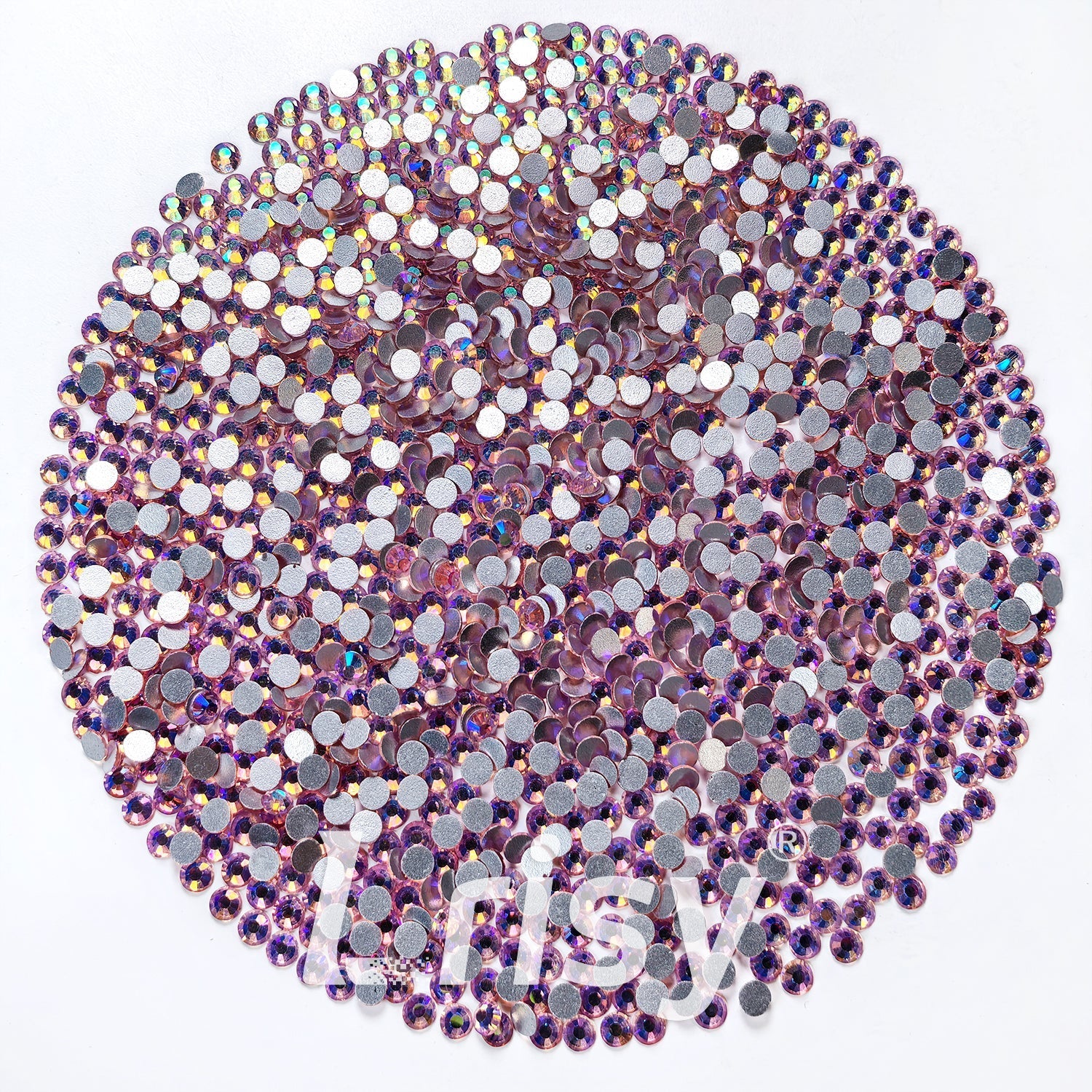

You are halfway through bedazzling a denim jacket when the worst happens: you run out of stones. The design is half-finished, the deadline is tomorrow, and your supplier is three days away. If you have ever found yourself staring at an incomplete project with an empty rhinestone packet, you know the pain of poor planning.
The good news? You never have to experience that again.
The answer to "how many rhinestones do I need" depends on three things: the size of your project, the size of your stones, and the coverage density you want. Most crafters and small business owners significantly underestimate their needs, leading to costly reordering delays and color-matching headaches. This guide gives you exact formulas, project-specific estimates, and bulk-buying strategies so you can order once and finish strong.
In short: A small phone case might need 200-400 stones. A fully covered evening gown can require 10,000-30,000. Most T-shirts and jackets fall in the 1,500-5,000 stone range.
Key Takeaways
- One gross equals 144 stones. Bulk orders are measured in gross, not individual pieces.
- Coverage density varies by stone size. Smaller SS6 stones cover less area per stone than larger SS20 stones.
- Always add 5-10% extra for defects, waste, and last-minute design changes.
- Use the formula: Project area (square inches) x Stones per square inch = Total needed.
- Bulk pricing kicks in at 10 gross (1,440 stones). Plan your orders around these thresholds to save money.
- Production runs need inventory buffers. Scale your waste allowance when ordering for multiple pieces.
Understanding Rhinestone Quantities: Pieces, Gross, and Packs
Before you can calculate how many rhinestones you need, you must understand how they are sold. The rhinestone industry uses a unique measurement system that confuses many first-time bulk buyers.
What Is a Gross?
A gross is a unit of measurement equal to 144 pieces. This term comes from the old French commercial system and remains standard in the rhinestone and bead industries today. When you see "1 gross" on a supplier listing, you are buying 144 individual stones.
Here is a quick conversion chart:
- | 1 gross | 144 stones |
- | 2 gross | 288 stones |
- | 5 gross | 720 stones |
- | 10 gross | 1,440 stones |
- | 50 gross | 7,200 stones |
- | 100 gross | 14,400 stones |
Common Pack Sizes
Most suppliers package rhinestones in a few standard configurations:
- Small packs: 1-2 gross (144-288 stones), ideal for testing colors or small repairs
- Standard bags: 10 gross (1,440 stones), the most common bulk unit
- Bulk boxes: 100-1,000 gross (14,400-144,000 stones), used by production houses and large decorators
Pro tip: Always check whether your supplier lists prices "per gross" or "per pack." A "pack" could mean 1 gross or 10 gross depending on the vendor. Misreading this is one of the most expensive mistakes new bulk buyers make.
If you are transitioning from hobby crafting to small business production, understanding bulk rhinestone project planning can save you thousands of dollars in your first year.
Project-by-Project Quantity Guide
The fastest way to estimate your needs is to match your project to a similar item below. These ranges assume standard coverage density using SS10 or SS16 stones.
T-Shirts and Tops
A standard adult T-shirt requires far fewer stones than most beginners expect. If you are adding a chest logo or small design:
- Minimal accent (logo, small design): 200-500 stones
- Moderate coverage (sleeves, collar, partial front): 800-1,500 stones
- Full front coverage: 2,500-4,000 stones
Most crafters working on custom apparel for parties, dance teams, or retail resale fall into the 800-1,500 stone range per shirt.
Dresses and Gowns
This is where quantities escalate quickly. Evening wear and performance costumes are the largest single-project use cases for rhinestones.
- Cocktail dress (accented bodice, hem): 2,000-5,000 stones
- Evening gown (moderate coverage): 5,000-10,000 stones
- Full-coverage pageant or stage gown: 15,000-30,000+ stones
For perspective, a single pageant gown can consume over 200 gross of rhinestones. If you are making multiple gowns for a dance team or bridal party, your order will quickly move from "standard bag" to "bulk box" territory.
If you need help selecting the right stone type for delicate fabrics, see our guide to rhinestones per dress by fabric weight and design complexity.
Jackets and Hoodies
Denim jackets and hoodies are popular canvases for rhinestone art because the heavy fabric supports hot-fix application without damage.
- Collar and cuffs only: 500-800 stones
- Back panel design: 1,500-3,000 stones
- Full jacket coverage: 4,000-8,000 stones
A detailed back panel with lettering and graphics will almost always land in the 2,000-3,000 stone range.
Shoes and Accessories
Small items are deceptive. They require fewer total stones, but the precision placement makes waste rates higher.
- Sneaker accents (swoosh, heel tab): 150-400 stones per shoe
- Full shoe coverage: 800-1,500 stones per shoe
- Clutch purse: 1,000-2,500 stones
- Belts: 500-1,200 stones
When working on shoes, always remove the laces and insoles before planning your layout. The usable surface area is often 20-30% smaller than the shoe appears.
Phone Cases and Small Items
Phone cases are the perfect beginner project because they require minimal investment.
- Minimal accent (initials, small motif): 100-200 stones
- Moderate coverage (half case): 300-600 stones
- Full case coverage: 800-1,200 stones
Other small items follow similar patterns:
- Keychains: 50-150 stones
- Lighters: 200-400 stones
- Sunglass frames: 300-600 stones
Signs and Automotive Projects
Car decals, store signage, and automotive accent work represent the largest physical surface areas you will encounter.
- Car emblem or small decal: 500-1,000 stones
- Rear window design: 3,000-6,000 stones
- Full hood or door panel: 10,000-25,000 stones
- Storefront sign (2x4 feet): 20,000-50,000 stones
For automotive work, use high-temperature adhesive stones rated for exterior conditions. Standard craft rhinestones can yellow or detach when exposed to sun and heat. For more on exterior-grade rhinestone applications, see this automotive vinyl and gem installation guide.
The Coverage Calculator: Math Made Simple
If you want precision beyond the estimates above, use this simple formula. It works for any flat or gently curved surface.
Step 1: Measure Your Surface Area
Calculate the area of your design in square inches:
- Rectangle: Length x Width
- Circle: Radius x Radius x 3.14
- Irregular shape: Trace onto graph paper and count squares
Step 2: Know Your Stones Per Square Inch
Each rhinestone size covers a different amount of space. Here are the standard coverage rates:
- | SS6 | 2.0 | 36 | 20 |
- | SS10 | 2.8 | 25 | 14 |
- | SS16 | 4.0 | 16 | 9 |
- | SS20 | 4.8 | 12 | 7 |
- | SS30 | 6.4 | 7 | 4 |
- | SS40 | 8.0 | 5 | 3 |
Dense coverage means stones are touching with minimal gap. Light coverage leaves visible space between stones for a scattered or floating effect.
Step 3: Apply the Formula
Total stones needed = Surface area (sq in) x Stones per square inch
Example: You are decorating a 12x16 inch jacket back panel with SS16 stones in dense coverage.
- Surface area: 12 x 16 = 192 square inches
- Stones per square inch: 16
- Total: 192 x 16 = 3,072 stones
- Add 10% waste buffer: 3,072 x 1.10 = 3,379 stones
- Convert to gross: 3,379 / 144 = 23.5 gross
Round up to 24 gross for your order.
This formula is the backbone of any reliable rhinestone quantity calculator. Keep it bookmarked for every project.
Size Matters: How SS Rating Affects Quantity
Many beginners choose stone size based on appearance alone. However, your SS rating directly impacts how many stones you need to buy.
What Does SS Mean?
SS stands for "Stone Size." It is a historical measurement from the pearl industry. Higher SS numbers mean larger stones. You can view the full SS size conversion chart at the Swarovski professional site for reference.
- | SS6-SS8 | 2.0-2.4 | Detail work, small items, intricate patterns |
- | SS10-SS12 | 2.8-3.1 | Standard apparel, general craft projects |
- | SS16-SS20 | 4.0-4.8 | Bold designs, handbags, shoes, automotive |
- | SS30-SS40 | 6.4-8.0 | Statement pieces, large signage, jewelry |
Coverage Comparison by Size
Imagine you are covering a 10 square inch area. Here is how many stones you need for each size:
- SS6: 360 stones (2.5 gross)
- SS10: 250 stones (1.7 gross)
- SS16: 160 stones (1.1 gross)
- SS20: 120 stones (0.8 gross)
- SS30: 70 stones (0.5 gross)
The smaller the stone, the more pieces you need. If you are working on a tight budget, choosing SS16 instead of SS10 can reduce your stone count by 36% while still achieving excellent visual impact.
However, smaller stones allow for more detailed designs. A portrait or lettering project almost requires SS6 or SS8 to achieve crisp edges. Choose your size based on your design detail level, not just cost.
Building in Waste and Defect Allowance
Running out of stones because you ordered the exact counted amount is a rookie mistake. Every professional builds in extra.
Why You Need Extra Stones
Defects are more common than you think. Even premium-grade rhinestones can have:
- Cloudy or chipped facets
- Uneven foil backing
- Discoloration in dye lots
- Stones stuck together in the packaging
Additionally, mistakes happen during application. A misaligned stone that you remove and replace costs you two stones, not one. Complex designs with tight curves and small letters naturally produce higher waste rates.
Industry Standard Allowance
- | Simple shapes, large areas | 5% |
- | Standard designs, lettering | 10% |
- | Complex patterns, production runs | 15-20% |
For a one-off personal project, 10% is usually sufficient. If you are fulfilling a 50-piece team order, increase your allowance to 15%. The cost of leftover stones is far lower than the cost of a delayed production run.
Store your excess stones in labeled, sealed containers by color and size. Leftover inventory becomes your "emergency stash" for repairs and small future projects.
Color Mixing and Pattern Planning
Not every project uses a single stone color. Gradient designs, ombre effects, and multi-color logos require a different planning approach.
How Patterns Affect Quantity
A solid-color design is the easiest to calculate. Patterned designs require you to estimate the percentage of each color within your total coverage area.
Example: You are creating a sunset gradient on a 15 square inch area using SS10 stones in dense coverage.
- Total stones needed: 15 x 25 = 375 stones
- Yellow (bottom 40%): 150 stones
- Orange (middle 35%): 131 stones
- Pink (top 25%): 94 stones
- With 10% waste: 165 yellow, 145 orange, 104 pink
Always round each color up individually. You cannot substitute orange for yellow mid-gradient without breaking the visual effect.
Gradient and Scatter Designs
Scatter designs, where stones are spaced irregularly across a surface, are the hardest to calculate precisely. If you are using a template or software like TRW Design Wizard, use the built-in stone count feature.
For manual scatter layouts, create a 1 square inch sample on scrap material first. Count the stones in that sample, then multiply by your total area. Add 15% waste because scatter placement is less efficient than grid placement.
Ordering Strategy: When to Round Up vs. Exact Count
Suppliers sell in whole gross increments. This creates a practical tension between mathematical precision and commercial reality.
Bulk Pricing Thresholds
Most wholesale suppliers offer price breaks at specific quantities:
- | 1-9 gross | Base price |
- | 10-49 gross | 10-15% off |
- | 50-99 gross | 20-25% off |
- | 100+ gross | 30-40% off |
If your calculated need is 18 gross, rounding up to 20 gross might not trigger a discount. But rounding up to 50 gross could cut your per-stone cost by 20%, making the extra inventory essentially free.
Storage Considerations
Before you bulk up your order, honestly assess your storage situation. Rhinestones should be stored:
- Away from direct sunlight
- In low-humidity environments
- In sealed containers to prevent dust accumulation
- Separated by color to avoid dye transfer
If you have limited storage, ordering 200 gross to save 15% is false economy if your stones degrade before you use them.
For small businesses, a good rule of thumb is to order 3-6 months of projected inventory at once. This balances discount capture with freshness and storage sanity.
Quantity Planning for Production Runs
Everything changes when you move from "one custom jacket" to "twenty team uniforms." Scaling your calculations requires a systematic approach.
From One Piece to One Hundred
Step 1: Create your prototype and count actual stones used.
Step 2: Multiply by the number of pieces in your run.
Step 3: Add waste allowance based on run size.
- | 1-5 pieces | 10% |
- | 6-25 pieces | 12% |
- | 26-100 pieces | 15% |
- | 100+ pieces | 18-20% |
Example: Your prototype T-shirt uses 1,200 stones. You need 30 shirts.
- Base need: 1,200 x 30 = 36,000 stones
- With 15% waste: 36,000 x 1.15 = 41,400 stones
- Convert to gross: 41,400 / 144 = 287.5 gross
- Round up to 288 gross
Inventory Management for Repeat Orders
If you know certain designs will reorder, keep a "production kit" inventory. For each recurring design, maintain a pre-counted stock of stones for 5-10 runs. When that stock drops below your reorder threshold, replenish it during your next bulk order cycle.
Use a simple spreadsheet to track:
- Design name
- Stones per piece
- Color breakdown
- Current inventory on hand
- Reorder trigger level
This prevents the panic of discovering you are 30 stones short on a Friday afternoon when a team needs uniforms by Monday.
For businesses scaling beyond hobby level, professional bulk rhinestone project planning tools can automate these calculations and integrate with your sales platform.
Conclusion
Knowing exactly how many rhinestones you need separates frustrated hobbyists from confident creators and profitable businesses. The key is simple: measure your area, choose your stone size, apply the coverage formula, and always add a waste buffer.
Start every project with a quick estimate using the stones-per-square-inch chart above. For one-off pieces, add 10% extra. For production runs, scale your buffer with your volume. And remember, ordering in bulk at the right pricing threshold can cut your material costs by 30% or more.
The worst feeling in crafting is staring at an unfinished design with no stones left. The best feeling? Finishing strong, with a few perfect spares tucked away for next time.
Ready to start your next project? Use our coverage calculator, download our free quantity planning spreadsheet, and browse our bulk pricing tiers to find the perfect order size for your studio or shop.
FAQ
How many rhinestones do I need for a standard T-shirt?
For a small design or logo, plan for 200-500 stones. For moderate coverage including sleeves and partial front, budget 800-1,500 stones. A fully covered front panel requires 2,500-4,000 stones depending on the size and stone density.
What is a gross of rhinestones?
A gross equals 144 individual stones. It is the standard wholesale measurement. Ten gross is 1,440 stones, which is the most common "bulk bag" size offered by suppliers.
How do I calculate rhinestones per square inch?
Use the stones-per-square-inch rates for your chosen size: SS6 (36 dense), SS10 (25 dense), SS16 (16 dense), SS20 (12 dense), SS30 (7 dense). Multiply by your design area in square inches, then add 10% waste.
Does stone size really change the total quantity that much?
Yes. Covering 10 square inches requires 360 SS6 stones but only 120 SS20 stones. Smaller stones give more detail but demand significantly higher quantities. For budget projects, choosing a larger stone size is the fastest way to reduce costs.
How much extra should I order for defects and mistakes?
Add 5% for simple designs on large areas, 10% for standard projects, and 15-20% for complex patterns or production runs. The cost of a few extra stones is always less than the cost of reordering and shipping.
Can I mix stone sizes in one project?
Absolutely. Many professional designs use smaller stones (SS6-SS8) for fine details and borders, with larger stones (SS16-SS20) for fill areas. Calculate each section separately, then sum the totals before adding your waste buffer.


Leave a comment
All comments are moderated before being published.
This site is protected by hCaptcha and the hCaptcha Privacy Policy and Terms of Service apply.