
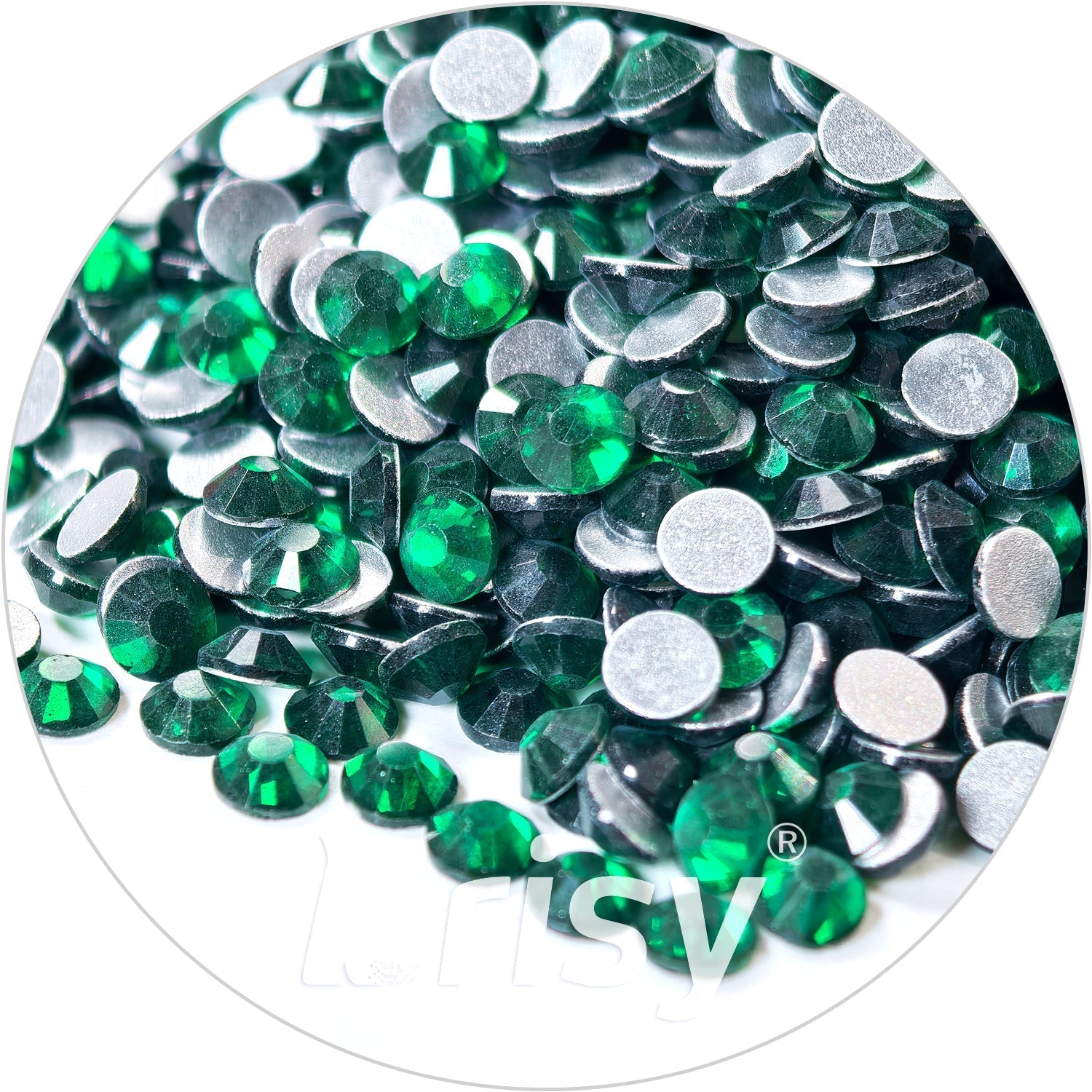

Hotfix rhinestones adhere to fabric when heat melts the thermoplastic glue on their flat back. A hotfix rhinestones heat press application requires 320-350°F for 12-18 seconds at medium pressure depending on stone size and fabric type. Getting these settings right separates a professional finish from stones that fall off after one wash.
Key Takeaways
- Heat press temperature for rhinestones ranges from 320°F (small stones on synthetic blends) to 365°F (large stones on cotton or denim)
- Pressure should be firm enough to embed the stone halfway into the fabric fibers without crushing the facets
- Hotfix applicator wands give you precision placement; heat presses give you speed and even pressure across large layouts
- Always pre-press your garment for 3-5 seconds to remove moisture and wrinkles before applying stones
- A peel test (warm or cold depending on stone quality) is the only way to verify the bond before releasing the garment
What Are Hotfix Rhinestones?
Hotfix rhinestones have a pre-applied thermoplastic adhesive on the flat bottom side. When heated to the correct temperature, the glue melts and bonds the stone to the fabric. The adhesive cools and hardens as it sets, creating a permanent bond that survives washing when applied correctly.
Unlike sew-on rhinestones that require hand stitching or rhinestone mesh that needs a transfer sheet, hotfix stones are applied individually with a hotfix applicator or in bulk with a heat press. This makes them the most popular choice for custom apparel, dance costumes, and small business apparel decorating.
The key variable with hotfix rhinestones heat press work is that different stone sizes, colors, and fabric types all require slightly different times and temperatures. The manufacturer of the stones usually provides a recommended range, but real-world conditions — ambient temperature, fabric thickness, and stone quality — all shift that window.
Best Hotfix Applicator: Wand vs Heat Press
You need the right tool for your project size. There are two main options for applying hotfix stones.
Hotfix Applicator Wand
A hotfix applicator wand looks like a soldering iron with a hollow metal tip. You place the stone onto the tip, position it on the fabric, and push a button or depress the tip to release the stone. These are ideal for small projects, detailed designs, and curved surfaces like collars and sleeves.
The wand gives you complete control over placement. You can work around letters, follow curved design lines, and place stones exactly where you want them one at a time. The downside is speed — a large chest design with 300 stones can take 45-60 minutes with a wand.
Best for: small runs, custom names and numbers, repairs, detailed patterns on curved garment areas.
Heat Press
A heat press is the right choice when you need speed and consistency. You arrange stones on a heat-resistant transfer sheet using a stone picker or template, position the sheet on the garment, and press the entire design at once. A 12x10 inch design with hundreds of stones takes seconds.
The heat press delivers uniform temperature and pressure across the entire design. Every stone gets the same heat exposure, which eliminates the variability of hand application. This is why production shops rely on heat presses for hotfix rhinestones heat press production work.
Best for: bulk production, large designs, uniform layouts, and commercial apparel decoration.
Which One Should You Buy?
If you are making single custom pieces or repairing garments, a hotfix applicator wand at $25-60 is sufficient. The Hotronix or Be Creative wands are reliable starter options.
If you plan to sell rhinestone apparel or produce more than 10 pieces per week, invest in a heat press. A 15x15 inch clamshell or swing-away press from brands like Hotronix, Geo Knight, or VEVOR runs $300-800 and pays for itself in production time savings.
Heat Press Temperature for Rhinestones: Complete Settings Chart
The most common question when learning how to apply hotfix rhinestones is what temperature to use. Here is the breakdown by stone size and fabric type.
| SS10-SS12 (small) | Cotton / Polyester | 330°F | 12 sec | Medium |
| SS10-SS12 (small) | Synthetic / Nylon | 320°F | 10 sec | Light-Medium |
| SS16-SS20 (medium) | Cotton / Denim | 345°F | 15 sec | Medium |
| SS16-SS20 (medium) | Polyester Blends | 335°F | 13 sec | Medium |
| SS30-SS48 (large) | Cotton / Denim | 365°F | 18 sec | Medium-Firm |
| SS30-SS48 (large) | Performance Fabric | 345°F | 15 sec | Medium |
| Mixed sizes | Any fabric | 345°F | 15 sec | Medium |
These are starting points. Always test on a scrap piece of the same fabric before committing to the final garment.
Pressure Settings
Pressure is the most overlooked variable with hotfix rhinestones heat press work. Too little pressure and the glue never fully contacts the fabric fibers. Too much pressure and the stones crack or the foil backing deforms.
The correct pressure pushes the stone approximately halfway into the fabric. On a heat press with adjustable pressure, set it to medium (about 40-60 PSI depending on your press model). For a wand, apply firm hand pressure that you can feel through the tool.
Fabric-Specific Adjustments
Delicate fabrics require lower temperature and shorter dwell time. Silks, thin jerseys, and performance synthetics scorch easily at standard rhinestone temperatures. Drop the temperature by 15-20°F and reduce time by 2-3 seconds for these materials.
Thick fabrics like denim, canvas, and hoodies need more heat and time to drive the adhesive deep into the weave. Add 10-15°F and 2-4 extra seconds compared to the standard settings. Pre-pressing the fabric for 5 seconds also helps by warming the base layer before the stones go on.
How to Apply Hotfix Rhinestones with a Heat Press: Step by Step
Step 1: Prepare the garment. Pre-press the area where stones will go for 3-5 seconds at 330°F. This removes moisture, relaxes wrinkles, and pre-heats the fabric so the stones bond immediately upon pressing.
Step 2: Arrange stones on the transfer sheet. Use a sticky transfer sheet or heat-resistant tape to hold stones in place with their flat adhesive side facing up. Arrange your design in reverse if using a mirror-image layout.
Step 3: Position and tape the sheet. Place the transfer sheet onto the garment and secure it with heat-resistant tape so nothing shifts during pressing. Make sure all stones are face-down against the fabric.
Step 4: Press according to the settings chart above. Apply firm, even pressure. Do not lift or rock the press during the dwell time, as this creates uneven contact.
Step 5: Peel the transfer sheet. For standard hotfix rhinestones, peel while the adhesive is still warm (within 10-15 seconds of pressing). For foil-backed or specialty rhinestones, allow the sheet to cool completely before peeling. Check the manufacturer instructions.
Step 6: Inspect every stone. Run your finger across the design. Any stone that lifts or shifts needs to be reapplied. Touch up loose stones with a small craft iron or hotfix wand at 330°F for 8-10 seconds.
Case Study: Crystal Creations Gets Consistent with a Heat Press
Sarah Chen started Crystal Creations in her Atlanta apartment in 2023, applying hotfix rhinestones by hand with a $35 wand. Her custom dance team leotards were popular, but she was spending 90 minutes on each garment and her hands cramped after three orders.
Her problem was inconsistency. Some stones held through a season of competitions; others popped off after the first rehearsal. Sarah realized the wand temperature fluctuated and her hand pressure varied across the design.
She invested in a used Hotronix 15x15 clamshell press and a set of rhinestone templates in January 2025. Her production time dropped from 90 minutes to 12 minutes per leotard. Stone adhesion became 100% consistent — zero failures in her next 200 pieces.
Sarah told us: "The heat press paid for itself in 14 orders. I can now take volume jobs I had to turn down before, and my customers get a better product."
Case Study: West Coast Dancewear Scales with Temperature Testing
Marcus Williams runs West Coast Dancewear in Los Angeles, producing custom rhinestone costumes for competitive dance studios across California. By early 2024, he was pressing over 500 garments per month using a commercial-grade heat press.
He noticed that SS30 stones on stretch velvet were failing at a 15% rate with the standard 345°F for 15 seconds. His customer Emma Rodriguez sent back three competition costumes after stones dropped during a weekend event, costing Marcus $420 in refunds and rush rework.
Marcus ran a controlled test across 50 fabric samples. He found that stretch velvet needs 365°F for 18 seconds at firm pressure because the fabric pile creates a gap between the stone and the base weave. The extra dwell time drives the adhesive deeper.
He updated his process documentation and retrained his team. The failure rate dropped to under 1%. Emma's costumes have now survived five competitions and two washes with zero lost stones. Marcus now tests every new fabric batch before production, saving thousands in rework annually.
Troubleshooting Common Problems
Stones fall off after washing. The most common cause is insufficient temperature or pressure. The adhesive never fully flowed into the fabric. Re-press at 10-15°F higher or add 3-5 seconds of dwell time. Also check that you pre-pressed the garment.
Stones crack during pressing. Pressure is too high or the heat press platen is hitting the stones unevenly. Reduce pressure and check that the transfer sheet is level. Some inexpensive rhinestones also crack at standard temperatures due to poor glass quality.
Glue residue oozes around the edges. Temperature is too high or dwell time is too long. The adhesive is liquefying and spreading beyond the stone. Drop the temperature by 15-20°F and reduce time by 2-4 seconds.
Stones look cloudy or dull after pressing. The facets have been crushed or the foil backing is damaged. Reduce pressure and verify the heat press platen is clean. A dirty platen can leave residue that makes stones look hazy.
Iron On Rhinestones: Can You Use a Regular Iron?
Yes, but it is harder to get consistent results with a household iron. Irons lack precise temperature control, have uneven pressure across the soleplate, and can easily scorch fabric if left in one spot too long.
If you need to use a regular iron for small projects:
- Set the iron to cotton or linen (high heat, approximately 350°F)
- Do not use steam — the water cools the glue
- Press firmly for 15-20 seconds without sliding the iron
- Lift straight up, do not drag the iron across the stones
- Let the fabric cool before moving it
The results will be less consistent than a dedicated heat press, but it works for small repairs or projects with fewer than 20 stones. For any serious production, invest in a proper hotfix rhinestones heat press setup.
Caring for Rhinestone Garments
Proper care extends the life of hotfix rhinestone designs.
- Turn garments inside out before washing to protect stones from abrasion
- Use cold water on a gentle cycle — hot water can re-melt the adhesive
- Line dry only — dryer heat can re-flow the glue and cause stones to shift or fall off
- Do not bleach or use fabric softeners near rhinestone areas
- Store garments flat or hanging — folding across rhinestone designs creates stress points
Frequently Asked Questions
What temperature do you set a heat press for hotfix rhinestones?
Set your heat press between 320°F and 365°F depending on stone size and fabric type. Small stones (SS10-SS16) on synthetic fabrics need 320-335°F. Large stones (SS30+) on cotton or denim need 350-365°F. Always check the stone manufacturer's recommended range if available.
How long do you press hotfix rhinestones?
Dwell time ranges from 10-18 seconds. Small stones require 10-12 seconds, medium stones need 13-15 seconds, and large stones need 15-18 seconds. Thicker fabrics like denim and hoodies need the longer end of each range.
Can you use a hotfix wand instead of a heat press?
Yes. A hotfix applicator wand is ideal for small projects, detailed designs, and repairs. Wands give you precise placement and work well on curved surfaces. The tradeoff is speed — a wand applies one stone at a time, making it impractical for large designs.
What is the best hotfix applicator for beginners?
The Be Creative Rhinestone Applicator and the HTR400 hotfix tool are the most popular starter wands at $30-50. For a heat press, the VEVOR 12x15 inch swing-away press provides reliable performance for under $300 and is the best budget option for beginners who plan to produce more than a few pieces.
Why are my rhinestones falling off after one wash?
The adhesive did not fully bond during pressing. Increase your temperature by 10-15°F, add 3-5 seconds of dwell time, or apply firmer pressure. Also confirm you pre-pressed the garment to remove moisture. If the problem persists, the stones themselves may have poor quality adhesive.
How do I remove misplaced hotfix rhinestones?
Use a hotfix wand or soldering iron to reheat the stone from the top until the adhesive softens (5-8 seconds), then lift it with tweezers. Remove residual glue with rubbing alcohol or a commercial adhesive remover. Let the fabric cool completely before applying a replacement stone.
Ready to Start Applying Rhinestones?
Whether you are a hobbyist creating custom gifts or a shop owner scaling production, the right hotfix rhinestones heat press setup transforms your results. Start with the temperature and time chart above, run a test on scrap fabric, and adjust from there.
Download the Free Heat Press Settings Cheat Sheet
Get a printable PDF with temperature, time, and pressure settings for every stone size and fabric type. Includes a troubleshooting quick reference.
[Join the free download list →]
Shop Pre-Sorted Hotfix Rhinestone Kits
Skip the sorting. Our SS16 and SS20 mixed-color kits come pre-sorted with verified temperature ranges printed on each pack. Perfect for production shops running hotfix rhinestones heat press jobs daily.

Leave a comment
All comments are moderated before being published.
This site is protected by hCaptcha and the hCaptcha Privacy Policy and Terms of Service apply.