
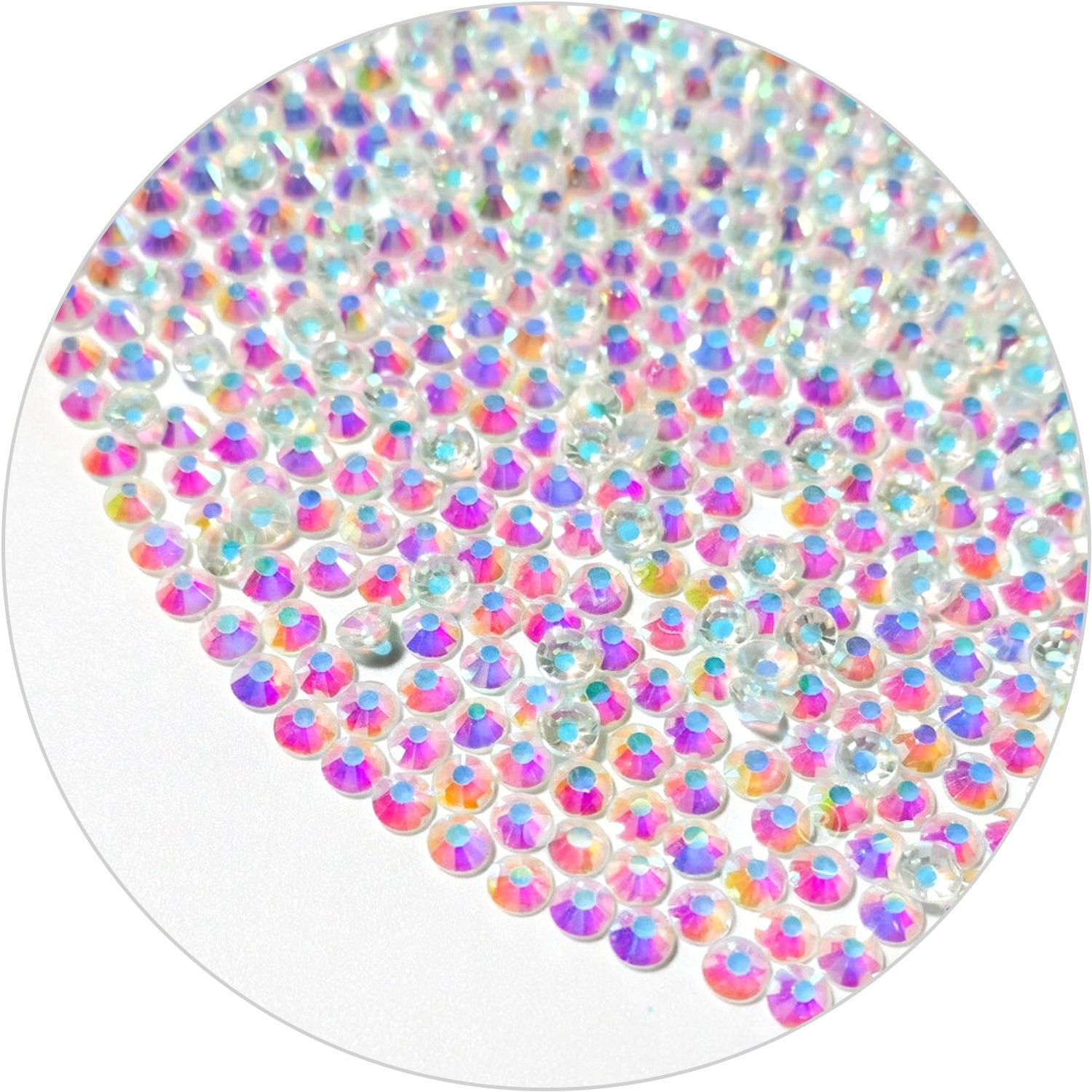

AB rhinestones are crystals coated with an iridescent Aurora Borealis finish that refracts light into rainbow hues. The "AB" stands for Aurora Borealis, named after the Northern Lights because the coating creates a similar multicolored shimmer effect across the surface of the stone.
Key Takeaways
- AB coating is a vacuum-deposited metallic layer applied to the top of a rhinestone that splits light into spectral colors, creating an iridescent rainbow effect.
- Crystal AB rhinestones (Swarovski and Preciosa) offer the highest clarity and color play, while cheaper AB-coated glass stones sacrifice brilliance for cost.
- AB coating works best on light-colored bases — clear, crystal, light pink, and aqua produce the most visible rainbow refraction.
- Compared to clear rhinestones, AB stones show more color variation but slightly less raw sparkle because the coating diffuses some direct light.
- AB rhinestones wholesale pricing typically runs 15-30% higher than non-coated equivalents due to the additional manufacturing step.
What Does AB Mean on Rhinestones?
The term AB on a rhinestone means it has been treated with an Aurora Borealis finish. This specialized coating was originally developed by Swarovski in 1956 and has since become an industry standard across rhinestone manufacturers worldwide.
The coating itself is a thin metallic layer — usually a combination of titanium and silicon oxides — applied to the top facet of the stone through a vacuum deposition process. When light hits this layer, it refracts at different angles depending on wavelength, splitting white light into the full visible spectrum. This is the same physical principle behind soap bubbles, oil slicks, and of course the actual Northern Lights.
What makes AB rhinestones distinctive is that they do not just sparkle in one color. A clear AB rhinestone can flash pink, blue, green, gold, and purple depending on the viewing angle and light source. This chameleon-like quality is why costume jewelry designers, nail artists, and dance costume makers reach for AB stones when they want movement and color depth.
How AB Coating Is Applied
Manufacturers apply the Aurora Borealis finish using physical vapor deposition (PVD). Stones are placed in a vacuum chamber where the coating material is vaporized and then condenses onto the crystal surface in a layer measured in nanometers.
The process adds less than a micron of thickness, which means AB coating does not alter the size or cut of the underlying stone. You can safely use AB rhinestones in any setting designed for the same size non-coated stone.
Not all AB coatings are equal. Swarovici and Preciosa use a multi-layer deposition process that produces a more even, durable finish. Budget manufacturers often use a single-pass spray technique that wears off faster and shows patchy iridescence under magnification.
The Original Swarovski AB Effect
Swarovski developed the Aurora Borealis finish in collaboration with French couturier Christian Dior in 1956. Dior wanted a stone that mimicked the shimmer of the Northern Lights he had admired on a trip to Scandinavia. The result was the AB coating, which Swarovski still calls its "Aurora Borealis" effect.
Today Swarovski produces AB in multiple variations including:
- Crystal AB — Clear base with full rainbow refraction
- Light Rose AB — Pale pink base with warm-toned iridescence
- Pacific Opal AB — Frosted white base with soft pastel flashes
- Light Sapphire AB — Pale blue base with cool-toned rainbow play
Each variation uses the same underlying PVD process but with different base crystal colors that shift the overall color temperature of the refraction.
AB vs Clear Rhinestones: What Is the Difference?
The core difference between AB and clear rhinestones is how they handle incoming light. A clear rhinestone acts like a prism — it bends light through its facets and returns a bright white sparkle. An AB rhinestone adds a spectral filter on top, so the returned light is broken into component colors before it ever reaches the facet system.
Clear rhinestones deliver maximum brightness and are the best choice when you want a pure, high-impact sparkle. They read as white or silver from any angle and work well in high-contrast settings like bridal wear and red-carpet jewelry.
AB rhinestones deliver a softer, more colorful shimmer. They appear to change color as the viewing angle shifts, which makes them ideal for dance costumes, stage wear, and statement pieces where color movement enhances the design.
Here is how they stack up side by side:
| Sparkle intensity | High (pure white light) | Medium-high (diffused into colors) |
| Color variation | None (reads as white) | High (flashes multiple colors) |
| Best lighting | Direct, bright | Mixed or angled |
| Cost | Baseline | 15-30% more |
| Durability | Standard | Same base, coating can wear |
Best Colors for AB Coating
While AB coating can be applied to any color base, it performs dramatically better on some colors than others.
Top-Performing Base Colors
Clear and crystal bases produce the strongest rainbow effect because the coating has the most white light to work with. Crystal AB rhinestones are by far the most popular choice and the benchmark for the entire AB category.
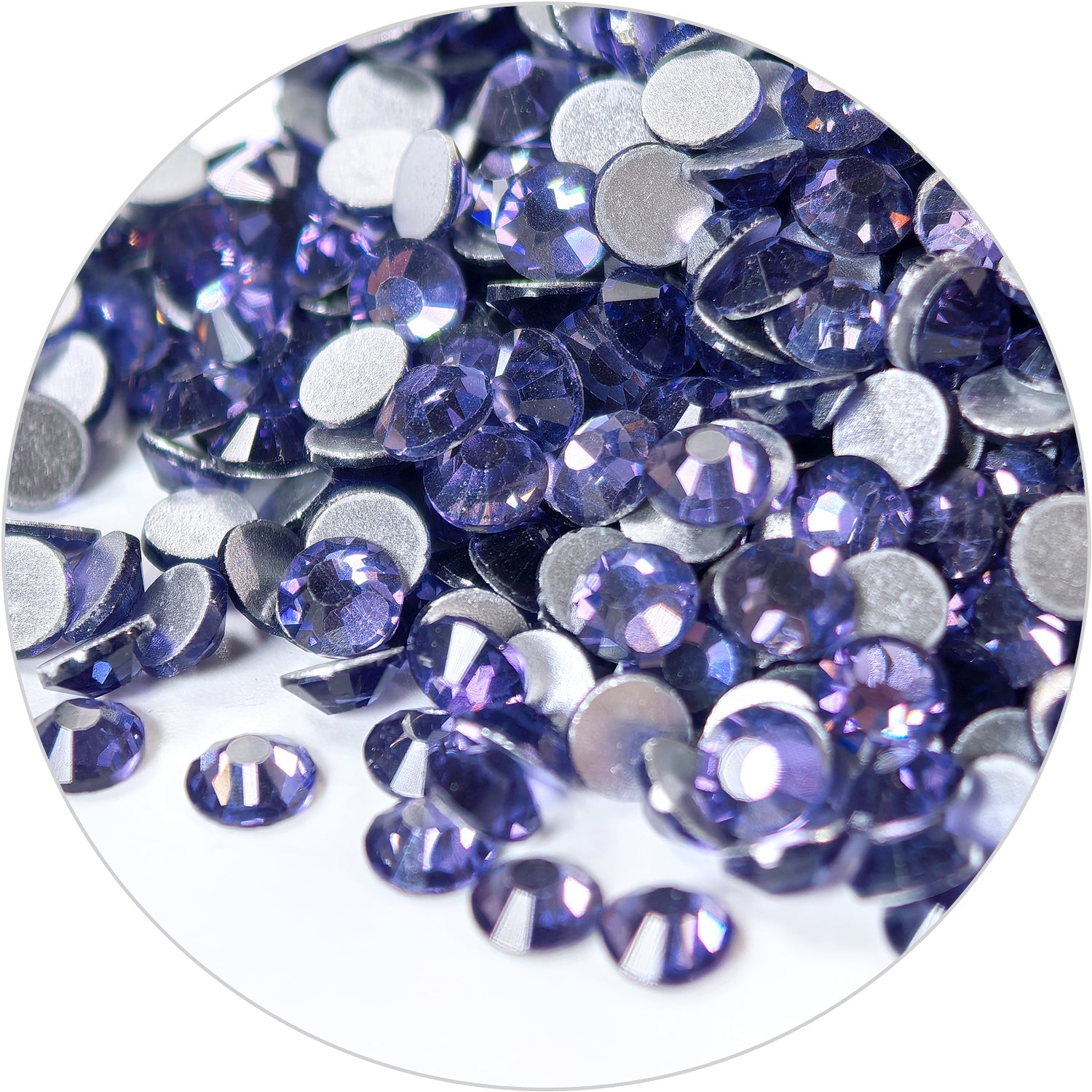
Light pastel bases — pale pink, aqua, lavender, and light sapphire — produce a close second. The tinted base shifts the overall color temperature of the iridescence, giving the stone a distinct personality while still allowing strong rainbow refraction.
White and opal bases create a softer, more diffused look. These are popular in bridal and bohemian designs where a subtle shimmer is preferred over dramatic color shifts.
Lower-Performing Base Colors
Dark colors — deep red, emerald green, royal blue, black — absorb too much light for the AB coating to refract effectively. The iridescence is barely visible, and the stones read almost identically to their non-coated counterparts. Most manufacturers do not even offer AB variants of dark colors because the effect is negligible.
Saturated bright colors such as hot pink and bright orange fall somewhere in the middle. You will see some color play in direct light, but it is subtle and may not justify the price premium.
Durability and Care of AB Rhinestones
AB coating is durable enough for regular wear but not indestructible. The metallic layer sits on top of the crystal facet, which means it is exposed to abrasion from contact with clothing, skin, and other surfaces.
How Long Does AB Coating Last?
In jewelry that is worn occasionally (a few times per month), AB coating lasts years without visible wear. In high-friction applications like dance costumes, the coating on exposed stones can show thinning after 6-12 months of regular use.
Nail art is the toughest environment for AB rhinestones. Hand washing, cleaning products, and repeated exposure to acetone vapor can degrade the coating within weeks. Seal AB rhinestones on nails with a quality top coat, and avoid direct application of acetone near the stones during removal.
Two Stories from Real Users
When bridal designer Elena Marchetti sourced 3,000 crystal AB rhinestones for a custom wedding gown in 2024, she tested a sample stone under UV light and in direct sunlight before committing to the full order. "The difference between cheap AB and quality AB is night and day," she says. "The budget stones looked gray under UV. The Preciosa stones lit up like the actual sky." Her final gown used over 2,800 crystal AB stones across the bodice and train. The bride reported getting more compliments on the "color-changing crystals" than on the dress silhouette itself.
Nail artist Jamal Wright runs a studio in Austin that specializes in rhinestone nail art. He stopped using AB rhinestones on hands entirely after repeated customer complaints about coating wear within two weeks. "I switched to placing AB stones only on toe nails or using clear rhinestones with an AB-effect top coat instead," he explains. "The stones themselves are fine if you baby them, but most people don't treat their hands like museum pieces." His studio now sells an AB-inspired gel polish that creates a similar effect without the durability issues.
Cleaning Guidelines
- Use a soft, dry cloth to polish. Avoid abrasive jewelry cloths.
- Never use ultrasonic cleaners — the vibration can loosen the coating on lower-quality stones.
- Keep AB rhinestones away from acetone, alcohol, and harsh cleaning chemicals.
- Store pieces separately to prevent scratching between stones.
Creative Applications for AB Rhinestones
AB rhinestones excel in any application where light and movement are part of the design.
Dance and Performance Costumes
Dance costumes are the single largest market for AB rhinestones. The coating catches stage lighting from every angle and produces visible color shifts even from the back of a large venue. Ballroom, Latin, and ice skating costumes routinely use thousands of AB stones per garment.
- Tips for dance costumes: Use crystal AB as the primary stone and layer color-specific AB stones (Light Rose, Light Sapphire) for gradient effects. Avoid using AB stones on high-friction areas like knees and elbows unless backed with protective fabric.
Jewelry Design
Statement jewelry benefits from the color-changing quality of AB stones. A single crystal AB rhinestone in a pendant can flash multiple colors as the wearer moves, creating the illusion of a much more complex piece.
- Tips for jewelry: Pair crystal AB stones with warm-tone metals (gold, rose gold) to amplify the pink and gold flashes, or with white metals (silver, platinum) to emphasize the blue and green spectrum.
Nail Art
Despite the durability challenges mentioned earlier, AB rhinestones remain popular in nail art for special occasions where short-term wear is acceptable.
- Tips for nail art: Use AB stones only on accent nails. Seal with two layers of high-quality top coat, and warn clients that the coating may dull within two weeks on hands.
FAQ
What does AB stand for in rhinestones?
AB stands for Aurora Borealis, named after the Northern Lights. The term was coined by Swarovski in 1956 when they developed a metallic coating that creates a multicolored iridescent effect similar to the natural phenomenon.
Are AB rhinestones more expensive than regular rhinestones?
Yes. AB rhinestones typically cost 15-30% more than their non-coated equivalents. The price increase reflects the additional PVD coating process. Crystal AB stones from premium manufacturers like Swarovski carry the highest premium.
Does AB coating wear off?
Yes, AB coating can wear off over time, especially on stones exposed to frequent friction, chemicals, or abrasion. The metallic layer is nanometers thin. In occasional-use jewelry, the coating lasts for years. In high-contact applications like dance costumes or nail art, visible wear can appear within weeks to months.
What is the difference between AB and clear rhinestones?
Clear rhinestones sparkle white by refracting light through their facets. AB rhinestones add an iridescent coating that breaks the light into rainbow colors. Clear stones are brighter; AB stones are more colorful. The choice depends on whether the design needs high-impact sparkle or color movement.
Can AB coating be reapplied?
Not practically. The PVD process requires specialized vacuum equipment and precise temperature control. Re-coating a stone that has lost its AB finish is not cost-effective. The better option is to replace the stone or design around uncoated stones.
What color base shows AB coating best?
Clear and crystal bases produce the strongest rainbow effect because they transmit the most white light. Light pastel bases — pink, aqua, lavender, and light sapphire — also perform well. Dark bases absorb too much light for the iridescence to be visible.
Are Swarovski AB rhinestones better than Preciosa AB?
Swarovski AB stones have slightly brighter iridescence and more consistent coating across production batches. Preciosa AB stones are approximately 85-90% as bright at 60-70% of the cost. For most applications, Preciosa offers better value. For high-end jewelry or costumes where absolute maximum iridescence is required, Swarovski is the better choice.
Where can I buy genuine AB rhinestones?
Genuine AB rhinestones are available through authorized distributors of Swarovski, Preciosa, and Asfour. Online marketplaces like Etsy and Amazon carry them too, but buyers should verify seller reputation and request photos under both natural and artificial light before purchasing wholesale quantities.
Ready to buy wholesale rhinestones? LRISY offers factory-direct pricing on wholesale bulk rhinestones with fast international shipping. Browse our flat back, pointed back, hotfix, and colors AB collections for all your needs.

Leave a comment
All comments are moderated before being published.
This site is protected by hCaptcha and the hCaptcha Privacy Policy and Terms of Service apply.