
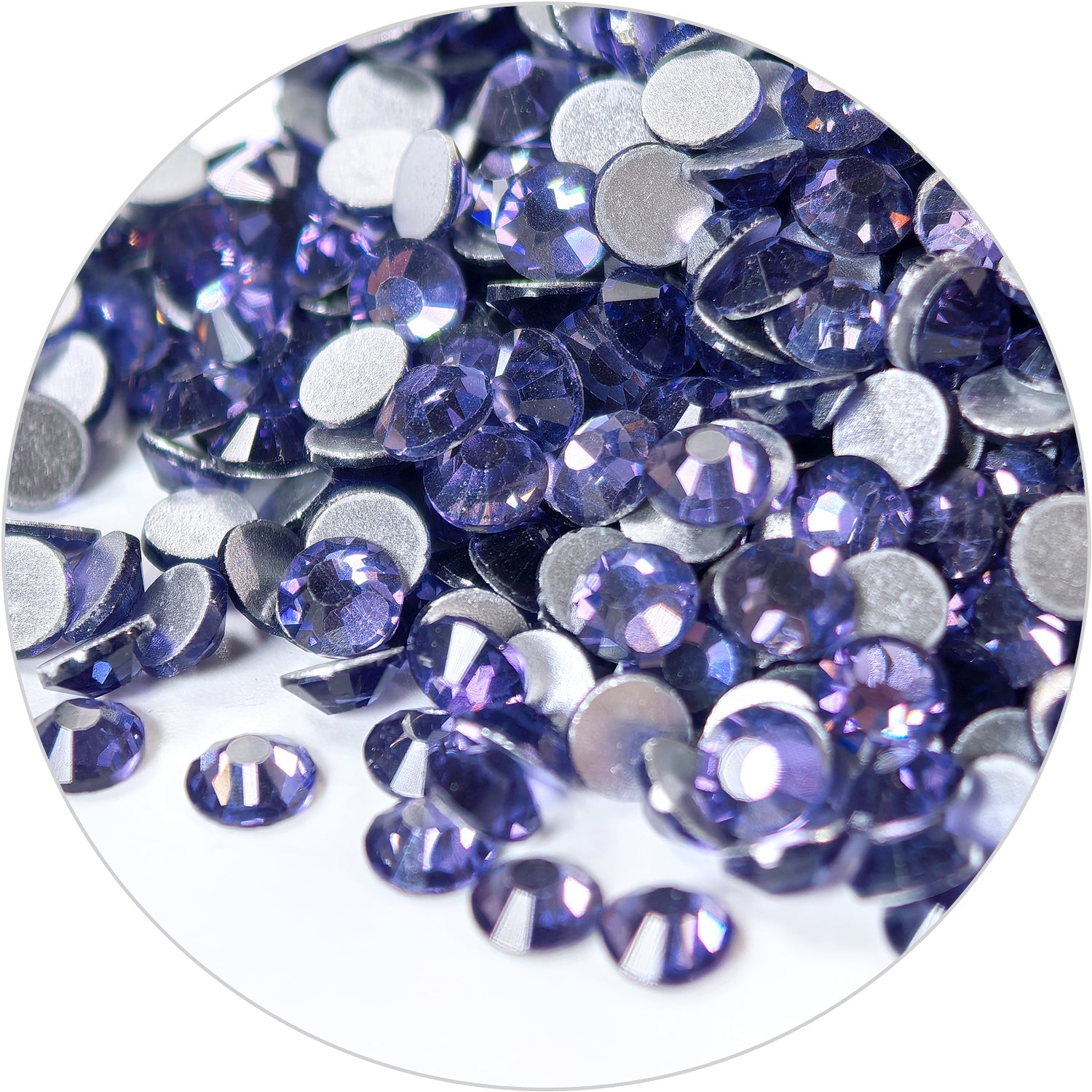

Wholesale rhinestones are crystals sold in bulk quantities — typically by the gross (144 stones) — at 60-80% below retail pricing. The best bulk buying strategy depends on your application: flatback stones for general crafts, hotfix for apparel, and sew-on for washable performance costumes.
The global rhinestone market was valued at approximately $1.59 billion in 2025, growing at a compound annual growth rate (CAGR) of 5.84% to 7.5%. North America holds roughly 38% of global market share, while Europe is the fastest-growing region at approximately 8.5% CAGR. Meanwhile, the U.S. crafting industry reached $44 billion in 2023, creating massive downstream demand for affordable embellishments.
You already know that retail rhinestone prices eat into your margins. What you might not realize is how much money you are leaving on the table by ordering small bags from craft stores. In this guide, we promise to show you exactly how to source wholesale rhinestones at true bulk pricing, spot the right quality grades, and build supplier relationships that protect your cash flow.
When Maya Chen launched her dance-costume Etsy shop in Phoenix in early 2024, she bought rhinestones in 50-stone packs from a local craft chain. Her material cost per costume was $18. After switching to a vetted overseas supplier and ordering hotfix rhinestones bulk by the thousand-gross lot, that cost dropped to $4.30. Her profit margin tripled within one quarter.
What Are Wholesale Rhinestones?
Rhinestones are imitation gemstones made from glass, crystal, or acrylic, cut with facets that catch and reflect light. They add sparkle to apparel, accessories, home décor, and performance costumes. When you buy them wholesale, you purchase in large volumes directly from manufacturers rather than through retail intermediaries.
The Gross Explained
In the rhinestone trade, quantity is measured in gross. One gross equals 144 stones. A thousand-gross lot contains 144,000 stones. Suppliers price by the gross because it simplifies manufacturing. Your unit price drops sharply as you move from single-gross orders to ten-gross, hundred-gross, and thousand-gross tiers. For example, a single SS20 flatback might cost $0.08 per stone at one gross but fall to $0.022 at one thousand gross. That difference compounds fast when you are embellishing hundreds of garments.
Who Buys in Bulk?
Rhinestone suppliers serve a diverse customer base. Fashion designers, dance and cheer uniform companies, bridal accessory makers, custom t-shirt shops, nail-art studios, crafters, and event decorators all buy bulk rhinestones. Corporate buyers purchase for promotional products. Cosplayers need them for armor and props. The common thread is volume: if you use more than a few hundred stones per month, buy wholesale rather than retail.
Types of Wholesale Rhinestones
Not all rhinestones work for every surface. Choosing the wrong type leads to stones falling off or damaged fabric. Here is how the major categories differ.
Flatback Rhinestones
Flatback rhinestones have a flat, foil-backed underside and no pre-applied glue. You attach them with epoxy, jewel glue, or clay-gel adhesive. They are the most versatile category, representing roughly 55% of total market share. Because you control the adhesive, flatbacks work on nearly any hard or semi-rigid surface: phone cases, shoes, tumblers, nails, jewelry settings, and fabric. If you are browsing flatback rhinestones wholesale, focus on consistency of facet cut and foil backing.
Hotfix Rhinestones
Hotfix stones come with a heat-activated adhesive pre-applied to the flat back. You position them on fabric and apply heat with a press or iron. They bond permanently to textiles, making them the go-to choice for apparel decorators. The hotfix segment is growing at approximately 9.2% CAGR, driven by demand in custom sportswear. When you order hotfix rhinestones bulk, check the glue viscosity rating. Low-quality glue melts unevenly or releases during washing.
Sew-On Rhinestones
Sew-on stones feature metal settings or holes that let you stitch them directly onto fabric. They are essential for washable performance costumes, theatrical wear, and bridal pieces. Because they do not rely on adhesive, they withstand heat and agitation better than any other type. Browse our sew-on rhinestone collection for settings in silver, gold, and black finishes.
Self-Adhesive Rhinestone Trims
Self-adhesive strips and sheets arrive pre-mounted on a sticky backing. They are ideal for quick décor projects, event signage, and temporary crafts. In 2025 and 2026, social commerce has supercharged this niche. TikTok Shop sellers are moving 13,000+ units monthly for self-adhesive trims aimed at DIYers. The convenience premium is real, but these trims are rarely permanent on fabric.
Quality Grades Explained
Quality is where many first-time buyers stumble. The difference between grades determines how brilliantly your stones catch stage lights, how uniform they look in dense patterns, and how long they resist chipping or foil peeling.
AAA vs AA vs A
Most rhinestone suppliers use a three-tier grading system:
- AAA (or Grade A+) offers the highest clarity, most precise facet symmetry, and consistent color batch-to-batch. These stones rival premium branded crystals in appearance and are suitable for luxury bridal, competition costumes, and high-end jewelry.
- AA (or Grade A) delivers strong sparkle with minor variation in cut or color. They are the sweet spot for commercial apparel, promotional products, and mid-market accessories.
- A (or economy grade) shows visible imperfection, uneven facets, and softer brilliance. Use them for kids' crafts, low-cost giveaways, or any project where stones are viewed from a distance.
A single grade jump can double or triple your per-stone cost. Match the grade to the viewing distance and brand positioning of your finished product. Customers holding a tumbler six inches away notice AAA sparkle. Spectators fifty feet from a stage usually cannot tell AA from AAA.
Glass vs Crystal vs Acrylic
Material choice affects weight, refraction, durability, and price:
- Lead-free crystal offers the highest refractive index and sharpest brilliance. It is the modern standard after lead-crystal regulations tightened.
- Glass rhinestones provide very good sparkle at a lower price. Most commercial-grade stones are glass.
- Acrylic is the lightest and cheapest option. It scratches easily and lacks depth, but works well for children’s products and temporary installations.
If you need a sizing reference for your next project, check our rhinestone sizing chart before you order.
SS Sizing and AB Coating
Rhinestone diameter is measured in SS (Stone Size) numbers. SS6 is roughly 2.0 mm. SS10 is 2.8 mm. SS16 is 4.0 mm. SS20 is 4.8 mm. SS30 is 6.5 mm. Larger SS numbers cost more per stone, but the visual impact scales non-linearly. A single SS34 center stone delivers more drama than a cluster of SS10 stones covering the same area.
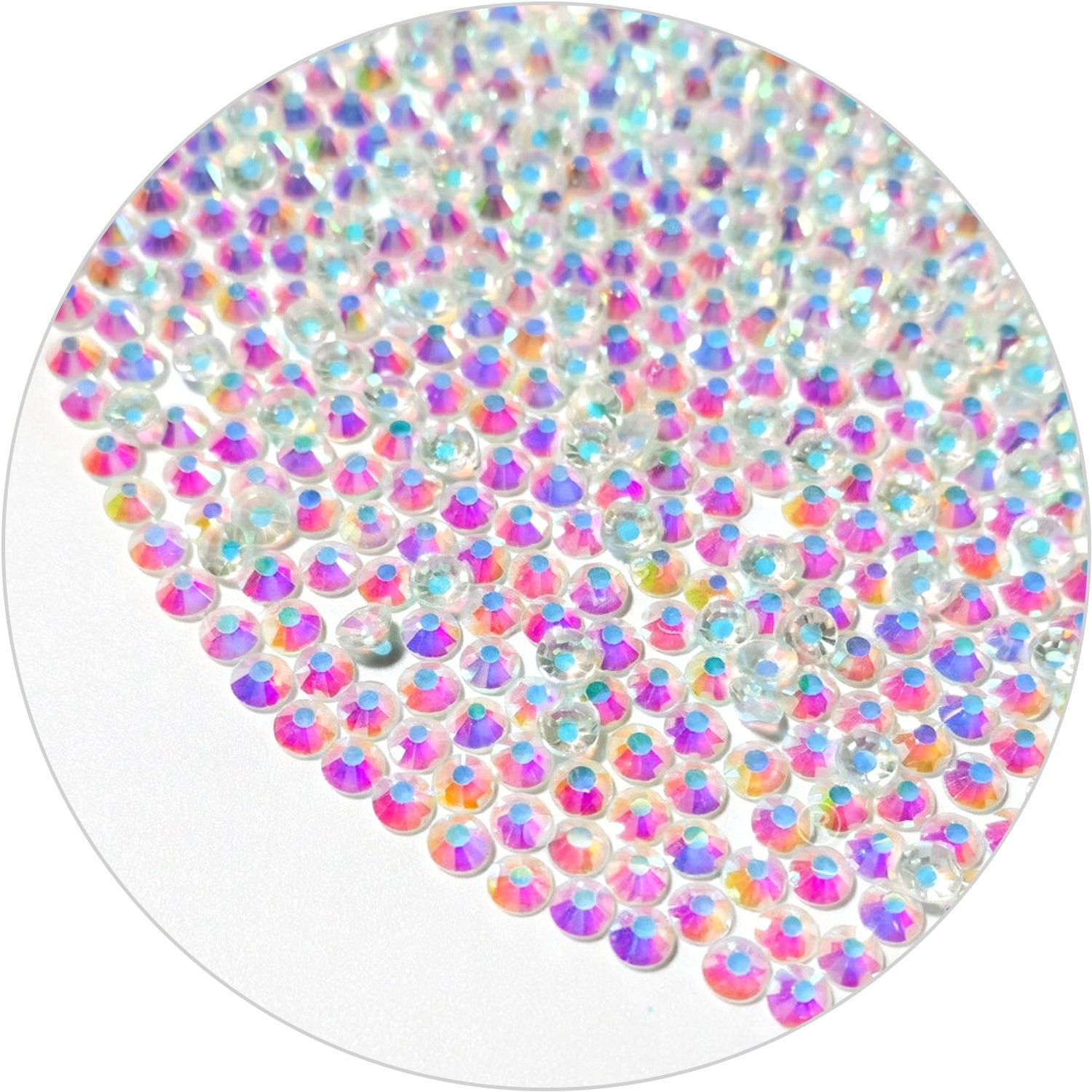
AB (Aurora Borealis) coating adds a rainbow shimmer over the base color. It increases perceived value and is especially popular in dance, cheer, and festival fashion. AB coating costs 10-20% more per stone but can raise your finished-product price by 30% or more.
Why Grade Matters for Your Bottom Line
Over-buying grade is a silent margin killer. A uniform company charging $80 per garment can absorb AAA crystal costs. A decorator selling $18 festival tops cannot. Calculate your target margin first, then choose the lowest grade that satisfies your customer’s expectations. That discipline separates profitable wholesale crystals buyers from hobbyists who accidentally stock luxury inventory on a budget.
Calculating True Cost
Sticker price is only the beginning. To compare bulk rhinestones offers fairly, you must normalize to a common unit and account for the full landed cost.
Price Per Stone at Volume
Always divide the lot price by the exact stone count. A $38 bag labeled "10 gross" contains 1,440 stones. That is $0.026 per stone. A $320 bag labeled "100 gross" contains 14,400 stones. That is $0.022 per stone. If you use 50,000 stones per month, the $0.004 gap equals $200 in monthly savings — or $2,400 per year — just from stepping up one tier.
Defect Rates and Inspection
Even top-tier rhinestone suppliers ship occasional defects. A stone with a scratched table, missing facets, or peeling foil is useless in precision work. Reputable wholesale vendors keep defect rates below 2%. Budget vendors may run 5-8%. Ask your supplier for their defect-rate policy before you commit to a large order. When your first shipment arrives, inspect a random sample of 200 stones under magnification. Count the defects. If the rate exceeds what was promised, document with photos and request a replacement.
Shipping, Duties, and Hidden Fees
Domestic shipping for a ten-gross box might cost $12. International air freight for a thousand-gross shipment can cost $180-$400. Import duties for glass or crystal stones entering the United States typically fall under HTS code 7018.10. Add customs brokerage fees if your supplier does not deliver duties-paid. Some overseas vendors quote "FOB" prices that exclude freight. Ask: "What is my total landed cost per gross to my door?"
The 2026 Pricing Landscape
Post-pandemic logistics stabilized in 2024 and 2025, but currency fluctuations and energy costs continue to move factory-gate prices in China and the Czech Republic. In 2026, expect mid-grade glass flatbacks to range from $0.018 to $0.035 per stone at hundred-gross volumes. Premium crystal grades range from $0.045 to $0.12 per stone depending on size and coating. Acrylic economy grades sit between $0.004 and $0.009 per stone. Lock in annual contracts with reliable suppliers if your volume is predictable. This protects you against spot-price spikes and often unlocks payment terms instead of prepayment.
How to Vet a Rhinestone Supplier
Supplier selection determines your quality consistency, delivery reliability, and payment security. A bad supplier wastes more than money; it wastes production schedules and customer trust.
Domestic vs Overseas Suppliers
Domestic rhinestone suppliers offer faster shipping, easier returns, and familiar payment protections, but their per-stone prices are usually 15-30% higher than overseas factories. Overseas suppliers offer lower unit costs and massive capacity, though language barriers and longer shipping windows are trade-offs. Many successful businesses use a hybrid model: a domestic wholesaler for rush orders and an overseas factory for base volume. That balances cost and risk.
Red Flags to Watch For
Be cautious if a supplier:
- Refuses to send samples before a large order.
- Quotes prices far below market rate without explanation.
- Has no verifiable business registration or physical address.
- Communicates only through informal messaging apps with no contract.
- Demands 100% prepayment via unsecured wire transfer with no escrow option.
- Changes quoted prices after you send a deposit.
- Cannot provide batch-to-batch color consistency data.
Sample Ordering Strategy
Never skip the sample phase. Order three sample packs from each finalist supplier: one in your primary color, one in AB coating, and one in the largest size you plan to use. Test the samples under your exact production conditions. Wash hotfix samples three times. Drop flatback samples from table height to check chipping. Leave them in sunlight for a week to test colorfastness. Only after passing your real-world tests should you escalate to a pilot order of ten gross.
Understanding MOQs
MOQ stands for Minimum Order Quantity. Some domestic wholesalers accept single-gross orders. Overseas factories may require fifty to one hundred gross. A high MOQ is fine if it aligns with your consumption rate. What matters is whether the per-stone savings justify the cash tied up in inventory. If you use ten gross per month and the MOQ is one hundred gross, you are looking at nearly a year of inventory. Store in a dry, temperature-stable environment to prevent foil degradation.
Ready to cut your material costs by 60% or more? Contact our sourcing team for a free volume quote on flatback rhinestones wholesale, hotfix, and sew-on stones. We offer sample packs and flexible MOQs for businesses of every size.
Application Essentials
Even perfect stones fail if you attach them poorly. Each rhinestone type has optimal application conditions. Master these basics to protect your investment.
Adhesive Basics for Flatback Stones
For flatback stones, use an adhesive formulated for jewelry or fabric depending on your substrate. E6000 bonds well to hard surfaces. Fabric-specific jewel glues remain slightly flexible after curing, which prevents pop-off when textiles stretch. Apply adhesive sparingly. Excess glue oozing around the edge catches dust and looks unprofessional. Let the bond cure for 24-72 hours before handling. Rushing the cure is the top reason flatbacks detach.
Heat Press Settings for Hotfix
Hotfix application requires precise heat, pressure, and time. Most stones bond best at 325-350°F (163-177°C) with medium pressure for 12-15 seconds. Always use a protective sheet or Teflon cover. Test on fabric scraps first. Delicate fabrics like spandex can warp under high heat; use a heat-transfer pillow to distribute pressure evenly. After pressing, let the garment cool completely before stretching or folding. A proper bond survives dozens of wash cycles.
Washing Care and Longevity
Turn embellished garments inside out before washing. Use cold water and a gentle cycle. Avoid fabric softener, which can break down adhesive bonds over time. Air drying is safest. If you must use a dryer, choose low heat. For heavily decorated performance costumes, hand washing in cold water extends stone life dramatically. Communicate these care instructions to your customers on a tag or insert. It reduces complaints and returns.
In 2023, a costume rental company in Orlando switched from hand-glued flatbacks to properly heat-pressed hotfix stones on all new inventory. Their in-season repair rate dropped from 18% to 2%. The labor savings alone paid for the heat press within two months. Small process changes create outsized durability gains.
2026 Market Trends
The wholesale rhinestones landscape is evolving. Staying ahead of these shifts helps you stock the right colors, anticipate customer demand, and avoid obsolete inventory.
The Post-Swarovski Shift
Swarovski’s strategic retreat from the mass-market crystal components business created a supply vacuum that independent factories and emerging brands have rushed to fill. Premium buyers who once defaulted to Swarovski are now testing lead-free crystal from Czech, Chinese, and Korean manufacturers. The result is a more competitive premium tier with better pricing and comparable brilliance. Request optical comparison samples before committing long-term to any new "premium" brand.
Sustainability and Eco-Friendly Options
Environmental pressure is reaching the embellishment industry. Customers increasingly ask about recycled glass content, non-toxic coatings, and plastic-free packaging. Some forward-thinking rhinestone suppliers now offer stones made from post-consumer glass cullet with the same clarity as virgin material. Others ship in biodegradable bulk bags instead of plastic pails. If your brand markets sustainability, demand documentation. Ask for recycled-content certificates or RoHS compliance statements. Greenwashing is common; verify claims.
The TikTok DIY Boom
Social commerce has transformed the customer base for wholesale rhinestones. Creators now film tutorials and sell small-batch embellished goods through TikTok Shop, Instagram, and Etsy. They buy smaller lots — ten to fifty gross — but reorder frequently and respond fast to trend colors. If you sell to this segment, consider offering color bundles tied to trending Pantone shades. One viral DIY video can empty your inventory overnight.
Marcus Webb, a custom sneaker artist in Atlanta, built a six-figure side business by filming 60-second rhinestone customization videos. He sources bulk rhinestones in fifty-gross lots and pre-sorts them into color kits that match his most popular designs. His followers buy his sneakers and his kits. The line between end user and micro-wholesaler has blurred completely.
Conclusion
Buying wholesale rhinestones is not about finding the cheapest bag of sparkle on the internet. It is about matching the right material, grade, type, and supplier to your specific business model. We covered what "by the gross" means, how flatback differs from hotfix and sew-on, why grade matters for margins, and how to calculate true landed cost. We also explored how to vet reliable rhinestone suppliers, how to apply stones so they stay put, and where the market is heading in 2026.
The five takeaways are simple. Buy by the gross to capture 60-80% savings. Choose the type that matches your substrate and durability needs. Match the grade to your customer’s expectations. Vet suppliers with samples, not promises. And stay alert to post-Swarovski competition, sustainability demands, and the TikTok creator economy.
If you are ready to stop overpaying for retail packs, reach out for a tailored volume quote today. The sooner you lock in a reliable supply chain, the sooner you can scale production without stress.
Frequently Asked Questions
What is the minimum order for wholesale rhinestones?
Domestic distributors often accept single-gross orders (144 stones), while overseas factories typically require 50 to 100 gross. Many suppliers offer flexible MOQs for first-time buyers who start with a sample order.
How much cheaper are wholesale rhinestones compared to retail?
Bulk rhinestones usually cost 60-80% less than retail craft-store pricing when purchased by the gross or larger. The exact savings depend on material, grade, and volume tier. At thousand-gross volumes, the per-stone price can be one-fifth of retail.
What is the difference between hotfix and flatback rhinestones?
Flatback rhinestones have a flat, foil-backed underside with no adhesive; you attach them with glue. Hotfix rhinestones come with a heat-activated adhesive layer that bonds to fabric when pressed with heat. Hotfix is faster for textiles. Flatback is more versatile across surfaces.
What does SS size mean in rhinestones?
SS stands for "Stone Size," a standardized diameter measurement. Common sizes include SS6 (2.0 mm), SS10 (2.8 mm), SS16 (4.0 mm), SS20 (4.8 mm), and SS30 (6.5 mm). Larger SS numbers create bolder visual impact and command higher prices.
Are all rhinestones made of crystal?
No. Rhinestones are made from crystal, glass, or acrylic. Crystal offers the highest brilliance and weight. Glass is the most common commercial choice. Acrylic is the lightest and least expensive, best suited for crafts and temporary use rather than durable apparel.
Can I wash garments decorated with wholesale rhinestones?
Yes, if applied correctly. Turn the garment inside out, wash in cold water on a gentle cycle, and avoid fabric softener. Air drying is preferred. Hotfix and sew-on stones generally withstand washing better than flatbacks attached with standard craft glue.
Ready to buy wholesale rhinestones? LRISY offers factory-direct pricing on wholesale bulk rhinestones with fast international shipping. Browse our flat back, pointed back, hotfix, and colors AB collections for all your needs.

Leave a comment
All comments are moderated before being published.
This site is protected by hCaptcha and the hCaptcha Privacy Policy and Terms of Service apply.