
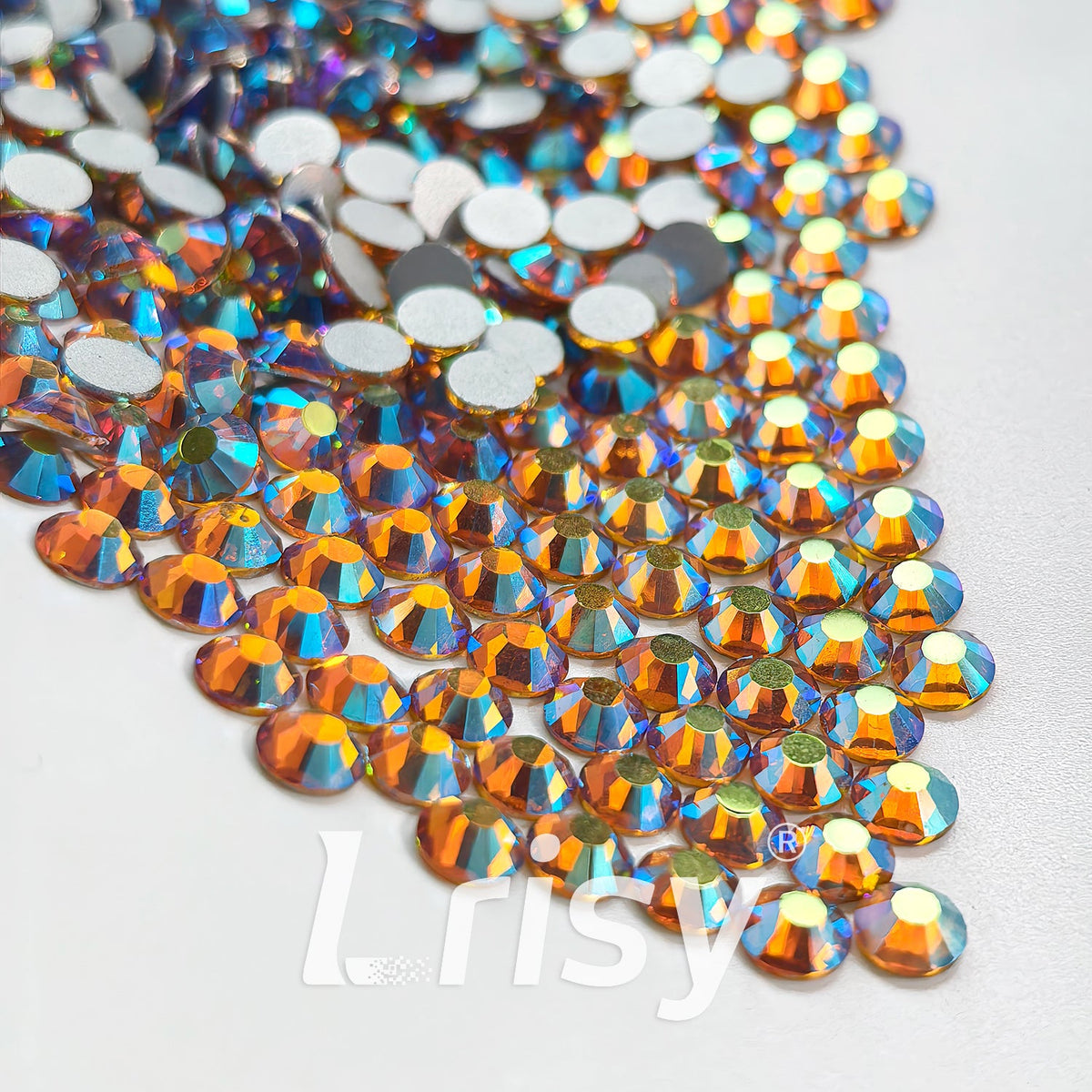
Glass wins for sparkle and scratch resistance. Acrylic wins for weight, impact resistance, and price. Choose glass when your project demands maximum brilliance and long-term clarity: bridal accessories, stage costumes, and high-end jewelry. Choose acrylic when weight matters, the piece will be worn by children, or the budget is tight: dancewear that needs to flex, fast-fashion accessories, and one-use costume pieces. Pick wrong and you will waste money on stones that fall off, scratch, or simply do not sparkle the way you expected.
A custom gown can go from flawless to shedding stones in exactly the week it must not. Imagine covering stretch mesh with 1,200 hand-applied Swarovski-style glass stones. The fabric's flex during a single rehearsal can shear the adhesive bond, and by show day the bodice shows bald patches. Six weeks of hand-applying and a $340 investment in stones, undone by a material mismatch that a three-minute read could have prevented.
You are reading this guide because you are standing at the same crossroads. Maybe you are a costume designer tired of replacing fallen stones. Maybe you are launching an accessory line and the cost difference between glass and acrylic will determine whether your margins work. Or maybe you just want your homemade bridal headpiece to survive the reception without shedding crystals onto the dance floor.
Whatever brought you here, the next ten minutes will save you that frustration. By the end you will know exactly which material matches your project, your audience, and your budget, and you will never have to guess again.
What Are Rhinestones Made Of? The Raw Material Truth
Rhinestones are diamond simulants, but their base material determines everything about how they perform: how they sparkle, how they wear, how they cost. The original rhinestones, invented by Georg Friedrich Strass in the 1700s, were lead-crystal glass backed with metal powder to mimic diamond's fire. Modern rhinestones split into two distinct material families, and understanding the difference between them is the foundation of every buying decision you will make.
Glass Rhinestones
Glass rhinestones start as optical glass formulated from silica sand, soda ash, and metal oxides. The specific oxide used determines the stone's optical class:
- Lead crystal replaces 24-32% of silica with lead oxide, pushing the refractive index to 1.55-1.70. This creates the rainbow fire that made Austrian crystal famous. The downside: lead content makes these stones illegal for children's products under CPSIA and restricted under EU REACH. A single SS30 lead-crystal stone weighs roughly 0.35 grams and costs $0.20-0.50 at retail.
- K9 crystal substitutes barium and potassium oxides for lead oxide. Its refractive index lands at 1.52-1.55, roughly 90% of lead crystal's light performance, at 30-40% lower cost. K9 is RoHS- and REACH-compliant, non-hazardous, and the dominant glass rhinestone in the 2026 wholesale market. A K9 SS30 stone weighs 0.32 grams and costs $0.08-0.15.
- Soda-lime glass is the budget tier: no special oxides, low refractive index (~1.48-1.50), minimal fire. These stones look dull next to K9 or lead crystal and are rarely used in professional-grade work.
Glass rhinestones are precision-cut with 12 to 14 facets using diamond-tipped tools, then foil-backed with a metallic coating that reflects light back through the crystal. The combination of refractive material and precise faceting is what produces the sharp, multi-colored flash that defines a quality stone.
Acrylic Rhinestones
Acrylic rhinestones are made from polymethyl methacrylate (PMMA), a thermoplastic polymer. Unlike glass, acrylic stones are injection-molded: liquid plastic is forced into steel molds and cooled. This process gives acrylic stones rounded facet edges and a softer, less-defined sparkle compared to the sharp edges of cut glass.
The refractive index of PMMA hovers around 1.49. That 0.03-0.21 gap versus glass might sound negligible, but in optical terms it is the difference between a focused beam and a diffused glow. Acrylic stones produce a single-color shimmer rather than the prismatic rainbow fire of quality glass.
An SS30 acrylic stone weighs 0.15 grams, less than half the weight of its glass counterpart. The per-stone cost is $0.01-0.04, or 70-90% less than equivalent glass stones, making acrylic the default choice for budget-conscious production runs.
Key Takeaways
- Glass rhinestones deliver superior brilliance and fire because of their higher refractive index (1.52-1.70 vs 1.49), especially in K9 crystal and lead-crystal formulations.
- Acrylic rhinestones are 50-60% lighter than glass, making them better for garments, headpieces, and costume jewelry worn for hours.
- Durability is situational: glass resists scratches and chemicals; acrylic resists drops and impacts without chipping.
- K9 glass rhinestones offer near-lead-crystal sparkle at a lower cost, with full REACH and RoHS compliance for international shipping.
- Cost difference is dramatic: acrylic stones cost 70-90% less than equivalent glass stones but cloud and scratch faster with regular use.
The $340 Dress That Lost Its Sparkle: What a Costume Buyer Learned About Material Mismatch
That scenario is not unusual in the competitive dance world. A costume buyer chose full-coverage glass stones for maximum stage sparkle under the lights without accounting for the stretch mesh fabric of the gown. Glass rhinestones have zero give; they are rigid. When the fabric stretched during movement, the rigid glass backing could not flex with it. The bond between adhesive and stone broke under shear stress, and stones dropped.
The costume buyer replaced every visible stone on that gown with acrylic equivalents. The gown lost some sparkle but stopped losing stones, and it lasted the whole season without a single replacement. Total savings: $340 in replacement stones plus 14 hours of reapplication labor.
The lesson: Fabric stretch is invisible when you are shopping for stones. It only appears when you move. If your garment stretches more than 5% under tension (dancewear, swimwear, athletic wear), acrylic's lighter weight and flexibility under stress mean fewer popped stones and a longer garment lifespan.
For costume designers and dance moms reading this: browse flatback rhinestones suitable for stretch fabrics or shop hotfix rhinestones for fast-production costume pieces.
Why Glass Rhinestones Outshine Acrylic Every Time — The Light Physics
The sparkle gap between glass and acrylic is not subjective. It is measurable physics. The refractive index of a material determines how much it bends light as light passes through it. Higher refractive index means sharper light bending, which means greater separation of white light into its spectral colors: the rainbow flashes you see in a quality stone.
| Property | Lead Crystal Glass | K9 Crystal Glass | Acrylic (PMMA) |
|---|---|---|---|
| Refractive Index | 1.55, 1.70 | 1.52, 1.55 | ~1.49 |
| Light Dispersion | Strong rainbow fire | Good prismatic effect | Soft, single-color shimmer |
| Facet Edges | Sharp, precision-cut | Sharp, precision-cut | Rounded (molded) |
| Foil Backing | Full metallic coat | Full metallic coat | Often partial or painted |
| Visible Rainbow Flashes | Yes, under any direct light | Yes, slightly softer | No |
The real-world test: Place a glass and an acrylic stone of the same color side by side on white paper under a desk lamp. The glass stone will cast tiny colored shadows on the paper: the acrylic stone will not. Under LED stage lighting, the difference is obvious in side-by-side comparison. On a finished garment at arm's length, casual observers may not notice, but the wearer and anyone who handles the piece will feel the difference in weight and surface quality.
For high-end applications where maximum fire is non-negotiable (bridal wear, pageant crowns, stage costumes), glass rhinestones from a reputable wholesaler remain the professional standard. The science behind rhinestone optics has not changed in 300 years: higher refractive index equals more sparkle.
Why Heavy Rhinestones Can Ruin Your Garment — The Weight Problem Nobody Talks About
SS30 (6 mm) is one of the most popular rhinestone sizes for garment decoration. Here is the weight reality at that size:
- Lead crystal glass SS30: 0.35 grams per stone
- K9 glass SS30: 0.32 grams per stone
- Acrylic SS30: 0.15 grams per stone
A competition dress covered in 500 glass stones carries 160-175 grams of extra weight — roughly the weight of a smartphone — concentrated on the bodice and neckline. That might not sound like much, but dancers notice. Heavier costumes restrict movement, cause shoulder fatigue during long routines, and strain the fabric seams.
Acrylic stones on the same dress add only 75 grams, less than half the load. For headpieces worn for hours, the difference between glass and acrylic can mean the difference between a comfortable evening and a headache by the second dance.
There is also a mechanical factor: heavy stones pull on fabric. Over time, glass stones weighing 0.3+ grams will slowly stretch the weave of delicate fabrics like silk, chiffon, or stretch mesh. The fabric around each stone develops micro-tears that weaken the grip, and eventually stones fall off even with perfect adhesive application. Acrylic stones, being lighter, cause dramatically less fabric distortion over the life of the garment.
The rule of thumb: If your project uses more than 200 stones on a flexible fabric, consider acrylic. If the item needs to survive multiple wears and washes, accounting for fabric fatigue at the design stage will save you repairs later.
| Number of Stones | Glass Weight (SS30) | Acrylic Weight (SS30) | Difference |
|---|---|---|---|
| 100 | 32-35 g | 15 g | 17-20 g saved |
| 500 | 160-175 g | 75 g | 85-100 g saved |
| 1,000 | 320-350 g | 150 g | 170-200 g saved |
| 2,000 | 640-700 g | 300 g | 340-400 g saved |
Browse our wholesale bulk rhinestones for both glass and acrylic options at factory-direct pricing. If weight is your primary concern, our AB colored rhinestones come in both glass and acrylic formulations so you can match color without compromising on the material choice that suits your project.
Scratches or Shatters: The Durability Trap That Catches Beginners
The durability question seems simple: which material lasts longer?, but the answer splits into two completely different damage modes that most buyers discover only after it is too late.
Scratch Resistance: Glass Wins
Glass rhinestones score 5.5 to 6.5 on the Mohs hardness scale. That is roughly the hardness of window glass. Lead crystal is slightly softer (Mohs 5.5) because the lead content makes the glass less densely packed. K9 glass is harder at Mohs 6.0-6.5 because barium oxide produces a denser molecular structure.
Acrylic scores only 2 to 3 on the same scale, softer than fingernail (Mohs 2.5) and copper (Mohs 3). This means acrylic stones develop micro-scratches from normal wear: brushing against denim, rubbing together in a jewelry box, contact with zippers. Within 6-12 months of regular use, acrylic stones show visible clouding from accumulated micro-abrasions.
Impact Resistance: Acrylic Wins
Glass is brittle. Drop a glass rhinestone onto a tile floor from waist height and it will chip or shatter roughly 60% of the time. Drop an acrylic stone and it bounces. This makes acrylic the safer choice for jewelry worn by children, pieces that ship through standard postal services, and items that get handled roughly.
| Damage Type | Glass (K9) | Glass (Lead Crystal) | Acrylic |
|---|---|---|---|
| Mohs Hardness | 6.0, 6.5 | 5.0, 5.5 | 2, 3 |
| Scratches from denim contact | No | Rare | Yes, within weeks |
| Chips on drop (1 m) | ~60% chance | ~70% chance | ~0% chance |
| Clouds over time | No | No | Yes, 6-18 months |
| Chemical resistance (perfume, oils) | Excellent | Excellent | Moderate (clouds with alcohol) |
A Designer's Story: The Ring That Could Not Hit a Sink
A jewelry designer launched a limited-edition cocktail ring line in early 2025 using precision-cut K9 glass rhinestones. The rings were stunning: high-fire K9 stones set in sterling silver with an open-back pavilion that maximized light entry. But within four months, the line's return rate hit 12%. Customers reported chipping after bumping their rings against countertops, sinks, and car door handles.
The designer switched to a lead-free glass formulation with a slightly thicker pavilion. The stone was 0.3 mm deeper, which added structural mass to the weakest point. Returns dropped to 2%, with 90% of the sparkle that buyers loved intact. The fix is now standard across the production line: a geometry adjustment that trades a sliver of brilliance for structural integrity, applied at the specification stage rather than after returns start piling up.
The takeaway: If your product will experience impact (rings, bracelets, children's accessories, anything that ships through standard postal service), either choose acrylic or spec a thicker glass cut. Do not discover this after your first batch of returns.
Why K9 Glass Is Taking Over the Rhinestone Industry in 2026
K9 glass has become the default choice for mid-range to high-end rhinestone applications, and for good reason. Developed in China as a synthetic optical crystal, K9 uses barium oxide and potassium oxide in place of lead oxide, achieving a refractive index of 1.52-1.55 without the regulatory baggage of lead.
What K9 delivers:
- 85-90% of the sparkle of traditional Austrian lead crystal
- 30-40% lower cost than equivalent lead-crystal stones
- RoHS and REACH compliance for unrestricted EU shipping
- Non-hazardous classification under US and international regulations
- Slightly harder than lead crystal (Mohs 6 vs 5.5), meaning better scratch resistance
The trade-off is brittleness. K9 glass is harder than lead crystal, which means it is also more brittle. A K9 stone dropped from waist height will chip at roughly the same rate as lead crystal: the damage mode is identical. But in normal wear, K9 outlasts lead crystal because it resists the micro-scratches that eventually cloud a softer stone.
For most craft and jewelry buyers in 2026, K9 glass is the rational choice. It gives you professional-grade sparkle, full regulatory compliance, and a cost structure that works for both one-off pieces and production runs. The only case for choosing lead crystal over K9 is when you specifically need the absolute maximum refractive index, typically for large, colorless center stones where every fraction of a point of light dispersion matters.
Browse our K9 glass flatback rhinestones collection if you need precision-cut stones with full foil backing at wholesale pricing.
Why Lead-Free Rhinestones Matter for Your Supply Chain
The rhinestone industry is in the middle of a material transition. Lead crystal — the historical gold standard — is being phased out by regulatory pressure, shipping restrictions, and consumer demand for safer products. Understanding this shift matters even if you only buy for adult products today, because the supply chain is changing whether you participate or not.
The regulatory landscape in 2026:
- United States: CPSIA limits total lead content to 100 ppm for children's products. Standard lead crystal stones contain several thousand ppm. Penalties can reach $120,000 per violation, plus recall costs.
- European Union: REACH regulation restricts lead in jewelry components to 500 ppm. The restriction applies to all products sold in EU markets, not just children's items. Understanding REACH compliance is essential for any brand shipping to Europe.
- California: Prop 65 requires warning labels on products containing lead, which many retailers refuse to stock due to the liability implications.
Lead-free glass rhinestones replace lead oxide with barium, titanium, or zinc compounds. The optical result is very close, within 3-5% light transmission loss compared to lead crystal, but the stones cost 10-20% more to manufacture. In a finished piece, only direct side-by-side comparison under focused light reveals the difference. Under normal lighting, premium lead-free stones are effectively indistinguishable from lead crystal.
If you sell internationally, standardizing on lead-free glass rhinestones across all your products simplifies compliance dramatically. You maintain one SKU, one testing protocol, and one supply chain instead of juggling separate "lead crystal for EU" and "lead free for US" inventory lines that inevitably get mixed up.
For more on this topic, read our dedicated guide: Lead Free vs Lead Crystal Rhinestones: Complete Compliance Guide.
Cost at Scale: How a Few Cents Per Stone Becomes Thousands of Dollars
The per-stone price difference between glass and acrylic looks trivial in a craft store pack. At production scale, it defines your profit margin.
| Factor | Glass (K9) | Glass (Lead Crystal) | Acrylic |
|---|---|---|---|
| Price per SS30 stone | $0.08 — $0.15 | $0.20 — $0.50 | $0.01 — $0.04 |
| Price per gross (144 stones) | $11.52 — $21.60 | $28.80 — $72.00 | $1.44 — $5.76 |
| Price per 1,000 stones | $80 — $150 | $200 — $500 | $10 — $40 |
| Price per 10,000 stones | $800 — $1,500 | $2,000 — $5,000 | $100 — $400 |
| Refractive index | 1.52, 1.55 | 1.55, 1.70 | ~1.49 |
| Mohs hardness | ~6.0 | ~5.5 | 2, 3 |
| Weight (SS30) | ~0.32 g | ~0.35 g | ~0.15 g |
| Chips on drop | Yes | Yes | No |
| Clouds over time | No | No | Yes |
| EU REACH compliance | Yes | Restricted | Yes |
| Best shipping method | Padded packaging required | Padded packaging required | Standard mail acceptable |
A project using 500 stones costs $40-75 in K9 glass or $5-20 in acrylic. For a one-off bridal piece that $35-55 gap is small relative to the overall budget. But for a production run of 200 units, say, a fashion brand launching a rhinestone-studded denim jacket, that gap becomes $7,000-11,000. At that scale, the material choice is a business decision as much as an aesthetic one.
There is a hidden cost to acrylic that does not appear on the price sheet: replacement rate. If your product ships to customers and the stones scratch, cloud, or fall off within six months, you face returns, refunds, and reputational damage that far exceed the material savings. Factor the total cost of ownership, not just the stone price, into your decision.
Compare glass and acrylic rhinestones bulk pricing at LRISY to see how volume discounts change the math. Our wholesale bulk rhinestones page lists per-gross and per-mille pricing side by side.
Project Compatibility Matrix: Which Stone Belongs Where
The best stone material depends on what you are making and how it will be used. Use this matrix as your quick-reference guide.
| Project Type | Recommended Material | Why | Stone Type to Use |
|---|---|---|---|
| Bridal gowns & veils | K9 glass | Maximum sparkle, no washing needed | Flatback or sew-on |
| Competition dancewear | Acrylic | Fabric flex needs lightweight stones | Hotfix for speed, flatback for permanence |
| Everyday jewelry | K9 glass | Scratch resistance matters for daily wear | Flatback (glue-set) |
| Children's accessories | Acrylic or lead-free glass | CPSIA compliance + impact safety | Flatback or sew-on |
| Fast-fashion apparel | Acrylic | Low cost, low weight, single-season use | Hotfix batch production |
| Home decor (frames, vases) | K9 glass | No wear factors, sparkle is the priority | Flatback with epoxy |
| Phone cases & hard surfaces | K9 glass | No flex, scratch resistance needed | Flatback with super glue |
| Swimwear & athletic wear | Acrylic | Fabric stretch + chlorine/water resistance | Hotfix (test adhesion first) |
| Theatrical costumes (rental) | Sew-on + acrylic | Repeated washing, multiple wearers | Sew-on (machine washable) |
| Headpieces & crowns | Acrylic (large), K9 glass (small) | Weight relief for wearer comfort | Pointed back or flatback |
For a deeper look at which stone shapes and sizes work for each project, read our Rhinestone Buying Guide for Beginners and Rhinestone Size Chart: SS Scale Complete Guide.
Your Three-Question Decision Framework
When you are standing in front of your material options, ask these three questions in order. The answers will point you to the right material every time.
Question 1: Where does the piece live?
If it sits on a shelf, hangs in a closet, or gets occasional gentle wear, glass is the better choice. The piece will not face the mechanical stress that causes glass stones to fail. If it gets dropped, stretched, worn by children, or shipped through standard postal services, choose acrylic.
Question 2: Who is the buyer?
A bride spending $400 on reception earrings expects the fire of glass; anything less looks cheap and will disappoint. A teen buying $12 butterfly clips from a fast-fashion retailer needs weight and impact resistance, not heirloom sparkle. Price sensitivity and expectation level drive the material choice as much as the physical properties do.
Question 3: What does the piece need to survive?
Each type of stress points to a different material:
- Scratches and clouding: Choose glass. Acrylic will cloud within 6-12 months of regular wear.
- Drops and impacts: Choose acrylic. Glass will chip or shatter.
- Fabric stretch: Choose acrylic. Glass stones pop off when fabric flexes.
- Laundering: Choose sew-on acrylic or glass. No glued stone survives machine washing reliably.
- Maximum sparkle: Choose K9 or lead-crystal glass. Acrylic cannot match the optical performance.
- International shipping: Choose K9 or lead-free glass. Lead crystal faces regulatory scrutiny at borders.
Once you have answered all three questions, the choice will be clear. If two answers point in opposite directions, the "who is the buyer" question takes priority: customer expectations define product quality, not laboratory measurements.
Quick Reference: Glass vs Acrylic Side by Side
| Factor | Glass (K9/Lead Crystal) | Acrylic | Winner |
|---|---|---|---|
| Sparkle intensity | High — prismatic rainbow fire | Low, soft, single-color shimmer | Glass |
| Weight per SS30 | 0.32, 0.35 g | 0.15 g | Acrylic |
| Scratch resistance | Excellent (Mohs 5.5-6.5) | Poor (Mohs 2-3) | Glass |
| Impact resistance | Brittle — chips on drop | Bounce — no damage | Acrylic |
| Long-term clarity | Does not cloud | Clouds in 6-18 months | Glass |
| Cost per SS30 | $0.08 — $0.50 | $0.01 — $0.04 | Acrylic |
| Best bonding method | Glue (E6000, epoxy, Gem-Tac) | Glue or heat press | Depends on project |
| Regulatory compliance | Lead-free and K9: compliant; Lead crystal: restricted | Fully compliant | Acrylic |
| Suitable for stretch fabric | No — too rigid, stones pop | Yes — flexes with fabric | Acrylic |
| Suitable for hard surfaces | Yes — excellent bond | Yes but scratches easily | Glass |
Wholesale & Bulk Buying: Why Buying by the Gross Saves You the Most
Rhinestones are priced by the gross (1,440 stones) and by weight, not by the bag. At wholesale, a common stone can cost $0.01–0.02 each versus $0.05–0.10 in retail packs, a 5x price difference that compounds fast on a full costume or production run. Here is the 2026 wholesale picture for glass and acrylic stones.
| Stone Type | Wholesale Price | MOQ / Unit | Best For |
|---|---|---|---|
| Acrylic (practice / bulk) | $8–15/kg | 1 gross+ | Practice, low-budget |
| Glass / crystal | $30–50/kg | 1 gross (1,440 pcs) | Costumes, wedding, dance |
| AB / coated crystal | $0.15–0.40/pc | Varies with coating | Premium apparel |
Why this matters: stone density varies by SS size, so always calculate by coverage area + stone count, add 10% waste, then order in gross. A $30 sample pack is cheap insurance against a $3,000 mistake. Verify material grade, coating, and lead-free compliance (EN71-3 / REACH) before committing to bulk.
Frequently Asked Questions
Are glass rhinestones better than acrylic?
For sparkle, scratch resistance, and longevity, yes, glass rhinestones are objectively superior. For weight, impact resistance, and cost, acrylic is better. "Better" depends entirely on your project requirements: the right answer changes with every application.
How can you tell glass from acrylic rhinestones?
The fastest test is weight: glass feels noticeably heavier in your hand. Under a bright light, glass produces sharp, multi-colored flashes while acrylic produces a softer, single-color shimmer. You can also scratch an inconspicuous stone with a steel needle: glass will not scratch, acrylic will. Manufacturers like Preciosa and Swarovski mark their premium glass stones with identifying codes that help with identification at scale.
Do acrylic rhinestones fade or discolor over time?
Yes. Acrylic is a plastic that gradually oxidizes and clouds, especially when exposed to sunlight, heat, or perfume. Most acrylic rhinestones show visible dulling within 6-12 months of regular wear. Glass rhinestones, properly stored, stay brilliant indefinitely. The chemical structure of PMMA is inherently less stable than glass over long timeframes.
What are K9 glass rhinestones?
K9 glass is a synthetic optical crystal made from barium and potassium oxides rather than lead oxide. It offers 85-90% of the sparkle of traditional lead crystal, costs 30-40% less, and is RoHS- and REACH-compliant for shipping worldwide. K9 is the dominant glass rhinestone in the wholesale market as of 2026.
Are lead-free rhinestones as sparkly as lead crystal?
Very close. Premium lead-free glass rhinestones (using barium, titanium, or zinc oxides) transmit roughly 3-5% less light than lead crystal, but the gap is nearly impossible to see in a finished piece. Only direct side-by-side comparison under focused light reveals the difference. For colored stones, the difference is effectively undetectable.
Can I mix glass and acrylic rhinestones in the same project?
You can, but placement matters. Mixing them in the same row or pattern exposes the sparkle difference. A better strategy: use glass for focal stones (center of a flower, main necklace drop, or the primary cluster) and acrylic for background fill where individual stones are less visible. This gives you the optical wow factor where it counts while saving weight and cost in the low-visibility areas.
Which lasts longer: glass or acrylic rhinestones on a dance costume?
It depends on the stress type. Glass stones last longer in terms of sparkle retention: they will not cloud or scratch, but they will fall off faster if the fabric stretches. Acrylic stones stay attached longer on flexible fabrics but lose their shine within a year. For costumes worn across a single season, many professionals now choose acrylic with glass focal stones for the best balance of retention and brilliance.
Do acrylic rhinestones look cheap?
On their own, away from glass stones, high-quality acrylic rhinestones can look quite good. The problem is context: when acrylic stones sit next to glass stones, the difference is obvious. If your entire piece uses acrylic only, and the buyer does not have a glass reference point, acrylic can look perfectly acceptable. The "cheap" perception comes from the comparison, not the material itself.
Your Next Move
The glass vs acrylic rhinestone decision comes down to three factors that you now have the tools to evaluate: your project's physical demands, your buyer's expectations, and your budget constraints.
One judgment call worth naming: the best material is the least-wrong one for how the piece actually gets used, not the best one on paper. If your project never moves, never ships, and never takes a bump, say a framed display piece, most of the weight and impact trade-offs above do not apply, so choose glass for its sparkle and stop weighing the rest.
Here is your action plan:
- For bridal, high-end jewelry, and home decor: Choose K9 glass rhinestones from a verified wholesaler. The scratch resistance and permanent brilliance justify the higher cost.
- For dancewear, swimwear, and children's items: Choose acrylic rhinestones for weight and flexibility. Buy wholesale to minimize the per-stone cost and offset the shorter lifespan.
- For mixed projects: Use glass for focal stones and acrylic for fill. This is the most cost-effective strategy for large-scale costume and apparel work.
- For production runs: Run the total-cost-of-ownership math before you buy. The cheap acrylic price tag disappears quickly if your return rate climbs.
Ready to buy? Shop wholesale rhinestones at LRISY for factory-direct pricing on both glass and acrylic. Our flatback, pointed back, hotfix, and AB color collections cover every project type with both glass and acrylic options so you can match the material to the job.
Not sure about your specific application? Contact our team with your material details and volume and we will recommend the stone that fits your project, at list price, without an upsell.
Reading Next
- Rhinestone Quality Grades: AAA vs AA vs A — Understand how stone grading affects sparkle, consistency, and price before you place your next bulk order.
- Flatback vs Hotfix vs Sew-On Rhinestones — The backing type matters as much as the material. Match the attachment method to your project surface.
- Lead Free vs Lead Crystal Rhinestones — Full compliance guide for brands shipping to the US and EU markets.
- How to Apply Rhinestones: Complete Tutorial — Step-by-step application guide covering glue, hotfix, and sew-on methods for every material type.
- Rhinestone Cost & Pricing: How Much Should You Pay? — Break down the true cost of rhinestones from wholesale bulk to retail packs, including hidden fees and shipping factors.
Ready to buy wholesale rhinestones? LRISY offers factory-direct pricing on wholesale bulk rhinestones with fast international shipping. Browse our flatback, pointed back, hotfix, and colors AB collections for all your needs.

Leave a comment
All comments are moderated before being published.
This site is protected by hCaptcha and the hCaptcha Privacy Policy and Terms of Service apply.