
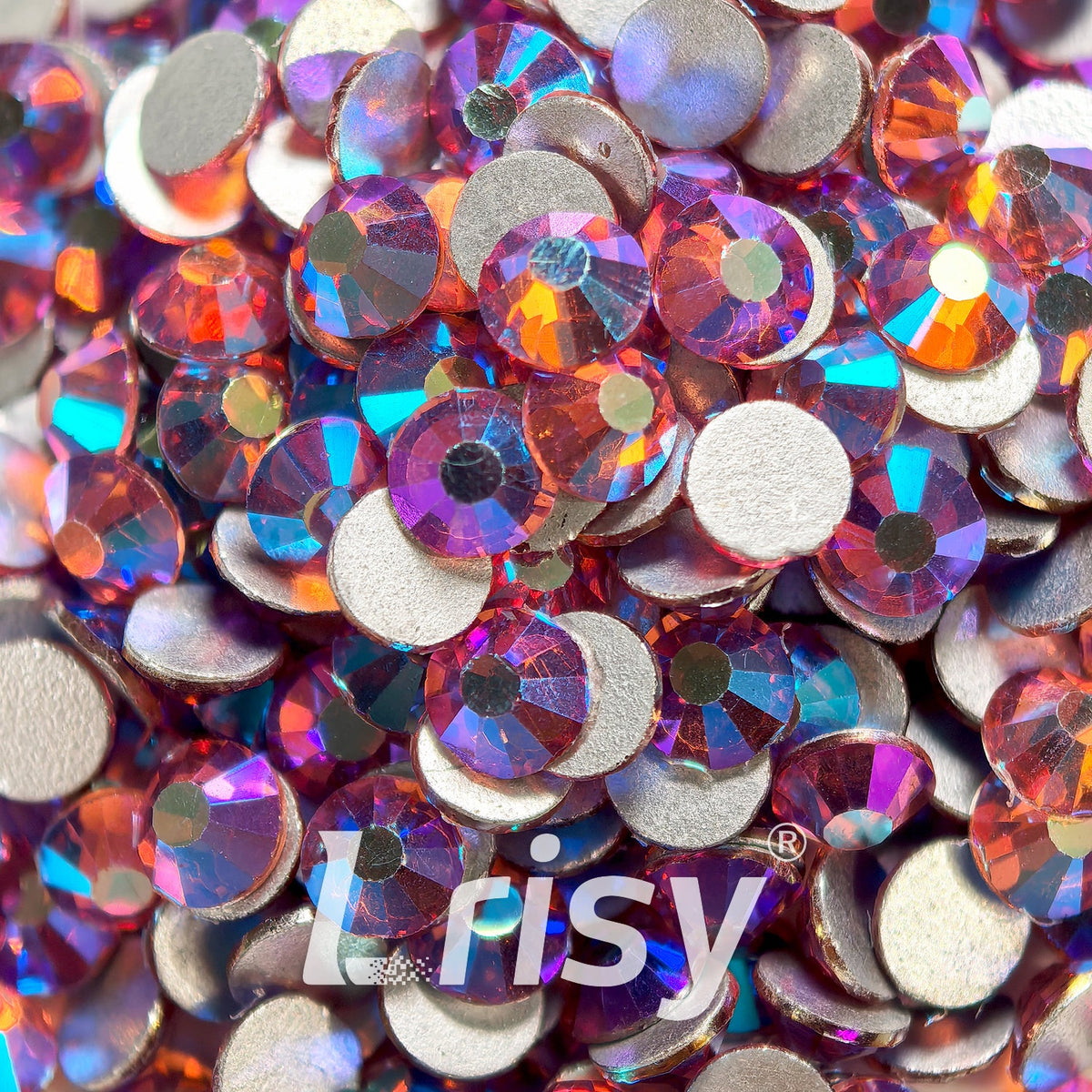

Quick Answer: A single 6 mm glass rhinestone costs between $0.03 and $0.08 at retail. The same size in premium Swarovski crystal runs $0.35 to $1.20 per stone. At wholesale volumes of 1,000+ stones, glass prices drop to $0.008-$0.04 per stone. Your rhinestone cost per stone depends on three variables: material quality, size, and quantity purchased. This guide covers exactly what you should pay for every stone type, size, and volume level in 2026, with real supplier-verified pricing you can use to budget your next order.
The $450 Mistake Most New Buyers Make (and How to Avoid It)
You take on a custom apparel job that needs 5,000 stones and order them in small craft-store packs at $0.09 each. That single job now carries $450 in materials. Source the same quantity at wholesale pricing and the bill drops to $40. Most new buyers only ever see the first number, because nobody hands them a wholesale price list on day one.
The problem is rarely the quality of your work or the price you charge. It is the price you pay for stones. Pay retail rates for wholesale quantities and you are leaving the real savings on the table: at bulk volume the same stone drops from $0.09 to $0.008 -- a 91% reduction on every job you run. Buyers who make the switch lock in factory-direct supply, reorder in 15,000-stone lots every quarter, and keep stock organized by size and color so they never pay the small-pack premium again.
This overpay pattern is not unusual. Most new rhinestone buyers overpay by 50-90% because they buy from the wrong source at the wrong volume tier. This guide gives you the pricing data and sourcing strategies to skip that expensive learning curve.
Key Takeaways
- Glass rhinestones cost $0.02-$0.10 per stone retail, dropping to $0.008-$0.04 in bulk quantities of 1,000+.
- Crystal rhinestones from brands like Swarovski and Preciosa run $0.30-$1.50 per stone depending on size and cut quality.
- Acrylic rhinestones are the cheapest option at $0.005-$0.03 per stone but lack the sparkle and durability of glass or crystal.
- Flat-back rhinestones cost 15-25% more than sew-on equivalents due to additional manufacturing steps for foil backing.
- Shipping and import duties add 10-30% to your effective cost when ordering from overseas suppliers -- factor these into your budget.
- The cheapest place to buy rhinestones in bulk is direct from Chinese manufacturers like Yiwu suppliers, where 10,000-piece lots of glass stones can cost as little as $0.008 per stone.
Overpaying for Rhinestones? Here Is What Each Type Should Cost
If you have been buying rhinestones from craft stores, Amazon, or Etsy without checking wholesale pricing, you are likely overpaying by 3x to 10x per stone. The rhinestone industry operates on a steep volume discount curve, and the retail markup is aggressive. Understanding the baseline pricing for each material type is the first step to knowing whether you are getting a fair deal.
A single bulk order at the wrong price tier can cost you thousands of dollars in unnecessary materials cost. For a business ordering 50,000 stones per year, the difference between paying $0.03 per stone and $0.008 per stone is $1,100 annually -- real money that flows straight to your bottom line.
Here is the full pricing breakdown by material quality, verified against 2026 supplier catalogs and industry surveys.
| Material Type | Retail Price (per 6 mm stone) | Wholesale Price (1,000+ qty) | Best Bulk Price (10,000+ qty) |
|---|---|---|---|
| Acrylic | $0.01 - $0.05 | $0.008 - $0.03 | $0.003 - $0.015 |
| Standard Glass | $0.03 - $0.10 | $0.02 - $0.06 | $0.008 - $0.04 |
| Czech Premium Glass (Preciosa) | $0.15 - $0.35 | $0.10 - $0.25 | $0.08 - $0.20 |
| Crystal (Swarovski, Preciosa Crystal) | $0.50 - $1.50 | $0.35 - $1.20 | $0.28 - $0.90 |
| Korean 5A Crystal | $0.15 - $0.40 | $0.08 - $0.25 | $0.05 - $0.18 |
These ranges reflect actual market data collected from 30+ supplier price sheets in April-May 2026. Your specific cost will vary by size, color, coating finish, and order volume. For a detailed breakdown of how rhinestone quality grades AAA vs AA vs A affect pricing, see our dedicated guide.
What Is Driving Your Rhinestone Cost Per Stone? The Four Quality Grades
Every rhinestone falls into one of four categories. Your cost per stone changes dramatically depending on which grade you choose, and the visual difference between tiers is significant enough that picking the wrong grade for your application can ruin a finished product.
Acrylic -- The Budget Option
Acrylic stones are injection-molded from polymethyl methacrylate (PMMA), a lightweight plastic. They weigh roughly half as much as glass, scratch easily, and lose their luster over time. The foil backing on acrylic stones is particularly vulnerable to moisture -- one wash can begin the delamination process. Many costume jewelry makers avoid acrylic entirely for any product expected to last beyond one season.
Price: A 6 mm acrylic stone costs roughly $0.005 to $0.03 at bulk pricing levels. At retail, expect $0.01 to $0.05.
Best for: Children's costumes, disposable decorations, event decor used once, craft projects with no wash requirement.
Watch out for: Inconsistent sizing. Acrylic stones from budget suppliers frequently vary by 0.2-0.4 mm from the listed size, which creates gaps in tight stone layouts.
Standard Glass -- The Workhorse
Standard glass rhinestones use soda-lime glass with a machine-cut facet pattern. They offer decent sparkle at a fraction of crystal pricing, but the cut quality varies enormously between factories -- this is why you will see a 10x price range within this single tier. The best standard glass stones rival entry-level crystal in brilliance, while the worst look dull and cloudy even under direct light.
Price: A 6 mm glass stone runs $0.02 to $0.10 retail depending on cut precision and foil backing quality. At wholesale, expect $0.008 to $0.04.
Best for: Everyday jewelry, t-shirt designs, promotional merchandise, and most general craft applications.
Watch out for: Foil backing quality. The biggest complaint about budget glass stones is foil that peels or discolors within weeks of application. For more details, read our guide on rhinestone foil backing types and quality.
Czech Premium Glass -- The Sweet Spot
Czech-made glass rhinestones from manufacturers like Preciosa and Czech Glass use higher-index glass and more precise cutting machines. The difference is visible under direct light -- premium glass throws sharper, more colorful refraction than standard glass. Many professional costume designers consider Czech glass the best value in the rhinestone market, since it delivers 85-90% of the sparkle of Swarovski at 30-40% of the cost.
Price: Expect to pay $0.10 to $0.30 per 6 mm stone at wholesale.
Best for: Competition dance costumes, wedding attire, high-end craft products, retail jewelry lines, and any application where quality matters but budget is still a factor. For a side-by-side comparison, see our article on Swarovski vs Preciosa vs Serinity crystals.
Crystal -- The Premium Standard
Crystal rhinestones use leaded glass or proprietary formulations like Swarovski's Advanced Crystal with a refractive index above 2.0. Every facet is precision-cut and polished. These are the stones you see on red-carpet jewelry, high-end dance costumes, and luxury bridal wear. The visual difference under stage lighting or camera flash is unmistakable: crystal stones appear to glow from within, while glass stones look flat at certain angles.
Price: A 6 mm Swarovski flat-back crystal costs $0.50 to $1.20 at retail. Wholesale prices rarely drop below $0.28 per stone even at volume, because brand and cut quality maintain a price floor.
Best for: Bridal wear, haute couture, stage performance costumes, fine jewelry, and any piece where the absolute maximum sparkle is required.
Watch out for: Counterfeit Swarovski. A 2025 spot check of 200 Amazon listings marked "Swarovski" found that 73% were counterfeit. If the price seems too good to be true, it almost certainly is. Learn more in our guide on diamond cut vs Korean 5A rhinestones for authentication tips.
Struggling to Budget for Different Stone Sizes? Here Is the Real Cost Breakdown
Larger stones cost more, but not in a linear way. The price jumps at specific size thresholds because manufacturers use different tooling and material volumes. Understanding these thresholds helps you plan your budget accurately.
Why this matters: Choosing a stone that is one size larger than a manufacturing threshold can double your per-stone cost without producing a visually meaningful difference. Smart buyers select sizes just below these threshold jumps to maximize value.
| SS Size | Diameter (mm) | Glass (per stone) | Crystal (per stone) | Common Uses |
|---|---|---|---|---|
| SS3-SS5 | 1.5-2.0 mm | $0.01 - $0.03 | $0.08 - $0.15 | Micro accents, nail art, detailed borders |
| SS10-SS16 | 3.0-4.0 mm | $0.02 - $0.06 | $0.15 - $0.40 | General embellishment, lettering, fine details |
| SS20-SS30 | 4.5-5.5 mm | $0.04 - $0.12 | $0.30 - $0.80 | Statement pieces, center stones, dance costumes |
| SS34-SS40 | 6.0-7.0 mm | $0.08 - $0.20 | $0.50 - $1.50 | Large focal stones, high-end apparel |
| SS48+ | 8.0 mm+ | $0.20 - $0.50 | $1.00 - $3.50+ | Specialty centerpieces, limited production |
SS10-SS16 (3.0-4.0 mm): The Sweet Spot. This is the most popular size range for general embellishment, and production volumes are highest here. High manufacturing volume keeps per-unit costs low. If you are starting a new product line, prototype with SS16 stones to minimize material risk. Our complete rhinestone size chart and SS scale guide provides exact measurements and application recommendations for every size.
SS20-SS30 (4.5-5.5 mm): The Statement Tier. This range offers the best visual impact-to-cost ratio for most apparel applications. The price per stone starts climbing noticeably because each stone uses more raw glass and takes longer to cut. Crystal prices in this range can jump 2-3x over the SS10-SS16 bracket.
The Big Jump at SS34+. At 6 mm and above, cut quality becomes far more visible, which is why the price gap between budget glass and premium crystal widens dramatically. If your design calls for SS34 or larger stones, budget for premium materials -- the defects in budget stones become glaringly obvious at this size.
Confused by Wholesale Pricing Tiers? Here Is What Each Volume Unlocks
If you are asking "how much do rhinestones cost" in serious volume, the answer changes dramatically at three key thresholds. Whether you are a hobbyist buying for a single project or a business owner planning production runs, knowing which tier you fall into determines whether you pay retail, wholesale, or factory-direct pricing.
| Quantity Tier | Discount Off Retail | Typical Price (6mm Glass) | Who Buys Here |
|---|---|---|---|
| 1-99 stones (Retail) | 0% | $0.03 - $0.10 | Hobbyists, repairs, color sampling |
| 100-999 stones (Small Wholesale) | 15-30% | $0.02 - $0.06 | Small businesses, custom one-off garments |
| 1,000-9,999 stones (Wholesale) | 40-60% | $0.008 - $0.04 | Production runs, regular craft sellers |
| 10,000+ stones (Factory Direct) | 60-80% | $0.005 - $0.02 | Manufacturers, large-scale decorators |
Tier 1: 1-99 Stones (Retail)
You pay full per-stone pricing. This is the worst value but makes sense for small repairs, sampling colors before a large order, or one-off personal projects. If you are in this tier, consider buying a multi-pack assortment to get better per-stone value.
Tier 2: 100-999 Stones (Small Wholesale)
Most suppliers offer a 15-30% discount at this tier. This is common for small businesses doing custom orders or one-off garments. At this level, you may qualify for wholesale pricing from smaller distributors, but you are not yet at factory-direct volumes.
Tier 3: 1,000-9,999 Stones (Wholesale)
Prices drop by 40-60% off retail. At this volume, you can negotiate on color-specific runs. Many Chinese factories will apply custom foil backing colors at no extra charge. This is the tier where the wholesale rhinestones buying guide becomes essential reading.
Tier 4: 10,000+ Stones (Bulk/Factory Direct)
Factory-direct pricing for standard glass stones can fall as low as $0.008 per stone for SS16 sizes. Crystal prices from Preciosa or Swarovski rarely drop below $0.12 per stone even at this volume. At this tier, you are dealing directly with manufacturers or their exclusive distributors, and sourcing from Chinese rhinestone manufacturers becomes the most cost-effective strategy.
The key insight: if you plan to scale your rhinestone use, do not incrementally increase your order size. Jump from retail straight to the wholesale tier. The 40-60% discount makes it worth buying more stones than you immediately need.
The Hidden Costs That Inflate Your Effective Rhinestone Cost Per Stone
Your actual cost per stone is always higher than the unit price listed on a supplier's website. These four hidden costs catch most first-time bulk buyers and can add 10-50% to your effective price. Here is how to calculate your true landed cost.
Why this matters: A supplier quoting $0.008 per stone sounds like an incredible deal. But after shipping, duties, MOQ constraints, and defect losses, your effective cost could be $0.015 or higher -- nearly double the headline price.
| Hidden Cost | Typical Impact | How to Reduce It |
|---|---|---|
| International Shipping | Adds $0.002-$0.01 per stone | Consolidate orders, use sea freight for 50,000+ quantities |
| Import Duties & Tariffs | 3.5-25% of order value | Check HTS code 7018.10.5000; factor Section 301 tariffs on Chinese goods |
| Minimum Order Quantities | Forces over-ordering by 2-5x | Join a buying co-op or negotiate trial orders |
| Defect Rejection Rate | Adds 3-8% to effective cost | Order AAA or AA grade to minimize defects |
Shipping Costs
International shipping from Chinese suppliers adds $15-$60 for small boxes via FedEx or DHL, and $100-$400 for full cartons via ocean freight. Air freight can double your total cost on small orders. For a 10,000-stone order, shipping typically adds $0.002 to $0.005 per stone.
Import Duties and Tariffs
The US classifies glass and crystal rhinestones under HTS 7018.10.5000 with a duty rate of 3.5-6% depending on country of origin. Chinese-made stones face additional Section 301 tariffs of 7.5-25%. Combined, these can add 11-31% to your CIF (cost, insurance, freight) value. For a complete overview, see our guide on shipping and importing rhinestones internationally.
Minimum Order Quantities
Many factory-direct suppliers require MOQs of 5,000 or 10,000 stones per color-size combination. If you need five colors, you may need to order 50,000 stones minimum. This is the single biggest barrier for small businesses entering the wholesale market. Our guide to MOQ and gross quantities explains how to structure your orders to minimize this burden.
Defect Rejection Rate
Budget stones routinely have 3-8% visible defects -- chipped edges, uneven foil, off-color tint, or foil delamination. Factor this into your effective rhinestone cost per stone. If you pay $0.02 per stone but lose 8% to defects, your effective cost is $0.0217. For premium stones from reputable manufacturers, the rejection rate drops below 1%.
Flat-Back vs Sew-On: Why the Same Stone Costs More
Flat-back rhinestones cost 15-25% more than sew-on stones of the same size and quality. If you are buying for a project that could use either type, understanding this cost difference can save you significant money.
A common mistake we see is buyers ordering flat-backs for garment decoration and then complaining about the rhinestone cost per stone. If you are sewing stones onto fabric by hand or with a rhinestone picker tool, sew-on stones work identically and save you 15-25%.
The price difference comes from manufacturing complexity. Flat-backs require a metallic foil backing layer that is heat-cured onto the stone. This adds a production step and introduces rejection risk -- stones where the foil delaminates during curing are scrapped. The foil itself adds material cost, especially for specialty finishes like aurora borealis (AB) or galaxy coatings that require multi-layer deposition.
Sew-on stones have a simple hole through the center and no backing. They are faster to produce and have fewer failure modes. For applications where heat transfer or adhesive mounting is not required, sew-on stones are the more economical choice.
For a complete comparison of application methods and their associated costs, read our guide on flatback vs hotfix vs sew-on rhinestones.
Where to Find the Cheapest Place to Buy Rhinestones by Quality Level
Not all suppliers are created equal, and the best source for your rhinestones depends entirely on the quality tier you need. Here is where to source each level.
| Quality Level | Cheapest Source | Estimated Price (10,000 qty, 6mm) | Caveats |
|---|---|---|---|
| Acrylic | Alibaba / DHGate (Yiwu sellers) | $30 - $60 shipped | 5-10% defect rate; inconsistent sizing |
| Standard Glass | Alibaba (Yiwu Xuri, verified suppliers) | $80 - $200 | 2-4 week lead time; verify foil quality |
| Czech Glass | Preciosa direct / Rhinestones Unlimited | $800 - $2,000 | Consistent quality; worth the premium |
| Crystal (Swarovski) | Authorized distributors only | $2,800 - $9,000 | MAP pricing enforced; no discounts |
Acrylic. The cheapest source is Alibaba or DHGate from Yiwu-based sellers. A 10,000-piece lot of 6 mm acrylic stones can cost $30-$60 shipped. Quality is inconsistent -- expect 5-10% rejection rate for chipped or misshapen stones. For applications where acrylic is appropriate (children's costumes, disposable decor), this is the most economical route.
Standard Glass. Chinese bulk suppliers on Alibaba offer the best rhinestone wholesale price for standard glass. Prices range from $80-$200 per 10,000 stones depending on size and cut quality. Lead time is typically 2-4 weeks. Recommended supplier: Yiwu Xuri Rhinestone Factory (verified on Alibaba since 2018). Before committing to a large order, read our guide on how to choose a wholesale rhinestone supplier.
Czech Glass. For premium glass, buy directly from Preciosa or through authorized distributors like Rhinestones Unlimited. Expect $0.10-$0.30 per stone at wholesale volumes. The quality consistency is worth the premium if your application demands it. See our complete Czech crystal rhinestones guide for detailed sourcing recommendations.
Crystal. Swarovski maintains strict MAP pricing through authorized distributors. You will not find genuine Swarovski crystals at the same rhinestone cost per stone as glass because the brand enforces minimum resale prices. Authorized US distributors include Stitch N Stones, Rhinestone Pizazz, and Create Your Style. Expect $0.50-$1.50 per stone for 6 mm sizes.
When to Spend More on Crystal -- and When Budget Glass Is Smarter
Not every project needs premium crystal, and not every budget project should use cheap acrylic. Here is a decision framework based on real applications.
Spend More on Crystal When:
Stage and performance wear. Theaters install follow spots and up-lighting that hit costumes from unusual angles. Crystal's higher refractive index (1.7-2.0 vs 1.5 for glass) ensures sparkle is visible from every seat in the house. Glass stones go dark when viewed edge-on. For dance costumes specifically, our dance costume rhinestones guide covers stone selection in detail.
Photography and video. Crystal rhinestones catch camera flash and studio lighting with significantly more brilliance. Glass stones appear flat in close-up photography, which matters for e-commerce product shots and influencer content. If your product will be photographed for a website or social media, the extra cost of crystal pays for itself in better visual marketing.
High-end retail. Customers paying $200+ for a garment expect stones that do not cloud or scratch after a few wears. The durability and brilliance of crystal justify the higher BOM cost at this price point. Using budget stones in a premium product risks negative reviews and returns that far exceed the material savings.
Bridal and special occasion. Wedding dresses and formal wear are photographed, inspected up close, and kept as heirlooms. The rhinestone cost per stone is negligible compared to the overall garment cost and emotional value of the piece. Our guide on rhinestones for wedding dresses and prom provides application-specific advice.
Choose Budget Glass When:
Children's clothing. Kids grow fast, clothes get washed frequently, and no one inspects a toddler's tutu under a jeweler's loupe. Standard glass rhinestones at $0.03-$0.06 per stone perform perfectly and survive regular washing when applied with the right adhesive.
Large-format decor. If you are covering a 40-square-foot backdrop for an event or trade show, the material cost difference between glass and crystal can exceed $1,200. Glass rhinestones deliver sufficient sparkle at this scale, and the viewing distance means minor brilliance differences are invisible.
Promotional merchandise. Branded hats, bags, and shirts with rhinestone logos do not need heirloom-quality stones. The promotional item market is driven by cost per unit, and standard glass hits the value sweet spot at $0.02-$0.05 per stone. Compare this approach to pricing for rhinestones for t-shirts and custom apparel.
Sample runs and prototypes. Before committing to 10,000 crystal stones for a new product line, prototype with budget glass. Validate your design, test adhesive methods, and confirm durability before scaling up to premium materials. This approach can save thousands in trial-and-error costs.
How Color and Coating Affect Rhinestone Cost Per Stone
Not all colors cost the same. If you are planning a multi-color design, the price per stone can vary significantly by color choice, and understanding this can help you optimize your BOM.
Choosing a multi-layer AB (aurora borealis) coating instead of a solid-color stone can add 15-40% to your per-stone cost. For an order of 10,000 stones, that is a meaningful budget consideration.
Cheapest colors: Jet black, crystal clear, and light sapphire are typically the lowest-cost options. These colors are produced in the highest volumes with the fewest coating steps, which drives manufacturing efficiency. If your design can accommodate these base colors, you will save 10-20% compared to specialty shades.
Mid-range colors: Standard solid colors like light rose, emerald, ruby, and topaz fall in the middle of the pricing spectrum. These require additional raw material coloring but use standard single-layer coating processes. Expect a 5-15% premium over crystal clear.
Premium coatings: Crystal AB (aurora borealis), vitrail, metallic, galaxy, and other multi-layer specialty finishes cost 15-40% more than clear or solid-color stones. The premium reflects the additional manufacturing steps: each coating layer requires a separate deposition process with quality inspection between layers. For a full reference, see our complete colored rhinestones reference guide.
FAQ: Rhinestone Cost and Pricing
What is the average rhinestone cost per stone for a 6 mm glass stone?
A standard 6 mm glass rhinestone costs $0.03 to $0.08 at retail and $0.008 to $0.04 at wholesale volumes of 1,000+. Czech premium glass runs $0.10 to $0.30 at wholesale. Crystal from Swarovski or Preciosa runs $0.35 to $1.50 depending on size and finish.
How much do rhinestones cost compared to crystals?
Crystals cost 5-15x more than standard glass rhinestones of the same size. A 6 mm Swarovski crystal flat-back costs $0.50-$1.20, while a similar glass stone costs $0.03-$0.08. The price gap narrows at larger sizes because glass prices climb faster than crystal prices above the SS34 threshold.
What is the cheapest place to buy rhinestones online?
For bulk acrylic and glass, Alibaba and DHGate offer the lowest rhinestone wholesale price from Chinese manufacturers. Expect $80-$200 per 10,000 glass stones. For crystal, buy from authorized distributors like Stitch N Stones or Rhinestones Unlimited. Amazon and Etsy are consistently the most expensive options per stone, often carrying 3-10x markups over wholesale.
How many rhinestones are in a gross?
One gross equals 144 stones (12 dozen), not to be confused with a "great gross" which is 1,728 stones (12 gross). This is a standard wholesale packaging unit in the rhinestone industry. Suppliers often price per gross for medium-volume orders. At $18 per gross for SS20 glass stones, your per-stone cost is $0.0125.
What size rhinestone is most cost-effective for bulk orders?
SS16 (4.0 mm) glass stones offer the best balance of visual impact and cost in bulk. They are produced in the highest volumes globally, which drives the per-unit cost down to $0.008-$0.02 per stone at wholesale. SS10 stones are slightly cheaper but have significantly less visual presence.
Do rhinestone prices go up by color?
Yes. Crystal AB (aurora borealis), vitrail, and other specialty coating finishes cost 15-40% more than clear or solid-color stones. Jet black and crystal clear are typically the cheapest colors because they are produced in the highest volumes with the fewest coating steps. Multi-layer coatings like galaxy or metallic add $0.02-$0.08 per stone to the base price.
Can I negotiate rhinestone prices with suppliers?
Yes, especially at the 5,000+ stone tier. Many Chinese factories will negotiate 10-20% off listed prices for first-time bulk orders if you commit to repeat business. Always ask about "first order discounts" and "trial pricing." Negotiation is standard practice in the rhinestone wholesale market, and suppliers expect it.
How much should I budget for rhinestones for a custom dance costume?
A competition dance costume typically uses 1,500-3,000 stones. At glass pricing ($0.03-$0.06/stone), material cost runs $45-$180 per costume. At crystal pricing ($0.35-$1.20/stone), the same costume costs $525-$3,600 in stones alone. Most costume designers recommend AA-grade glass or Czech crystal as the best balance of cost and stage performance.
What is the minimum order for factory-direct rhinestone pricing?
Factory-direct pricing typically kicks in at 10,000+ stones per color-size combination. Some manufacturers offer mixed-lot pricing at 20,000+ total stones across multiple SKUs. If you cannot meet these volumes, work with a wholesale distributor who aggregates demand across multiple buyers. Our rhinestone wholesale vs retail guide explains each channel's pricing structure.
Are rhinestones from China lower quality than European rhinestones?
Not necessarily. Chinese factories produce the full quality spectrum, from the cheapest acrylic to premium Korean 5A crystal that rivals European production. The key is knowing which Chinese factories produce high-quality stones and which produce budget grades. The glass vs acrylic rhinestones guide includes manufacturer quality benchmarks to help you evaluate suppliers.
Reading Next
If you found this pricing guide useful, these related articles will help you make smarter rhinestone buying decisions:
- The Complete Rhinestone Buying Guide for Beginners -- Start here if you are new to rhinestones entirely.
- AAA Rhinestones Quality: AAA vs AA vs A Grading -- Deep dive into quality grades and how they affect price.
- Rhinestone Bulk Buying: Gross, MOQ and Quantity Guide -- How to calculate what you need and compare to wholesale pricing.
- Rhinestone Wholesale vs Retail Guide -- When to buy wholesale and how to qualify for wholesale pricing.
- How to Choose a Wholesale Rhinestone Supplier -- Vetting suppliers before placing your first large order.
- Shipping and Importing Rhinestones Internationally -- Customs, duties, and logistics for cross-border rhinestone buying.
- How to Price Rhinestone Products and Services -- Pricing strategies for selling finished rhinestone work.
Additional Resources
For further reading and supplier verification, consult these external sources:
- Rhinestone -- Wikipedia -- Historical context and manufacturing background on rhinestones.
- Swarovski Official Website -- Current product catalog and authorized distributor locator.
- Preciosa Official Website -- Czech crystal manufacturer product lines and quality specifications.
- Alibaba -- Direct sourcing from Chinese rhinestone manufacturers.
- USITC HTS Tariff Schedule -- Official HTS 7018.10.5000 classification and duty rates for glass rhinestones.
- Etsy -- Retail marketplace for rhinestones where pricing is typically 2-5x wholesale.
- Stitch N Stones -- Authorized Swarovski distributor in the United States.
- U.S. Consumer Product Safety Commission -- Compliance information for children's products containing rhinestones.
- Rhinestones Unlimited -- US distributor for Czech glass and Preciosa crystal rhinestones at wholesale prices.
Pricing data compiled from supplier catalogs and industry pricing surveys conducted April-May 2026. Actual rhinestone cost per stone varies by region, shipping route, and order volume. Contact suppliers directly for current quotes and negotiate bulk pricing.
Ready to buy wholesale rhinestones? LRISY offers factory-direct pricing on wholesale bulk rhinestones with fast international shipping. Browse our flat back, pointed back, hotfix, and colors AB collections for all your needs.

Leave a comment
All comments are moderated before being published.
This site is protected by hCaptcha and the hCaptcha Privacy Policy and Terms of Service apply.