

The right glitter for resin art must be solvent-resistant, non-bleeding, and stable in epoxy temperatures up to 120°F during curing. Standard craft glitter often fails these requirements, causing color bleed, uneven dispersion, or surface defects that ruin finished pieces. For crafters and small businesses producing resin tumblers, jewelry, and home décor, buying glitter in bulk is cost-effective — but only if you understand the technical requirements before placing large orders.
Sarah Nguyen started making resin coasters as a weekend hobby in 2023. By early 2024, her Etsy shop was processing 80 orders per month, and she was buying retail glitter in 2-ounce jars at $6 each. The costs were eating her margins alive. When she switched to bulk glitter — buying 5-pound bags of solvent-resistant holographic glitter at $14 per pound — her material costs dropped by 73%. More importantly, the bulk glitter was actually designed for resin. Her color bleed issues disappeared, her customer complaints dropped to zero, and her profit per piece jumped from $8 to $19.
This guide covers everything resin artists need to know about selecting, testing, and buying glitter in bulk.
Key Takeaways
- Solvent-resistant glitter prevents color bleed and surface defects in cured resin.
- Chunky holographic blends are the top sellers for tumblers, coasters, and jewelry.
- Bulk buying drops material costs from $48/pound (retail) to $12–$18/pound wholesale.
- Always test glitter in your specific resin brand before placing large orders.
- Store bulk glitter in airtight containers with desiccant to prevent clumping.
Why Standard Craft Glitter Fails in Resin
Not all glitter can handle the chemical and thermal environment of epoxy resin. Understanding why standard craft glitter fails helps you make better buying decisions.
Solvent Exposure
Epoxy resin contains hardeners and solvents that dissolve uncertified dyes and coatings. Standard craft glitter uses water-based or alcohol-based colorants that bleed when exposed to resin hardeners. The result: muddy colors, cloudy resin, or uneven pigment distribution. Solvent-resistant glitter has an additional polymer coating that seals the colorant, preventing chemical reaction.
Curing Temperature
Epoxy resin generates exothermic heat during curing, often reaching 110–120°F in thick pours. Some low-quality glitters use adhesives or coatings that soften, warp, or discolor at these temperatures. High-quality resin glitter is heat-stable to at least 150°F.
Density and Suspension
Glitter particles have different densities depending on material and thickness. In resin, heavier particles sink while lighter ones float. The best glitter for resin is specifically cut to a thickness that suspends evenly throughout the curing process without excessive sinking or floating.
Types of Glitter for Resin Applications
Different resin projects benefit from different glitter types. Here is how to match glitter to your product line. If you are still deciding between a chunky and a fine cut, our size comparison explains the trade-offs first.
Fine Glitter (0.008" – 0.015")
Fine glitter creates a smooth, metallic finish with subtle sparkle. It is ideal for:
- Coaster surfaces where a glass-like finish is desired
- Jewelry where texture should be minimal
- Geode-style art where fine lines and veins are part of the design
- Tumblers where a satin shimmer works better than bold sparkle
Fine glitter suspends well but can create a cloudy effect if overused. Limit to 1–2% of total resin volume by weight.
Chunky Glitter (0.040" – 0.062")
Chunky glitter is the bestselling format for resin art. Its large reflective surface catches light dramatically and creates depth in clear resin. Popular uses:
- Tumbler wraps and inclusions
- Coaster inclusions and borders
- Tray and dish decorative layers
- Keychains and charms
Chunky glitter is forgiving to work with, mixes easily, and provides immediate visual impact. It is also the most cost-effective per pound.
Holographic and Iridescent
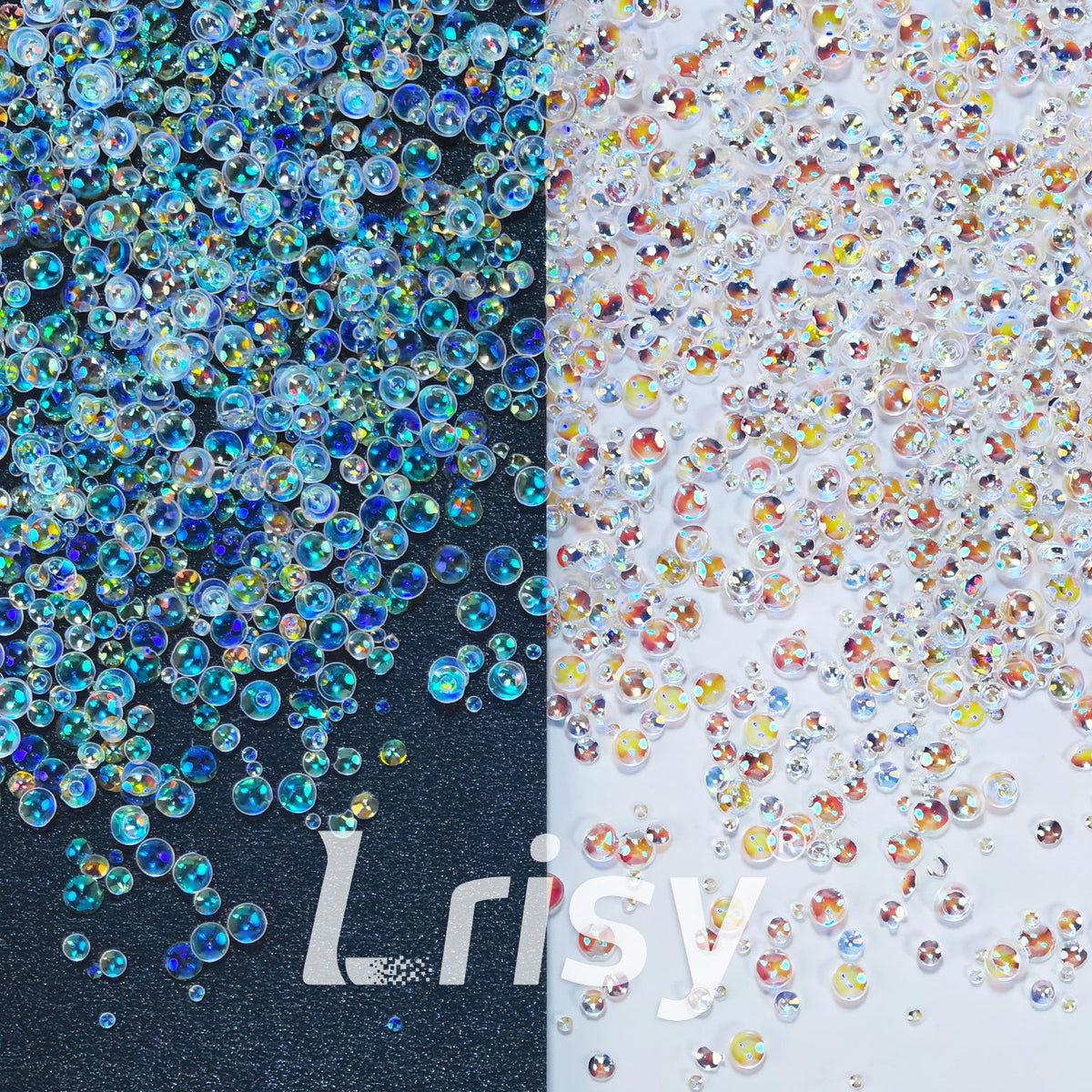
Holographic glitter diffracts light into rainbow patterns. Iridescent shifts between two colors depending on angle. Both are premium finishes that command higher prices for finished products. In resin, holographic glitter is especially effective in clear or lightly tinted resin, where the full light-play is visible.
Glow-in-the-Dark and UV-Reactive
Specialty glitters add unique selling propositions to resin products. Glow-in-the-dark glitter absorbs light and emits a soft glow for hours. UV-reactive glitter fluoresces under blacklight, making it popular for festival and party products. Both types are available in bulk but cost 30–50% more than standard finishes.
Shapes and Custom Cuts
Beyond standard hexagonal cuts, resin artists use glitter in shapes like stars, hearts, moons, and letters. These are popular for themed products (holiday coasters, wedding favors, baby shower gifts). Custom shapes typically require higher minimum orders but create products that are impossible to replicate with standard glitter.
Bulk Buying Strategy for Resin Artists
Buying glitter in bulk is essential for profitability, but it requires planning.
Cost Comparison: Retail vs. Bulk
| Purchase Method | Price per Pound | Annual Cost (20 lbs) | Savings |
|---|---|---|---|
| Retail (2-ounce jars) | $48 | $960 | Baseline |
| Small bulk (1-pound bags) | $24 | $480 | 50% |
| Wholesale (5-pound bags) | $14 | $280 | 71% |
| Factory direct (20+ lbs) | $10 | $200 | 79% |
For a business producing 50 resin pieces per week, annual glitter consumption is roughly 15–25 pounds. Bulk buying is not optional for profitability.
Color Palette Planning
Resist the urge to buy every color. Successful resin artists typically work with a curated palette of 8–12 core colors plus 3–4 seasonal rotating colors. A recommended starter palette:
- Neutrals: Gold, silver, rose gold, black, white
- Basics: Red, blue, green, purple
- Trending: Holographic silver, iridescent white, chunky holographic mix
Buy neutrals in the largest quantities (they sell year-round). Buy trending colors in smaller lots and rotate based on seasonality.
Testing Before Scaling
Always test new glitter in your specific resin brand before placing bulk orders. Resin formulations vary significantly between manufacturers, and a glitter that performs perfectly in ArtResin may behave differently in ProMarine or Stone Coat. Test for:
- Color bleed after 24 hours
- Suspension quality during curing
- Surface clarity after full cure
- Adhesion to the resin matrix
- Heat stability during exotherm
Request samples from suppliers or buy 1-pound test bags before committing to 5+ pound orders.
Storage and Handling for Bulk Inventory
Glitter is sensitive to humidity, light, and contamination. Poor storage turns a cost-saving bulk purchase into wasted inventory.
Airtight Containers
Transfer bulk glitter from supplier packaging into airtight containers immediately upon receipt. Glass jars with rubber seals or thick-walled plastic containers with locking lids work best. Avoid thin zip bags, which tear and leak.
Desiccant Packs
Include silica gel desiccant packs in every storage container. Humidity causes clumping, which makes glitter difficult to measure and mix evenly. In extreme cases, moist glitter can mold. Replace desiccant packs every 3–6 months.
Labeling System
Label every container with:
- Color name and supplier batch number
- Purchase date
- Particle size
- Solvent-resistant yes/no
- Special properties (glow, UV, holographic)
A clear labeling system prevents costly mistakes — like accidentally using non-solvent-resistant glitter in a large batch.
Inventory Rotation
Use first-in, first-out (FIFO) rotation. While PET glitter has a long shelf life, colors can shift slightly over time, and specialty coatings (glow, UV) degrade faster. Label and rotate stock to ensure customers receive the freshest product.
Pricing Your Resin Products with Bulk Glitter
Lower material costs should translate into competitive pricing or higher margins — ideally both.
Cost Calculation Example
A typical resin tumbler uses:
- Resin: $3.50
- Glitter (bulk): $0.80
- Tumbler blank: $4.00
- Other materials: $1.50
- Total materials: $9.80
At retail pricing of $35–$45 per tumbler, the material cost represents 22–28% of revenue. When Sarah was buying retail glitter at $3.50 per tumbler worth of glitter, her material cost was 35% of revenue. The switch to bulk glitter improved her margin by 13 percentage points.
Wholesale to Retailers
If you sell finished resin products to boutiques or gift shops, standard wholesale pricing is 50% of retail. Your material costs must be low enough to absorb this discount and still leave a profit. Bulk glitter purchasing is what makes wholesale pricing viable for small resin businesses.
Conclusion
Glitter is not an afterthought in resin art. It is the defining visual element that customers pay for. Buying the right glitter in bulk transforms your resin business from a low-margin hobby into a profitable product line. The key is understanding the technical requirements — solvent resistance, heat stability, suspension quality — and testing thoroughly before scaling.
Start with a curated color palette, buy from suppliers who understand resin applications, and store your inventory properly. The savings from bulk buying compound quickly, and the quality improvement from using resin-specific glitter is immediately visible in your finished products.
Ready to switch to bulk glitter for your resin business? Order sample packs from three suppliers, test them in your resin brand, and compare color stability, suspension, and price. The right supplier relationship will support your growth from hobbyist to full-time creator.

Leave a comment
All comments are moderated before being published.
This site is protected by hCaptcha and the hCaptcha Privacy Policy and Terms of Service apply.