
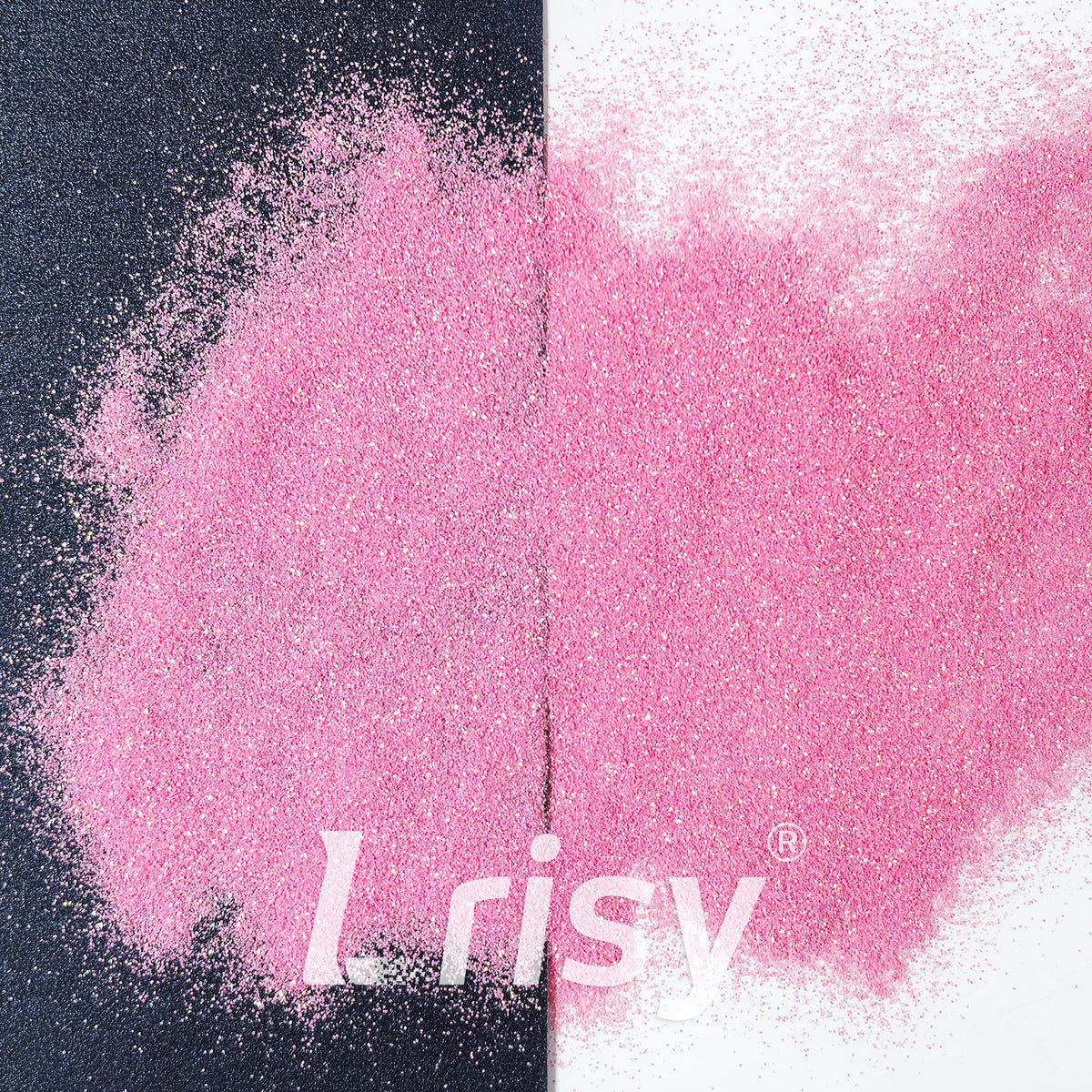

Quick Answer: Certified biodegradable glitter costs $45–$65 per pound wholesale, roughly 2–3x standard PET, and is the fastest-growing segment of the glitter market, driven by the EU's Regulation 2023/2055, which has banned loose plastic glitter since October 2023. But the price and the "bio" label are not the real story: only glitter with a third-party certificate (OECD 301, TÜV OK Compost, or EN 13432) is exempt from the ban, and "bio-coated" PET, plastic with a thin biodegradable shell, is the most common greenwashing trap in the market. This 2026 guide covers what biodegradable glitter actually is, how to verify claims without getting burned, the pricing to benchmark any quote against, and how to source certified product in bulk for an eco brand.
When the EU's microplastic ban landed, a California cosmetics brand that had built its entire identity on "clean glitter" discovered its bestselling line was not biodegradable at all. The glitter had a bio-coating over a PET core — still plastic, still a microplastic, and suddenly facing removal from EU shelves.
The brand had bought on the label, not the certificate.
"We bought on the label, not the certificate," the brand's founder says. "The rebrand cost us six months and a full relaunch. If we had asked for the OECD 301 certificate on day one, we would have saved the whole fiasco." That six-month reset is the real price of skipping verification — not the $45–$65-per-pound premium, but the lost shelf space, the recalled inventory, and the trust that takes years to rebuild.
This guide exists so your brand does not make that mistake. It covers what biodegradable glitter actually is, why the EU ban is reshaping the entire glitter supply chain, how to verify a real claim in about ten minutes, what it costs in 2026 at every grade, and how to source it in bulk, with the specific certifications, MOQ tiers, and supplier checks that separate certified product from greenwashed plastic.
Key Takeaways
- Certified biodegradable glitter runs $45–$65/lb wholesale: fine cellulose $45–$55, chunky $50–$60, holographic $55–$65, custom blends $60–$80, with MOQs starting at 5–50 lb.
- EU Regulation 2023/2055 banned loose plastic glitter outright in October 2023; cosmetics phase out by 2027–2035, with microplastic labeling from 2031 and ECHA emission reporting from May 2026.
- Verify certification, never trust the label: demand OECD 301, TÜV OK Compost, or EN 13432 with a batch number that matches your lot, "bio-coated" PET is a greenwashing trap.
- Biodegradable does not mean skin-safe. For body and cosmetic use, still require cosmetic-grade certification (FDA-compliant pigments, rounded edges) as a separate, independent check.
- Only truly biodegradable glitter is exempt from the EU ban; PET-based glitter with any coating still sheds microplastics and is restricted in the EU.
- This is the fastest-growing high-margin segment: the premium is narrowing to 1.5–2x by 2028 as production scales, and the regulatory tailwind is removing plastic competition from your market.
Why Your "Biodegradable" Glitter Might Still Be Plastic
Here is the uncomfortable truth about the eco glitter market in 2026: a large share of what is marketed as biodegradable is not. The term has become a marketing label worn by everything from genuinely plant-based cellulose to ordinary PET plastic with a thin coating. If you cannot tell the difference, you will pay the eco premium for a product that still ends up banned in Europe and still sheds microplastics.
"Biodegradable" is not a regulated term the way "organic" is in food, so any seller can print it on a label. The visual difference between bio-coated PET and true cellulose is nearly invisible to the naked eye; both look, feel, and sparkle like glitter. The only reliable way to separate them is documentation, and most buyers never ask for it. That is the gap greenwashers exploit.
The three materials that are genuinely biodegradable are plant-based cellulose (often from eucalyptus wood pulp), PLA (polylactic acid, a plant-derived polymer), and mica (a natural mineral). PET (polyester, the same plastic used in soda bottles) is not biodegradable no matter what you coat it with. The table below is the fastest way to sort the family.
| Type | Base Material | Biodegradable? | Best For |
|---|---|---|---|
| Cellulose glitter | Plant-based cellulose (e.g., eucalyptus) | Yes | Crafts, decor, cosmetics, festival |
| PLA glitter | Polylactic acid (plant-derived polymer) | Yes | Resin-safe, heat-rated applications |
| Mica glitter | Natural mineral flakes | Yes | Cosmetics, natural-color decor |
| Bio-coated PET | PET core + thin bio coating | No — still plastic | ⚠️ Avoid for eco claims; restricted in EU |
| Standard PET polyester | PET plastic film | No | Durable permanent crafts (non-EU markets) |
Material choice is a buying decision, not a slogan: the base material determines whether your product survives regulation, how it performs in your application (PLA handles resin heat; cellulose is softer and more fragile), and what you can honestly claim to customers. A brand that cannot name the base material of its "biodegradable" glitter does not have a real product; it has a label. Before you buy any eco line, cross-reference the base material against the manufacturer's bulk glitter powder collection so you know exactly what a certified product looks like on paper.
The EU Microplastic Ban: What It Actually Means for Glitter Buyers
The single biggest force reshaping the glitter market is regulatory, and understanding it is essential for any buyer selling into Europe or eco-conscious markets. The EU's Regulation 2023/2055 (formally REACH Annex XVII Entry 78) restricts synthetic polymer microparticles below 5mm that are intentionally added to products. Loose glitter, as a synthetic polymer microparticle, falls directly under it.
The restriction is immediate and retroactive: loose plastic glitter was banned from being placed on the EU market on October 17, 2023, with no transition period for the loose form. That is not a future regulation to plan around; it is already in force. Biodegradable, soluble, natural, or inorganic glitter is exempt, provided it meets strict biodegradability criteria. The restriction is expected to prevent roughly 500,000 tonnes of microplastics from entering the environment over 20 years, and it is spreading: US event organizers and retailers are adopting venue-level and store-level bans that copy the EU logic.
The 2026–2035 compliance timeline
| Date | Milestone | Who It Affects |
|---|---|---|
| Oct 17, 2023 | Loose plastic glitter banned immediately | All EU sellers of loose PET glitter |
| May 31, 2026 | ECHA emission reporting deadline for manufacturers | Manufacturers, importers of restricted substances |
| Oct 16, 2027 | Rinse-off cosmetics phase-out | Body washes, scrubs, cleansers with glitter |
| Oct 16, 2029 | Leave-on cosmetics phase-out | Moisturizers, sunscreen, body glitter products |
| From 2031 | "Contains microplastics" labeling required | Any remaining exempted plastic products |
| Oct 16, 2035 | Makeup, lips, and nails phase-out | Nail polish, makeup with plastic glitter |
The timeline doubles as a buying roadmap: every milestone is a deadline for a different buyer. Cosmetic and nail brands have hard phase-out dates from 2027 to 2035 and should switch to certified biodegradable (plus cosmetic-grade) now to avoid a rushed, expensive conversion later. Craft sellers in the EU lost the loose-PET option in 2023 already. And the May 2026 reporting deadline means manufacturers are cleaning their supply chains this year; which is precisely why eco-certified stock is tightening and prices on verified product are firming. For the full regulatory breakdown and compliance checklist, LRISY's biodegradable glitter wholesale guide is the definitive read for eco buyers, and the official restriction text is published on the ECHA microplastics page for anyone who wants the legal language directly.
How to Verify "Biodegradable" Claims: The 10-Minute Greenwashing Check
The single most important skill in eco glitter buying is verifying claims, because the market is full of products that look biodegradable and are not. The good news is that verification does not take days or a lab; it takes about ten minutes and one question: "Show me the certificate."
Why the certificate is the only proof: the recognized standards — OECD 301 (ready biodegradability), TÜV OK Compost, and EN 13432 (industrial compostability) — are independently audited. A product that holds one of these has been tested to break down within a defined period under defined conditions. A product that only says "biodegradable" on the label has been tested by nobody. The certificate is the difference between a scientific claim and a sales pitch.
The verification checklist
- Demand a third-party certificate: OECD 301, TÜV OK Compost, or EN 13432. A "bio" label is not proof; a certificate is.
- Check the batch number matches. The certificate must correspond to the specific batch you are buying, not a generic document a supplier reuses for every product. Ask for the batch code on your quote and cross-reference it.
- Ask about the base material. Cellulose, PLA, and mica are genuinely biodegradable; PET with a coating is not. If the supplier cannot name the base material, that is the answer.
- Verify cosmetic-grade separately. Biodegradable does not automatically mean skin-safe. Body use still requires cosmetic-grade certification: an independent, separate check.
- Confirm the degradation timeline. Certified products state how long they take to break down and under what conditions (composting, soil, water). A vague "degrades naturally" is not a standard.
For an independent, skeptical view of eco-glitter performance claims, cross-check supplier documentation against the biodegradable glitter literature; it separates real certified products from marketing without a lab. And when a supplier passes the certificate check, run the same discipline through LRISY's how to choose a bulk glitter supplier checklist so you do not skip the factory-vs-reseller and spec-sheet steps.
2026 Biodegradable Glitter Pricing: The Numbers to Benchmark
Biodegradable is the premium tier of glitter, and the fastest-growing. Here is what to expect in 2026, broken down by grade so you can benchmark any quote before you commit.
| Type | Wholesale (per lb) | Wholesale (per kg) | MOQ | Typical Retail (per 100g) |
|---|---|---|---|---|
| Fine cellulose | $45 – $55 | $35 – $60 | 5–20 lb | $20 – $35 |
| Chunky cellulose | $50 – $60 | $40 – $65 | 10–30 lb | $25 – $40 |
| Holographic cellulose | $55 – $65 | $45 – $75 | 10–30 lb | $30 – $45 |
| Custom eco blends | $60 – $80 | $50 – $90 | 25 lb+ | n/a |
The premium is a growth signal, not a penalty. The biodegradable market is growing at a double-digit rate and prices are falling as production scales: the 2–3x premium over PET today is expected to narrow to 1.5–2x by 2028. For an eco brand, that premium is not a cost; it is the marketing budget that justifies a higher retail price, and it comes with a regulatory tailwind that is removing your plastic competition. Compare the full price picture across every grade (craft PET at $3.50–$5.50/lb through to biodegradable at $45–$65/lb) in our bulk glitter cost per pound guide.
Biodegradable vs. PET: When the 2–3x Premium Actually Pays Off
Not every buyer should switch to biodegradable. The premium only makes sense in specific markets, and the honest answer depends on who your customer is and where they are.
When the premium pays for itself:
- You sell into the EU or to eco-conscious buyers. Here biodegradable is no longer a differentiator; it is a market-access requirement. Conventional PET glitter cannot be legally sold as loose glitter in the EU, and retailers and event organizers increasingly demand certification.
- Your brand position is built on sustainability. For a brand whose identity is "clean" or "green," the eco premium is the cost of the claim, and end customers pay more for verified eco products, typically supporting a 30–60% retail premium over standard lines.
- You face venue-level or store-level bans. Festival organizers and retailers adopting microplastic rules will not carry plastic glitter at all. An eco-compliant line is the price of the contract.
When PET is still the right call:
- Permanent crafts like resin, where durability matters. Standard PET glitter is heat-rated to 180°C+, suspends cleanly in epoxy, and holds color for years. Certified biodegradable can be softer and less predictable in thick pours. Test before committing an entire resin line. The epoxy resin art supplies collection is a practical starting point for permanent-craft stock.
- Markets with no regulation and price-sensitive customers. If you sell only domestically in a market without microplastic rules, PET at $3.50–$5.50/lb still wins on cost, and your customers are not asking for eco.
Keep the decision market-driven: the cheapest mistake is switching for moral reasons and paying a premium your customers will not reward, or staying on PET and losing shelf space to a competitor who already certified. Run the numbers per product, not per principle. For the per-project cost math that makes the comparison concrete: a 30 oz tumbler at $0.55 on biodegradable vs $0.13 on PET. See our how much glitter do I need guide.
How to Source Certified Biodegradable Glitter in Bulk
Sourcing biodegradable in bulk follows the same discipline as any glitter purchase, with certification verification added to every single step. The process below is the order that keeps brands from getting burned.
- Shortlist certified suppliers. Ask each candidate for OECD 301 / TÜV OK Compost / EN 13432 certificates up front. Drop any that cannot produce one, there is no negotiating position on a missing certificate.
- Order samples from the actual batch. Test the product in your real application (resin, polish, packaging) and verify the certificate batch number matches the sample. A generic certificate that does not match your lot is worthless.
- Confirm MOQ and lead time. Biodegradable MOQs start around 5–50 lb; custom blends run higher. Plan for 7–15 days of production plus shipping, and book Q4 orders by early September so the eco line arrives before holiday demand peaks.
- Verify cosmetic-grade separately if the glitter touches skin. Biodegradable and cosmetic-grade are independent properties, and both must be certified in writing.
- Place a pilot order (5–10 lb) through the real purchase process — real invoice, real shipping, real inspection — before you commit a full season. A pilot order costs a few hundred dollars and reveals everything a sales call cannot.
The pilot order is non-negotiable because certification only proves that a product breaks down; it says nothing about how that product behaves in your specific resin, polish, or packaging line. Only your own test can answer that. The general supplier vetting framework (factory vs reseller, spec sheets, red flags) is covered in LRISY's how to vet a wholesale glitter supplier guide, and the wholesale buying playbook from MOQ to supplier checks is laid out in the complete wholesale glitter buying guide for business.
Biodegradable Glitter by Buyer Type: Who's Buying and Why
The eco market is not one audience. Each buyer type has a different reason to switch, a different certification requirement, and a different budget. Knowing which bucket you are in changes your whole sourcing strategy.
- Eco craft and slime brands. Parents and schools increasingly demand microplastic-free options, and certified biodegradable is now a shelf-requirement in many markets. Here the certification is the product: parents check the label, so the certificate is your marketing.
- Festival and event vendors. Venue-level glitter bans are spreading, and an eco line is becoming a contract requirement rather than a differentiator. See our bulk glitter for festival vendors guide for the seasonal stock plan and eco-compliance checks specific to events.
- Cosmetic and body-glitter brands. The 2027–2035 cosmetics phase-out makes the switch to certified biodegradable (plus cosmetic-grade) a compliance timeline, not a choice. Buyers in this lane should treat 2026 as the last low-pressure year to convert.
- Private-label brands. Eco positioning is a proven market premium. See our bulk glitter for private label brands guide for how to build an eco line with certified materials and packaging that justifies the retail premium.
- Event and decor companies. Large corporate events now specify biodegradable on their vendor requirements. For decor buyers, the eco line coexists with chunky and holographic PET for durable pieces, the split is by application, not by brand.
Buyer type changes the sourcing decision: a festival vendor needs cosmetic-grade certified biodegradable in fine sizes for body work; a slime brand needs certified product that is also safe for children's hands; a resin artist needs biodegradable only if the pour is temporary. One certificate does not serve all three: match the certification to the application, exactly as you would match particle size.
The Biodegradable vs. Cosmetic-Grade Confusion (and Why It's Dangerous)
One of the most dangerous assumptions in the eco glitter market is that "biodegradable" and "skin-safe" are the same thing. They are completely independent properties, and confusing them can put a non-cosmetic product on someone's face.
Why the two certifications answer different questions: biodegradability certification (OECD 301, EN 13432) tests what happens to the material in a composting environment. Cosmetic-grade certification (FDA 21 CFR compliant pigments, rounded edges, external-use-only) tests what happens when the material contacts skin. A cellulose glitter can be certified biodegradable and still use industrial pigments with sharp cut edges that irritate skin: the biodegradability certificate says nothing about the pigment safety.
The rule for body and cosmetic use
- Require both certifications in writing. Biodegradability for the environment, cosmetic-grade for skin. One document does not cover the other.
- Check the pigments, not just the material. Rounded edges and FDA-compliant colorants are cosmetic-grade specs. If the spec sheet does not say "cosmetic-grade," it is not.
- Never assume "natural" means safe. Mica, for example, is a natural mineral and genuinely biodegradable, but only cosmetic-grade mica is suitable for skin. Natural and skin-safe are different claims.
For the full FDA vs REACH regulatory breakdown on cosmetic glitter (the certifications, the testing, and the labeling requirements for brands selling makeup with glitter), LRISY's cosmetic glitter regulations guide is the reference, and the solvent-resistant glitter range shows how cosmetic-grade product is specified for nail and polish applications.
Common Biodegradable Glitter Fails (And How to Avoid Them)
| Problem | Root Cause | Fix |
|---|---|---|
| Product banned from EU shelf | "Bio-coated" PET purchased on label, not certificate | Demand OECD 301 / EN 13432 with matching batch number |
| Glitter irritates skin at festival booth | Biodegradable but not cosmetic-grade | Require cosmetic-grade certification separately for body use |
| Clouds or floats in resin pour | Biodegradable particle not resin-compatible | Test-cure a batch; use PLA or heat-rated product for resin |
| Certificate doesn't match the lot | Supplier reuses a generic document | Cross-reference batch codes before payment |
| Eco line arrives after holiday peak | Ignored 7–15 day lead time and Q4 booking | Book Q4 orders by early September |
The failures above are the ones that cost brands months, and all of them are preventable with three habits: ask for the certificate, check the batch number, and test the product in your own application before committing. For the per-project quantity math that sizes your eco order correctly (how many grams a tumbler, a nail set, or a festival application really uses), start with LRISY's how much glitter do I need guide.
FAQ: Bulk Biodegradable Glitter
Is bulk glitter banned in the EU?
Loose plastic glitter has been banned under EU Regulation 2023/2055 since October 2023. Genuinely biodegradable glitter is exempt. Cosmetics phase out by 2027–2035, with microplastic labeling from 2031.
How much does biodegradable glitter cost?
Wholesale runs $45–$65/lb, fine cellulose $45–$55, chunky $50–$60, holographic $55–$65, custom blends $60–$80. That is 2–3x standard PET, narrowing toward 1.5–2x by 2028. MOQs start at 5–50 lb.
How do I know glitter is really biodegradable?
Demand a third-party certificate (OECD 301, TÜV OK Compost, or EN 13432) and check the batch number matches your lot. "Bio-coated" PET glitter is a common greenwashing trap with a plastic core.
Is biodegradable glitter safe for skin and cosmetics?
Biodegradable and cosmetic-grade are independent properties. For body and cosmetic use, still require cosmetic-grade certification (FDA-compliant pigments, rounded edges) in addition to biodegradability.
What is the minimum order for biodegradable glitter?
MOQs typically start at 5–50 lb depending on type; custom eco blends run 25 lb+. Standard production takes 7–15 days, plus shipping. A 5–10 lb pilot order is the recommended entry point.
What's the difference between biodegradable and bio-coated glitter?
Biodegradable glitter is made from cellulose, PLA, or mica and breaks down in composting environments. Bio-coated glitter has a PET plastic core wrapped in a thin coating; it still sheds microplastics and is not exempt from the EU ban.
Is biodegradable glitter profitable?
Yes, it is the fastest-growing high-margin segment. End customers pay a premium for verified eco products, and EU regulation is removing plastic competition from your market.
📖 Reading Next
Continue exploring the LRISY glitter library:
- Biodegradable Glitter Wholesale Guide — the definitive regulatory and compliance read for eco buyers.
- Bulk Glitter Buying Guide — types, finishes, and MOQ math at wholesale scale.
- How to Choose a Bulk Glitter Supplier — the certification and QA checklist.
- Bulk Glitter Cost per Pound — 2026 pricing across every grade.
- How to Vet a Wholesale Glitter Supplier — red flags and sample-testing technique.
Conclusion
Biodegradable glitter is no longer a niche premium; it is the regulatory and consumer-driven future of the market. The EU's Regulation 2023/2055 has already banned loose plastic glitter, cosmetics are on a phase-out timeline to 2035, and eco-conscious buyers increasingly require certified product. The buying discipline is simple: verify certification with a third-party certificate, never trust a label, check the batch number, and confirm cosmetic-grade separately when the product touches skin. The 2–3x premium is a growth signal, not a penalty, and it narrows toward 1.5–2x as production scales.
Moving early is the real competitive move, but not for every brand. If you sell permanent resin crafts only in markets without microplastic rules, keep PET: the premium is a cost your customers will not reward. Everywhere else, moving first pays: buyers who move early get the margin and the market positioning while plastic competition is being removed around them. Buyers who wait will do a rushed, expensive conversion under regulatory pressure, and that conversion is the six-month rebrand and relaunch the California cosmetics brand endured.
Ready to build an eco-compliant glitter line? Start with a glitter sample set to test certified options, review the biodegradable wholesale guide, and explore LRISY's glitter powder collection for eco-certified options at factory-direct prices. Verify the certificate, test the batch, and let the regulatory tailwind work for you.


Leave a comment
All comments are moderated before being published.
This site is protected by hCaptcha and the hCaptcha Privacy Policy and Terms of Service apply.