
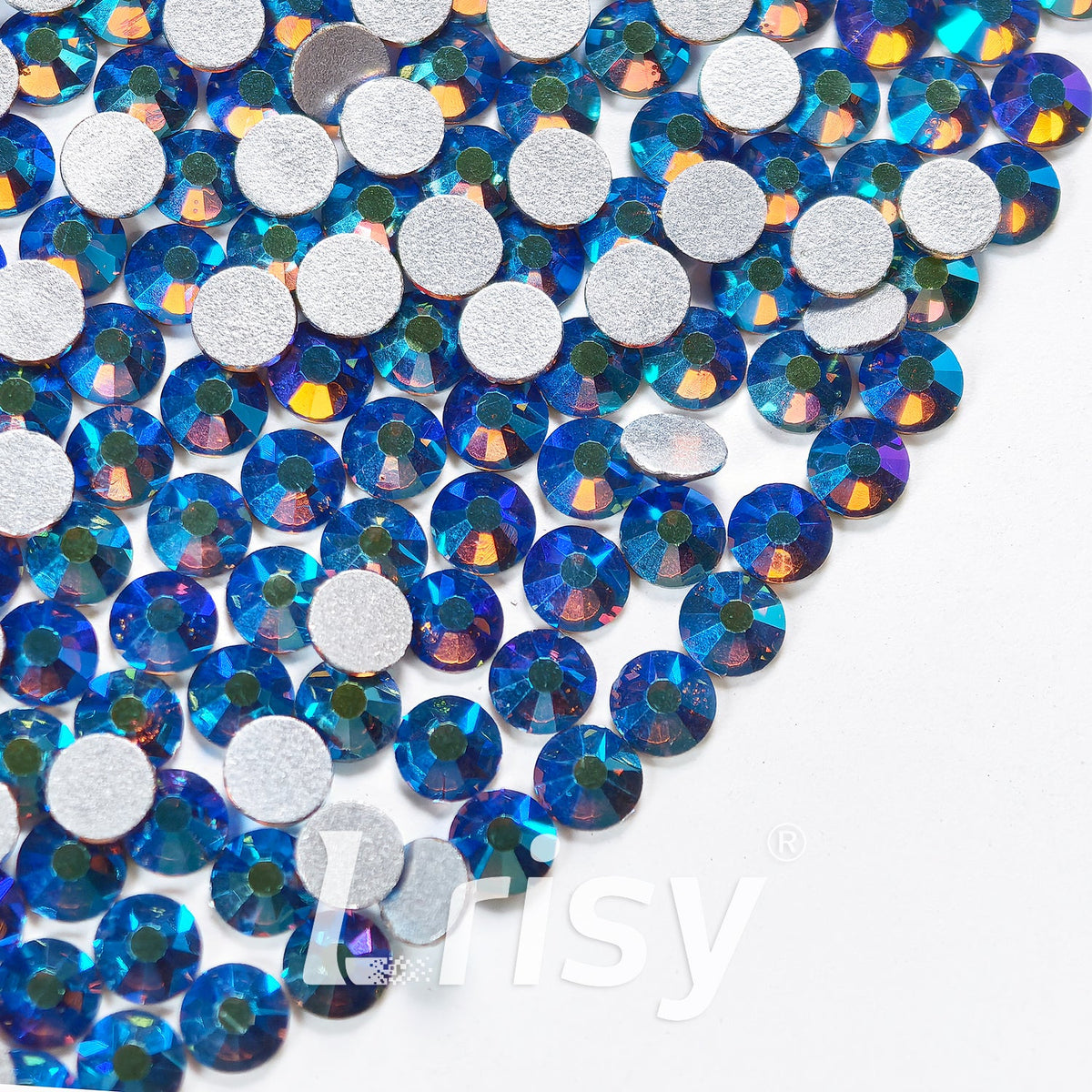
Quick Answer: Vet a wholesale rhinestone supplier by verifying their business registration, requesting product samples before placing bulk orders, checking for authorized distributor status with major brands like Swarovski or Preciosa, confirming physical factory addresses via video calls, reviewing payment protections such as escrow or trade credit, and contacting trade references. Avoid any supplier that refuses samples, demands full payment upfront via wire transfer, offers prices that seem too good to be true, or cannot provide verifiable documentation.
The $5,000 Mistake That Could Sink Your Costume Business
You design custom dance costumes for a living, and three competitive studios depend on your deadlines. When you find a wholesale rhinestone supplier online offering "Swarovski-quality crystals" at 60% below market price, it looks like the jackpot.
The website looks professional. High-resolution product photos. Detailed specifications. The sales rep answers your emails within minutes, even on a Sunday evening. Friendly. Professional. Confident.
You wire $5,000 for your first bulk order. You calculate the profit margins in your head and smile. Three weeks later, a cardboard box arrives at your workshop. You open it with excitement and feel your stomach drop.
Inside are cloudy glass stones with uneven foil backing. Some are chipped. Half the shipment is the wrong size entirely. The color you ordered -- Crystal AB -- looks nothing like the sample photo on the website. You try contacting the supplier. No response. You try again. Nothing. The phone number is disconnected. The website has been taken down.
Your $5,000 is gone. Your production deadline is blown. Three angry customers demand refunds. That single bad supplier relationship sets your business back by four months.
This situation is not unusual. Scammers, counterfeiters, and unreliable vendors operate in every corner of the rhinestone supply chain. But here is the good news: a loss like this is entirely preventable. A systematic vetting process catches every single red flag before you send a dollar. This guide gives you that system.
Key Takeaways
- Always verify business registration and physical addresses before placing orders with new rhinestone suppliers.
- Order samples from at least three suppliers simultaneously and test for clarity, cut precision, foil integrity, and color consistency.
- Authorized distributor status with Swarovski, Preciosa, or Serinity is the only reliable proof of product authenticity for branded crystals.
- Never pay 100% upfront via wire transfer for first-time orders; use escrow services, credit cards, or letters of credit instead.
- Document every interaction in writing, including product specifications, refund policies, delivery timelines, and quality agreements.
- Build relationships with at least two verified bulk crystal suppliers to reduce supply chain risk and ensure production continuity.
- Invest in third-party inspection services for large first-time orders to catch quality issues before shipment leaves the factory.
The Wholesale Supplier Landscape: Know Your Options
Not all wholesale rhinestone suppliers operate the same way. Understanding the landscape is the first step in choosing the right partner for your specific business needs. Each supplier type comes with distinct advantages, trade-offs, and risk profiles.
Domestic Suppliers
Domestic suppliers operate within your home country. They import rhinestones in bulk and resell them with a markup. The main advantages are faster shipping (often 2-5 days instead of 2-6 weeks), easier communication in your native language, simpler return and exchange processes, and familiarity with local business regulations. The trade-off is higher per-unit pricing, typically 20-50% more than factory-direct sources.
Overseas Suppliers
Overseas suppliers -- particularly those based in China, the Czech Republic, and Austria -- offer factory-direct or near-factory pricing. The cost savings can be substantial, especially for large volume orders. However, you face longer lead times, potential language and time zone barriers, more complex dispute resolution, and greater difficulty verifying physical operations.
Authorized Distributors
An authorized distributor has a direct contractual partnership with crystal manufacturers like Swarovski, Preciosa, or Serinity. They receive genuine products with proper certifications, batch numbers, and technical datasheets. They also get advance access to new collections, limited-edition releases, and manufacturer technical support. For businesses that require branded crystals, authorized distributors are the only safe choice.
Factory Direct Suppliers
Factory direct rhinestones come straight from the manufacturing source. This structure typically offers the best per-unit pricing, maximum custom-order flexibility (custom colors, sizes, or foil colors), and deeper technical knowledge about production processes. The downside: factories usually enforce high minimum order quantities (MOQs), have less flexibility for small trial orders, and may lack English-language sales support if you are sourcing internationally.
Trading Companies
Trading companies act as intermediaries between factories and buyers. They source from multiple manufacturers and consolidate orders. This is often the best option if you need wholesale rhinestones with no minimum or very low minimums, want variety across multiple product lines from a single contact, or are new to importing and need guidance through the process. The trade-off is higher per-unit pricing due to the middleman markup and potential lack of deep technical knowledge about any single production process.
| Supplier Type | Best For | Price Level | MOQ | Lead Time | Risk Level |
|---|---|---|---|---|---|
| Domestic Supplier | Rush orders, small businesses, first-time buyers | High | Low | 2-5 days | Low |
| Overseas Supplier | Volume buyers, cost-sensitive projects | Low-Medium | Medium | 2-6 weeks | Medium-High |
| Authorized Distributor | Branded crystals (Swarovski, Preciosa, Serinity) | High | Low-Medium | 1-3 weeks | Very Low |
| Factory Direct | Custom orders, large volumes, OEM projects | Lowest | High | 3-8 weeks | Medium |
| Trading Company | Variety, low MOQs, first-time importers | Low-Medium | Very Low | 2-6 weeks | Medium-High |
Pro tip: Many successful buyers use a hybrid model. They source standard rhinestones from overseas factories or trading companies to control costs, then maintain relationships with domestic authorized distributors for rush orders or premium branded crystals. This approach balances cost efficiency with supply chain reliability.
Red Flag Checklist: 10 Warning Signs You Must Never Ignore
Before you invest time in deep supplier verification, run this quick red flag checklist. Each warning sign on its own is concerning. Two or more together should make you walk away immediately.
1. Prices That Seem Too Good to Be True
Premium crystals have a price floor based on raw material costs, cutting technology, and labor. If a supplier offers "Swarovski quality" at 50% below every competitor, you are not getting a bargain. You are the target of a scam. Compare pricing across at least five suppliers before drawing conclusions about what is realistic.
2. No Verifiable Physical Address
Search the supplier's address on Google Maps and Google Earth. A legitimate wholesale rhinestone supplier operates from a real warehouse, factory, or commercial office. If the address leads to a parking lot, a residential apartment, a virtual office, or an unrelated business, consider that a serious warning sign.
3. Refusal to Provide Samples
Any credible supplier will send product samples for a reasonable fee (typically $20-$100 including shipping). Refusal to provide samples suggests one of two things: they do not actually have the inventory, or they know the product quality will not survive inspection. Neither scenario is acceptable.
4. High-Pressure Sales Tactics
Scammers create false urgency to override your better judgment. Phrases like "This price expires in 24 hours," "Only three lots remaining at this rate," or "Our factory is closing for the month" are classic manipulation tactics. Legitimate suppliers understand that buying decisions take time and will give you space to evaluate.
5. No Written Refund, Return, or Replacement Policy
A professional supplier stands behind their product. If a supplier has no written policy for defective or incorrect goods, you will almost certainly have no recourse when problems arise. Demand a written policy before placing any order.
6. Demands Full Payment Upfront via Wire Transfer
Wire transfers are irreversible. This is the scammer's payment method of choice. Reputable suppliers accept secure payment options including credit cards, PayPal, Alibaba Trade Assurance, or letters of credit. If 100% wire transfer upfront is the only option, do not proceed.
7. Poor Communication Infrastructure
If all communication comes from a generic Gmail, Yahoo, or Outlook address instead of a company-domain email, that signals a lack of professional infrastructure. Slow responses, evasive answers to direct questions, and grammatically confusing messages are also warnings. Professional suppliers invest in proper business communication systems.
8. Stock Photos Stolen from Other Websites
Run a reverse image search on product photos using Google Images or TinEye. If the same images appear on five unrelated websites, the supplier likely does not possess the inventory they claim to have. They may be drop-shipping or planning to send inferior products.
9. Zero Online Presence or Reviews
Search the company name plus "review," "scam," "complaint," or "rating." Check trade platforms like Alibaba, Global Sources, ThomasNet, and Kompass. Check social media platforms including LinkedIn and Facebook. A company with no digital footprint in 2026 is suspicious. Even small legitimate suppliers have some online presence.
10. Unwilling to Provide Documentation
Request a business license, tax ID number, proof of address, and factory audit report. A legitimate supplier will provide these documents without hesitation. Evasive answers, excuses, or requests for more money before sharing documentation are serious red flags.
| Red Flag | Why It Matters | Action |
|---|---|---|
| Prices 50% below market | Indicates counterfeit or low-quality product | Walk away immediately |
| No physical address | Cannot verify supplier actually exists | Demand verifiable proof of location |
| Refuses samples | Product likely fails quality inspection | Do not proceed without samples |
| 100% wire upfront | No buyer protection; irreversible payment | Insist on escrow or credit card |
| Generic email domain | Lack of professional infrastructure | Request company-domain communication |
Why Supplier Verification Is Your Most Important Investment
Supplier verification is not an expense. It is an investment that protects every dollar you spend on inventory. Here is why it deserves your time and attention.
Why Business Registration Verification Matters
A business registration number is the legal identity of a company. Verifying it confirms that the entity actually exists, is legally authorized to operate, and has not been dissolved or flagged for violations. In China, use the National Enterprise Credit Information Publicity System. In the United States, check the Secretary of State website for the state where the company is registered. In the European Union, use national business registries or the European e-Justice Portal. This five-minute check can save you thousands of dollars.
Skip that check and you may not find out until it is too late: the supplier in the opening scenario had been dissolved for six months by the time the order was placed. That five-minute verification step, done before wiring funds, would have saved the entire $5,000.
Why Physical Address Verification Matters
A street address on a website means nothing. Scammers list fake addresses constantly. Verify the address through Google Maps street view, request a live video call showing the exterior and interior of the facility, and ask the supplier to hold a handwritten sign with your name and the current date during the video call. Legitimate suppliers will agree to this. Scammers will refuse or make excuses.
Why Third-Party Audit Reports Matter
Established suppliers often hold certifications like ISO 9001 (quality management), Sedex (ethical trade), BSCI (social compliance), or SGS factory audit reports. These certifications are granted only after independent third-party inspections. While not every small supplier has these, their presence strongly signals operational legitimacy. Request copies and verify the certification numbers with the issuing body.
Why Trade References Matter
Ask for at least three current customer references from businesses similar to yours. Contact them directly. Ask specific questions: How was product quality? How responsive was communication? Did orders arrive on time? How did the supplier handle problems? Most importantly: Would you order from them again? Honest feedback from real customers is the most reliable indicator of supplier quality.
The Sample Ordering Protocol: How to Test Before You Invest
Never place a bulk order without testing samples first. This rule is absolute and non-negotiable. A $50-$100 sample order is the cheapest insurance you will ever buy against a $5,000, $10,000, or $50,000 mistake.
Why Sampling Eliminates Risk
Rhinestones vary enormously in clarity, cut precision, color consistency, and foil backing durability. Professional product photos and written descriptions can hide or gloss over every one of these quality dimensions. Only physical inspection reveals the truth. A thoughtful sample testing protocol transforms subjective impressions into objective, comparable data.
What to Test: The Five Critical Factors
- Clarity and brilliance: Hold stones under a bright LED light. Premium crystals sparkle with sharp, clean facets. Cloudiness, dullness, or visible inclusions indicate inferior glass composition or poor cutting quality. Compare side by side with a known genuine stone.
- Cut precision: Measure stone dimensions with digital calipers. Acceptable variation is under 0.2mm. Variations exceeding 0.3mm suggest sloppy manufacturing that will cause problems in setting and alignment.
- Color consistency: Lay 10-20 stones side by side on a white surface under neutral daylight-matching light. Noticeable color shifts between stones from the same batch are unacceptable for professional use.
- Foil backing integrity: Examine the mirror-like backing under magnification. Scratches, bubbles, peeling at the edges, or uneven coverage will cause stones to lose reflectiveness after application or washing.
- Setting compatibility: If you use machine-setting equipment or standardized settings, test whether the stones fit correctly. Even 0.1mm deviations can cause problems in automated production.
How to Evaluate Samples Objectively
Create a standardized scoring sheet. Rate each critical factor from 1 (poor) to 5 (excellent). Photograph every sample next to a known genuine stone under identical lighting and magnification. Document any defects with dated photos. Use a spreadsheet to track results across multiple suppliers. This system gives you objective, comparable data instead of gut feelings and memory.
Best Practices for Sample Ordering
Order samples from at least three suppliers simultaneously. Test them under identical conditions on the same day. This head-to-head comparison reveals which supplier truly delivers the best value, not just the lowest price. Compare across suppliers using your standardized scorecard. The winning supplier is the one with the best quality-to-price ratio, not the cheapest option.
| Factor | What to Check | Acceptable Range | Testing Tool |
|---|---|---|---|
| Clarity | Cloudiness, inclusions, dullness | Clear, no visible defects | LED light, 10x loupe |
| Cut Precision | Dimension consistency, facet alignment | ±0.2mm variation | Digital calipers |
| Color Consistency | Batch-to-batch and stone-to-stone color | No visible shift under daylight | Neutral light source, white surface |
| Foil Integrity | Scratches, bubbles, peeling, coverage | Mirror finish, no defects | 10x loupe, magnification |
| Setting Compatibility | Fits in your settings or molds | Precise fit, no wobble | Your production equipment |
Understanding MOQs and Payment Terms
Minimum order quantities and payment structures vary dramatically across rhinestone suppliers. Understanding these terms protects your cash flow, reduces financial risk, and helps you negotiate better deals.
How to Negotiate MOQs
Factories typically set higher MOQs because they optimize production runs for efficiency. Trading companies and authorized distributors often offer lower minimums because they aggregate demand across multiple buyers. If you are a small business that needs wholesale rhinestones with no minimum or very low minimums, search specifically for distributors and trading companies that advertise this flexibility.
You can negotiate MOQs by offering a slightly higher per-unit price for smaller volumes, asking if the supplier can mix standard colors and sizes to reach the MOQ (for example, 500 of SS12 Crystal plus 500 of SS16 Jet instead of 1,000 of one SKU), or committing to a regular monthly or quarterly order schedule in exchange for lower per-order MOQs. Many suppliers will negotiate if you demonstrate reliable long-term potential.
Payment Security: Ranked from Safest to Riskiest
| Payment Method | Buyer Protection | Best For | Risk Level |
|---|---|---|---|
| Escrow (Alibaba Trade Assurance, PayPal) | Funds held until delivery confirmed | First-time orders, new suppliers | Lowest |
| Credit Card | Chargeback rights for non-delivery or misrepresentation | Small orders, domestic suppliers | Low |
| Letter of Credit (L/C) | Bank releases payment only when documents match terms | Large international orders over $10,000 | Medium-Low |
| Wire Transfer (30% deposit, 70% before shipping) | Minimal; supplier holds leverage | Established relationships only | High |
| Wire Transfer (100% upfront) | Almost none | Never for first orders; long-term partners only | Highest |
Trade Credit and Net Terms
Once you have completed several successful orders with a supplier, negotiate net-30 or net-60 payment terms. Trade credit improves your working capital, signals mutual trust, and often leads to preferential treatment such as priority production slots, first access to new products, and exclusive pricing. Strong relationships with bulk crystal suppliers are one of the most valuable assets you can build in this industry.
Authorized Distributor Status: The Only Guarantee of Authenticity
If your business uses or resells branded crystals like Swarovski, Preciosa, or Serinity, buying from an authorized distributor is not optional. It is the only reliable way to guarantee product authenticity.
What Authorization Guarantees
Authorized distributors purchase directly from the crystal manufacturer. They receive genuine products with proper certifications, batch numbers, and technical datasheets. They also receive manufacturer training, marketing support including official product images, advance access to new collections and limited-edition releases, and direct technical support for any product issues.
The Real Cost of Counterfeit or Gray Market Crystals
Unauthorized sellers may offer genuine overstock products through gray market channels, but they may also sell counterfeits, factory rejects, old inventory nearing degradation, or products that have been improperly stored. Counterfeit rhinestones have weaker foil that peels or scratches easily, inconsistent cuts that cause visible variation in sparkle, poor color accuracy compared to the genuine standard, and significantly lower durability during application and wear. If your customers depend on consistent quality for their products, one bad batch can destroy months of reputation building.
Compatibility: Which Suppliers Work with Which Brands
| Brand | Authorized Distributor Required | Typical Markup | Verification Method |
|---|---|---|---|
| Swarovski | Yes | 50-100% above non-branded | Swarovski partner directory, direct confirmation |
| Preciosa | Yes | 30-60% above non-branded | Preciosa authorized partner list |
| Serinity | Yes | 20-40% above non-branded | Serinity distributor lookup |
| Non-branded premium | No | N/A | Sample testing, factory audit |
| Generic / economy | No | N/A | Sample testing, price comparison |
How to Verify Authorization Yourself
Visit the crystal manufacturer's official website and search their authorized distributor directory. Contact the manufacturer directly by phone or email to confirm the supplier's authorization status. For example, Swarovski and Preciosa both maintain public lists of approved partners. If a supplier claims authorization but does not appear on these official lists, demand written proof directly from the brand. Any hesitation should be treated as a serious red flag.
Building Long-Term Supplier Relationships That Last
The best wholesale rhinestone supplier relationships are genuine partnerships, not transactional exchanges. Here is how to build trust that compounds over time.
Communicate Transparently
Share your production calendar, forecasted volumes, quality expectations, and any seasonal spikes with your supplier. Suppliers plan their production based on customer forecasts. When you share information openly, they can reserve capacity, source raw materials in advance, and offer you better terms. Respect flows both directions -- respond to their questions and requests promptly as well.
Start Small and Prove Yourself
Your first order should be modest in size. Use it to evaluate quality, delivery reliability, and communication responsiveness. Only increase order volumes after the supplier has demonstrated consistent performance across at least three orders. This gradual approach protects both parties as the relationship matures.
Visit Suppliers In Person When Possible
Nothing replaces a face-to-face meeting at the supplier's facility. Trade shows like the Tucson Gem Show, JOFA, and the Hong Kong International Jewelry Show offer excellent opportunities to meet suppliers in person. Visiting their facility builds mutual trust, gives you firsthand insight into their production capabilities, and signals that you are a serious buyer worth investing in.
Negotiate for Exclusivity and Priority Terms
As your order volumes grow, ask for benefits that create competitive advantages: exclusive color runs that only you can offer, priority production slots that reduce your lead times, customized packaging with your brand, or extended payment terms that improve your cash flow. Suppliers reward loyal customers who represent a meaningful share of their revenue. One dance costume manufacturer we know secured a custom rose-gold shade by committing to a modest quarterly volume. That exclusivity became a signature element of her brand.
A jewelry maker who spent two years developing a relationship with a Czech crystal supplier shows how the payoff compounds. He started with $200 sample orders. He communicated regularly, paid on time, and provided honest feedback after each shipment. Today, that supplier gives him 48-hour rush production on request, custom cutting services for his proprietary designs, and payment terms of net-45. The trust he built slowly now gives him a massive competitive advantage that no competitor can easily replicate.
What to Do When Something Goes Wrong
Even with the most thorough vetting, problems sometimes develop. Shipments get delayed. Quality standards slip. Communication breaks down. Here is your response playbook.
Document Everything from Day One
From the first email, save every piece of communication, every invoice, every product specification document, and every quality agreement. Dated documentation is your single strongest asset in any dispute. Without it, your claims have no evidentiary support.
Contact the Supplier Immediately
Describe the problem clearly and specifically. Include dated photos, batch or lot numbers, order reference numbers, and your proposed resolution. Give the supplier a reasonable timeline to respond (typically 48-72 hours). Professional suppliers want to fix problems because they value the long-term relationship. Many issues can be resolved with open communication.
Escalate Through Platform Dispute Systems
If you ordered through Alibaba, PayPal, or a similar platform, open a formal dispute within the platform's required timeframe. These platforms have established dispute resolution processes and often side with buyers when documentation is strong. Pay close attention to filing deadlines, which can be as short as 15 days from delivery.
Initiate a Chargeback as a Last Resort
If you paid by credit card and the supplier refuses to resolve the issue after reasonable attempts, contact your card issuer to initiate a chargeback. Chargebacks are powerful but should be your last option. Overusing them can damage your standing with payment processors and should be reserved for genuine fraud or major quality failures.
Always Maintain Supplier Redundancy
Never depend on a single wholesale rhinestone supplier. Maintain active, ongoing relationships with at least two verified suppliers. Continue ordering small test orders from potential backup suppliers even when your primary relationship is healthy. If something goes wrong with one supplier, you need to be able to pivot immediately without halting production or disappointing customers.
Why Diversifying Your Supplier Base Protects Your Business
Putting all your production eggs in one supplier basket is one of the most common and most dangerous mistakes in the rhinestone industry. Here is why diversification matters.
Supply Chain Disruptions Happen
Factories close. Raw material shortages occur. Shipping routes get disrupted. Trade policies change. A single-supplier strategy means any one of these events can halt your entire production line. Having at least two qualified alternatives means you can absorb shocks without missing deadlines.
Leverage for Better Terms
Suppliers who know you have alternatives treat you better. They are more likely to offer competitive pricing, prioritize your orders, and resolve issues quickly when they know you have other options. Diversification is not just risk management -- it is also negotiation leverage.
Access to Broader Product Range
Different suppliers excel in different areas. One may offer superior precision cutting for small stones. Another may have better pricing on large quantities. A third may specialize in unusual colors or custom foil finishes. By maintaining multiple relationships, you access the best of each supplier's capabilities.
Frequently Asked Questions
What is the safest payment method for first-time orders with overseas rhinestone suppliers?
Escrow services like Alibaba Trade Assurance or PayPal offer the strongest buyer protection for first-time orders. Your payment is held by the platform and released to the supplier only after you confirm satisfactory delivery. For larger orders, a confirmed letter of credit provides similar protection through your bank. Avoid wire transfers entirely for first-time purchases.
How can I tell if a supplier is an authorized Swarovski or Preciosa distributor?
Visit the official Swarovski or Preciosa website and search their authorized partner directory. Contact the manufacturer directly by phone or email to confirm the supplier's status. If the supplier is not listed on the official directory, demand written proof of authorization from the brand itself before placing any order for branded crystals.
What should I look for when testing rhinestone samples?
Evaluate five critical factors: clarity and brilliance under bright light, cut precision using digital calipers, color consistency across multiple stones under daylight-matching light, foil backing integrity under magnification, and setting compatibility with your production equipment. Create a standardized scoring sheet and compare samples from multiple suppliers under identical conditions.
Are factory direct rhinestones always cheaper than buying from a distributor?
Factory direct pricing is usually lower per unit because there is no middleman markup. However, factories typically require higher MOQs (1,000 to 10,000 pieces per SKU), which can make them impractical for smaller businesses. Distributors and trading companies charge higher unit prices but offer lower minimums and greater product variety. The best choice depends on your order volume, budget, and product requirements.
What MOQ is typical when buying wholesale rhinestones?
MOQs vary widely by supplier type. Factories may require 1,000 to 10,000 pieces per color and size combination. Trading companies and authorized distributors often offer lower minimums of 100 to 500 pieces. Some distributors advertise wholesale rhinestones with no minimum for standard stocked colors and sizes. Always confirm MOQ terms in writing before committing to a new supplier.
How long does it take to build a trusted supplier relationship?
Most buyers need three to six months and at least three to four successfully completed orders before strong trust develops. Start with small test orders. Increase volumes only after consistent quality and reliable delivery. Communicate clearly and frequently. Pay on time. Visit in person when possible. Trust is earned through consistent positive interactions over time, not through any single order.
Can I return defective rhinestones to an overseas supplier?
Return policies vary by supplier. Some reputable overseas suppliers accept returns for manufacturing defects and may cover return shipping. Others offer replacement or credit for defective items without requiring the physical return. The key is to agree on a written return and replacement policy before placing your order. Never assume a supplier will accept returns without a documented agreement.
What certifications should a reliable rhinestone supplier have?
Look for ISO 9001 (quality management system), Sedex or BSCI (ethical social compliance), and SGS or Bureau Veritas factory audit reports. For specific product certifications, check for REACH compliance (European chemical safety) and RoHS compliance (restriction of hazardous substances). Not every small supplier has all certifications, but their presence strongly signals operational legitimacy.
Reading Next
Continue building your rhinestone sourcing expertise with these related guides:
- The Complete Guide to Buying Wholesale Rhinestones in Bulk
- Flat Back vs Pointed Back Rhinestones: Which One Should You Choose?
- How to Apply Hotfix Rhinestones: A Complete Guide
- Rhinestone Size Chart: SS to MM Conversion Guide
- Browse Our Wholesale Bulk Rhinestones Collection
For further reading on quality control and supply chain management from industry experts, check out the Quality Magazine guide to supplier auditing and the International Trade Administration resources on verifying overseas suppliers.
Conclusion: Your Supplier Vetting System Starts Today
Vetting a wholesale rhinestone supplier is not complicated. It requires a system and the discipline to follow it every single time, without shortcuts or exceptions. Start with the red flag checklist to quickly eliminate obvious bad actors. Verify business registration and physical locations before discussing product details. Order samples from multiple suppliers simultaneously and test them using a standardized scoring system. Prioritize secure payment methods for every order, especially first-time purchases. Confirm authorized distributor status before buying branded crystals. Document everything in writing. Build relationships gradually and maintain supplier redundancy.
The wholesale rhinestone market offers enormous opportunities for buyers who do their homework. It also punishes those who rush. Vetting is not a one-time gate; it is a habit whose payoff grows with every order. It also has a limit worth naming: if you only place small, regular orders with a domestic distributor you have worked with for years, most of this system is overkill. Keep the sample checks and written documentation, and you are covered. The moment you scale volume, source overseas, or see a price that looks too good to be true, run the full protocol with no shortcuts. Every dollar you invest in vetting is a dollar that protects your business from the kind of loss described above. Take the time to vet every new supplier properly. Your reputation, your customers, and your bottom line all depend on this simple truth.
Ready to buy wholesale rhinestones from a trusted supplier? LRISY offers factory-direct pricing on wholesale bulk rhinestones with fast international shipping, consistent quality, and responsive customer support. Browse our flat back, pointed back, hotfix, and colors AB collections for all your production needs. Contact our team for bulk pricing and custom orders.
For more resources on sourcing, quality control, and building a resilient supply chain, explore our SEO guidelines and stay connected with the latest industry insights.
Ready to find your perfect supplier? Start by downloading our printable Supplier Vetting Checklist and sample evaluation scorecard. Share this guide with your team, and never get scammed again.

Leave a comment
All comments are moderated before being published.
This site is protected by hCaptcha and the hCaptcha Privacy Policy and Terms of Service apply.