
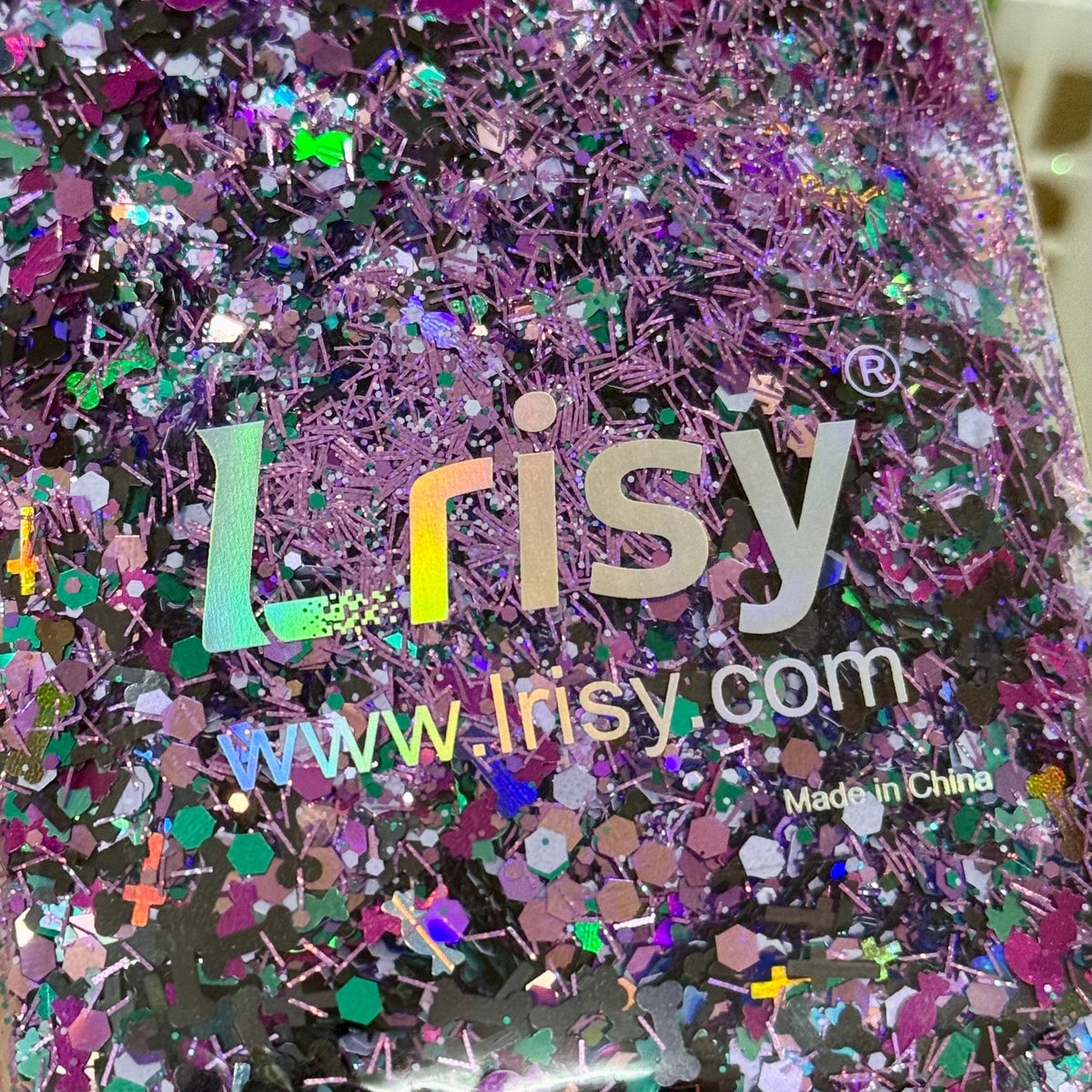
Quick Answer: A small business buying bulk glitter in 2026 should pay $8–$25 per kilogram for standard craft-grade PET, and a real factory-direct supplier starts MOQs at just 500g–1kg per color. That is 60–80% below retail jar pricing — the same glitter you find in a $10.29 retail jar at a craft store costs a fraction by the pound. Your first order should be a 1kg sample spread across 5–10 core colors — never a single bulk SKU — and you should verify the supplier is a manufacturer (per-kg quotes, spec sheets, test documentation), not a marketplace reseller repackaging retail. Bottom line: buy by weight, not by jar. Start small across colors, verify specs in writing, and scale only after your product actually sells.
Your first bulk glitter order as a new small business often goes like this. You launch custom glitter slime kits on Etsy, find a general marketplace listing promising "wholesale glitter," and commit to 200 assorted jars at $119 with free shipping. When the box arrives, nearly every color is wrong: the "holographic" glitter reflects nothing, particle sizes vary wildly between jars, and one color bleeds like ink in water. You end up refunding 40% of your first 60 orders before cutting your losses and finding a real factory-direct supplier.
The first order teaches an expensive lesson: the word "wholesale" on a listing means nothing. A factory-direct supplier quotes per kilogram, asks what grades you need, and sends actual test documentation. That switch is what drops material costs by about 70% and pushes refund rates below 3%.
This failure mode is the most common one in the craft-supply market, and the easiest to avoid. This guide walks small-business owners through real 2026 bulk glitter pricing, how MOQs actually work at small volumes, what to stock for resale, and a supplier vetting checklist you can run before placing any order. Whether you sell slime, nail products, resin cups, or party decor, the buying discipline is the same: buy by weight, verify specs, and scale on evidence.
Key Takeaways
- Real 2026 small-business pricing: $8–$25/kg for standard craft PET, $20–$45/kg for cosmetic-grade, $30–$80/kg for specialty finishes (holographic, chunky, biodegradable).
- MOQs are no longer the barrier they were: factory-direct suppliers now start at 500g–1kg per color, and some offer micro-orders under $1 for product testing.
- Start with a 1kg multi-color sample spread, not one bulk SKU — test in your actual product before scaling any single color.
- Verify the supplier is a manufacturer: per-kg quotes, material spec sheets, and published test documentation separate real factories from resellers.
- Retail jars cost 3–5x more per gram than bulk bags; your margin only works if you buy by weight, not by jar count.
- Certifications matter when you resell: cosmetic-grade for beauty use, EN71-3 for children's products, and biodegradability certificates for the growing EU-regulated market.
"Wholesale Glitter" Listings Are Not Bulk Glitter (The Reseller Problem)
Here is the uncomfortable truth about the craft-supply market: most listings labeled "wholesale glitter" are repackaged retail products. A reseller buys a bulk bag from a factory, splits it into 100g jars, marks it up 4–5x, and calls it wholesale. You are not getting factory pricing; you are getting retail pricing with a wholesale label. That first marketplace order, $119 for 200 jars, delivers the quality of a craft-store shelf, because that is exactly what it is: repackaged retail.
The markup survives because genuine wholesaling moves goods in volume at cost-plus margins, and the per-unit price should drop measurably as quantity rises. A reseller inverts this logic; it charges wholesale-sounding prices per jar with "no minimum" and no documentation. The label is free; the chemistry is not. A real factory-direct supplier quotes prices per kilogram, specifies MOQs per color, and can produce a material spec sheet on request.
How to tell the difference in 60 seconds:
- Real factory: quotes $/kg, sets per-color MOQs, provides spec sheets, publishes test results, can show production facilities.
- Reseller: quotes per jar, has "no minimum," can't produce specs, sells repackaged retail at 3–5x markup.
LRISY is a factory-direct manufacturer that produces glitter and rhinestones in-house, which is why it can quote per-weight pricing and publish epoxy and polish test results on product pages. That transparency is the first signal you are dealing with a real producer rather than a middleman. For the deeper version of this distinction, read LRISY's complete wholesale glitter buying guide for business.
What a Small Business Should Actually Pay in 2026 (And How to Read the Table)
Pricing varies by grade, particle size, finish, and quantity. Benchmark any quote against these 2026 ranges before you commit — price is the fastest early-warning signal in this market.
| Grade / Finish | Wholesale (per kg) | Retail Jar (per 100g) | Good For |
|---|---|---|---|
| Standard craft PET | $8 – $25 | $6 – $15 | Slime, decor, general resale |
| Cosmetic-grade | $20 – $45 | $12 – $25 | Nails, body, beauty resale |
| Holographic | $25 – $50 | $15 – $30 | Premium-tier resale, decor |
| Chunky / shaped | $30 – $80 | $18 – $40 | Resin art, statement pieces |
| Biodegradable | $35 – $90 | $20 – $45 | Eco brands, EU markets |
How to read the table: if a supplier quotes $6/kg for "premium holographic glitter," the product is not what it claims to be — real holographic wholesale does not go below roughly $25/kg at volume. For the full breakdown of unit costs, MOQs, and hidden fees, see the bulk glitter pricing guide.
The Hidden Costs Most Small Businesses Miss
- MOQ per color, not per order — a 10kg order across 10 colors might mean 1kg minimum per color, not 100g each.
- Sample costs — real factories charge for samples or shipping; "free samples" from resellers are often repackaged retail.
- Custom color and custom cut fees — matching a Pantone color or a custom particle size adds setup costs.
- Certification documentation — cosmetic-grade and biodegradability certifications cost the supplier money; confirm they are included or quoted separately.
- Shipping and duties — glitter is lightweight but bulky; always ask for FOB or CIF quotes so freight surprises are on paper, not in your margin.
Why hidden costs kill small businesses faster than sticker price: a small business runs on thin margins, and a 20–40% landed-cost surprise on your first bulk order can erase a whole quarter of profit. The fix is boring but effective: get every number — freight, duty, MOQ, setup, certification — on paper before you commit.
MOQs Are Not the Barrier They Used to Be (Real 2026 Numbers)
Many small-business owners assume bulk glitter means a 25kg minimum that will bury them in inventory. That was true a decade ago. In 2026, factory-direct suppliers have restructured MOQs to court exactly the small-business segment, and the entry point is far lower than you expect.
Every color run requires cleaning the production line, mixing new pigment, and re-calibrating the particle cut. That setup is why per-color minimums exist — small runs cost more per unit. The negotiation lever is obvious once you understand this: order fewer colors at higher quantity per color. A 2kg order of one color negotiates far better than a 2kg order split across 10 colors, because the factory amortizes the setup cost over more product.
Real MOQ Ranges in 2026
| Order Type | Typical MOQ | Best For |
|---|---|---|
| Factory-direct standard glitter | 500g – 5kg per color | Most small businesses |
| Micro-orders (testing) | From ~$1 (2–5 units) | Product trials before commitment |
| Custom colors / sizes | 5kg – 25kg per color | Branded color matching |
| Private label / custom packaging | 25kg+ or negotiated annual volumes | Own-brand glitter lines |
LRISY's glitter sample sets exist precisely so small businesses can test colors and grades before committing to bulk: the cheapest insurance a glitter purchase has. Buy the sample, run it through your actual product, then scale the winners.
Four Strategies to Beat High MOQs
- Form a buying co-op. Split a bulk order with two or three other local craft sellers. Splitting a 10kg MOQ three ways brings each person's commitment down to roughly 3.3kg — manageable for most small businesses. The Small Business Administration has guidance on forming buying cooperatives.
- Negotiate a trial order. Many factory-direct suppliers accept a 500g–1kg trial order if you commit to a larger repeat order within 30–60 days. Get the agreement in writing before placing it.
- Stick to universal colors first. Crystal, white, black, silver, and pink are the most universally demanded glitter colors. They resell easily if you over-order and are the most likely to be in stock at low MOQs.
- Order fewer colors, higher quantity each. Two kilograms of one color beats two kilograms split across ten colors on price, the factory amortizes setup over more product.
What to Stock for Resale: The Inventory Map
Your first bulk order should be an inventory map for your business model — not a shopping spree. Here is how to allocate a starter budget across the segments that actually sell in 2026. The map matches the fastest-moving products to the grade and quantity that fit each business.
| Business Model | Stock This | Starter Quantity |
|---|---|---|
| Slime / sensory kits | Fine craft PET, holographic, neon | 1kg per color × 8–10 colors |
| Nail / beauty resale | Cosmetic-grade, solvent-resistant, fine silver/pink/holo | 500g per color × 6–8 colors |
| Resin / tumbler supplies | Chunky, shaped, solvent-resistant PET | 500g–1kg per color × 6 colors |
| Event / party decor | Chunky, iridescent, seasonal colors | 1kg per color × 4–6 colors |
The map allocates by grade, not by color, because the same color sells at different grades to different buyers: a nail seller needs cosmetic-grade fine silver, a tumbler seller needs solvent-resistant chunky, and a party seller needs iridescent chunky. Stocking "silver glitter" without specifying grade and size is how small businesses end up with material they cannot sell to their actual customer. For a visual of what a well-rounded wholesale catalog looks like, browse LRISY's glitter powder collection and the chunky glitter wholesale range. Both map directly to the fastest-moving resale segments.
Certifications & Specs: What Actually Protects You When You Resell
When you resell glitter, the supplier's certifications become your liabilities. Three documents matter most for a small business, and each one converts an unquantifiable risk into a checkbox.
Why certifications matter: a craft-glitter batch marketed for children's products without EN71-3 compliance, or a "cosmetic-grade" label without a corresponding spec sheet, is a product-recall and liability risk you inherit by reselling. Verifying documentation before purchase is the difference between a sellable product and a liability.
The Three Documents to Request
- Material spec sheet — grade, PET thickness, particle-size tolerance, heat/solvent ratings, in writing. This is your baseline for batch-to-batch consistency.
- Certification copies — EN71-3 for children's products, FDA 21 CFR / cosmetic-grade for beauty use, REACH for EU sales, biodegradability certificates (OECD 301, TÜV OK Compost, EN 13432) for eco claims.
- Test documentation — epoxy tests, polish tests, color-fastness reports. LRISY publishes these on product pages so buyers can verify before committing.
If your products touch skin, read LRISY's cosmetic glitter regulations guide — FDA vs REACH compliance is a frequent source of surprises for small beauty brands. And if you sell into Europe, the biodegradable glitter wholesale guide explains the EU microplastics regulation (Regulation 2023/2055) that is reshaping the market.
The Supplier Vetting Checklist (Run It Before Every Order)
Run every candidate through this six-point checklist before you place any bulk order. It takes fifteen minutes and it is the difference between a supplier and a gamble.
- Factory or reseller? Ask directly, and ask for a production-line tour or facility photos. A real manufacturer can show you the plant.
- Quotes in per-kg, with per-color MOQs? Per-jar pricing with no minimum is a reseller markup.
- Material spec sheets? Grade, PET thickness, heat/solvent ratings, particle tolerances — in writing.
- Test documentation? Epoxy tests, polish tests, cosmetic certifications, biodegradability certificates — published or shareable.
- Batch samples? A sample from the actual batch you will receive, not a cherry-picked marketing pack.
- Return / replacement policy? What happens if the lot does not match spec? A real supplier has a written process.
For the deeper version of this checklist — including red-flag phrases and how to test a sample in your own product — read LRISY's how to vet a wholesale glitter supplier guide.
How Much Bulk Glitter to Order for Your First 3 Months
The #1 mistake new glitter businesses make is over-ordering dead inventory. Here is a conservative starter formula built on the per-project math from LRISY's how much glitter do I need guide.
The starter formula: estimate your monthly sales of each SKU, multiply by 3 months, add a 15% waste buffer, then buy at the MOQ tier nearest to that number. Start with 500g–1kg per core color and 100g samples of experimental colors. Scale only after your product sells. Reordering at a higher per-kg price is cheaper than sitting on a pallet of glitter nobody bought.
- Core colors (crystal, white, black, silver, pink): 1kg each, these move regardless of season.
- Seasonal colors: 500g each — test the season before committing.
- Premium lines (holographic, chunky, neon): 500g each, the higher price per kg is offset by higher resale margins.
- Experimental colors: 100g samples only, the cheapest way to test demand.
Three months balances cash flow against reorder frequency — short enough that you are not funding dead stock, long enough that you are not reordering every week. The 15% buffer absorbs spills, misplacement, and rework without turning into over-order. For the unit math behind this — cost per gram, per jar, per project — see the bulk glitter cost per pound guide.
Why Small-Business Resale Is a Margin Game, Not a Price Game
Every decision in this guide — buy by weight, verify specs, stock by grade, vet the supplier, order in 3-month tiers — points at the same thing: your margin lives in the buying decision, not the selling price. A reseller who marks glitter up 4–5x eats that margin before you ever price your product.
The margin is the moat: when you buy factory-direct at $8–$25/kg and resell at even 2x landed cost, your glitter line funds itself — marketing, packaging, marketplace fees, and returns all come out of the spread. When you buy at retail-plus, you have no spread and no room to experiment. That 70% material-cost drop is the line between a business that funds its own growth and one that works for the supplier. If you are considering a private-label line of your own, the bulk glitter for private label brands guide extends this margin logic into OEM territory, and the bulk glitter buying guide covers the sourcing math at larger scale.
FAQ: Bulk Glitter for Small Business
How much does bulk glitter cost for a small business?
Standard craft PET runs $8–$25/kg wholesale; cosmetic-grade $20–$45/kg; specialty finishes (holographic, iridescent, chunky, biodegradable) $30–$90/kg. Compare per-100g, never per-jar.
What is the minimum order quantity for small businesses?
Factory-direct MOQs now start at 500g–1kg per color. Some suppliers offer micro-orders under $1 for product testing, and custom colors/packaging require 5kg–25kg+.
How do I know if a glitter supplier is a real factory?
Real factories quote per-kg with per-color MOQs, provide material spec sheets, publish test documentation, and can show production facilities. Resellers quote per-jar with no minimum and cannot show specs.
Should I buy cosmetic-grade or craft-grade glitter?
If you resell for beauty use (nails, makeup, body), cosmetic-grade is non-negotiable. If you sell craft and decor products, craft-grade is fine and cheaper. Never substitute craft-grade in beauty products.
How much glitter should I order for a new business?
Start with 1kg per core color, 500g per seasonal color, and 100g samples of experimental colors. Scale only after your product sells — over-ordering dead inventory is the #1 mistake.
Is biodegradable glitter worth the higher cost?
For eco-positioned brands and EU markets, yes — it commands the highest price and fastest-growing demand under the EU microplastics regulation. Verify claims with third-party certificates to avoid "bio-coated" greenwashing.
How do I beat a high glitter MOQ as a small business?
Form a buying co-op with other sellers, negotiate a trial order against a committed repeat, stick to universal colors first (crystal, white, black, silver, pink), and order fewer colors at higher quantity per color.
What certifications do I need when I resell glitter?
EN71-3/CPSIA for children's products, FDA 21 CFR/cosmetic-grade for beauty use, REACH for EU sales, and biodegradability certificates for eco claims. MSDS and batch CoA are the baseline.
📚 Reading Next
Continue exploring the LRISY glitter library for your small business:
- The Complete Wholesale Glitter Buying Guide for Business — the market-level view of sourcing.
- How to Vet a Wholesale Glitter Supplier — red flags and sample-testing technique.
- Bulk Glitter Pricing Guide — unit costs, MOQs, and hidden fees.
- How Much Glitter Do I Need? — per-project quantity calculations.
- Bulk Glitter for Private Label Brands — when you are ready to build your own line.
Conclusion
Profitable bulk glitter buying for a small business comes down to three disciplines: buy by weight instead of by jar, verify specs instead of trusting labels, and vet the supplier instead of the price. The market is full of repackaged retail labeled "wholesale" — real factory-direct pricing, real per-color MOQs, and real test documentation are how you separate the manufacturers from the middlemen. Get those right and your glitter margin works; skip them and you are one bad lot away from a shelf of unusable inventory.
The small-business advantage in 2026 is that the entry barrier has never been lower: 500g–1kg MOQs, sample sets, and micro-orders mean a solo seller can source like a factory. That advantage only pays off when you treat every bulk order as a measured experiment, scaling a color only after it sells in your actual product. If glitter is a minor ingredient in a product you are not scaling, most of this guide is overkill for now: buy the cheapest batch that passes your own test and come back when volume changes the math.
Ready to source bulk glitter from a real factory? Browse LRISY's glitter powder collection, explore the chunky glitter wholesale range, and start with a sample set before your first bulk order.

Leave a comment
All comments are moderated before being published.
This site is protected by hCaptcha and the hCaptcha Privacy Policy and Terms of Service apply.