
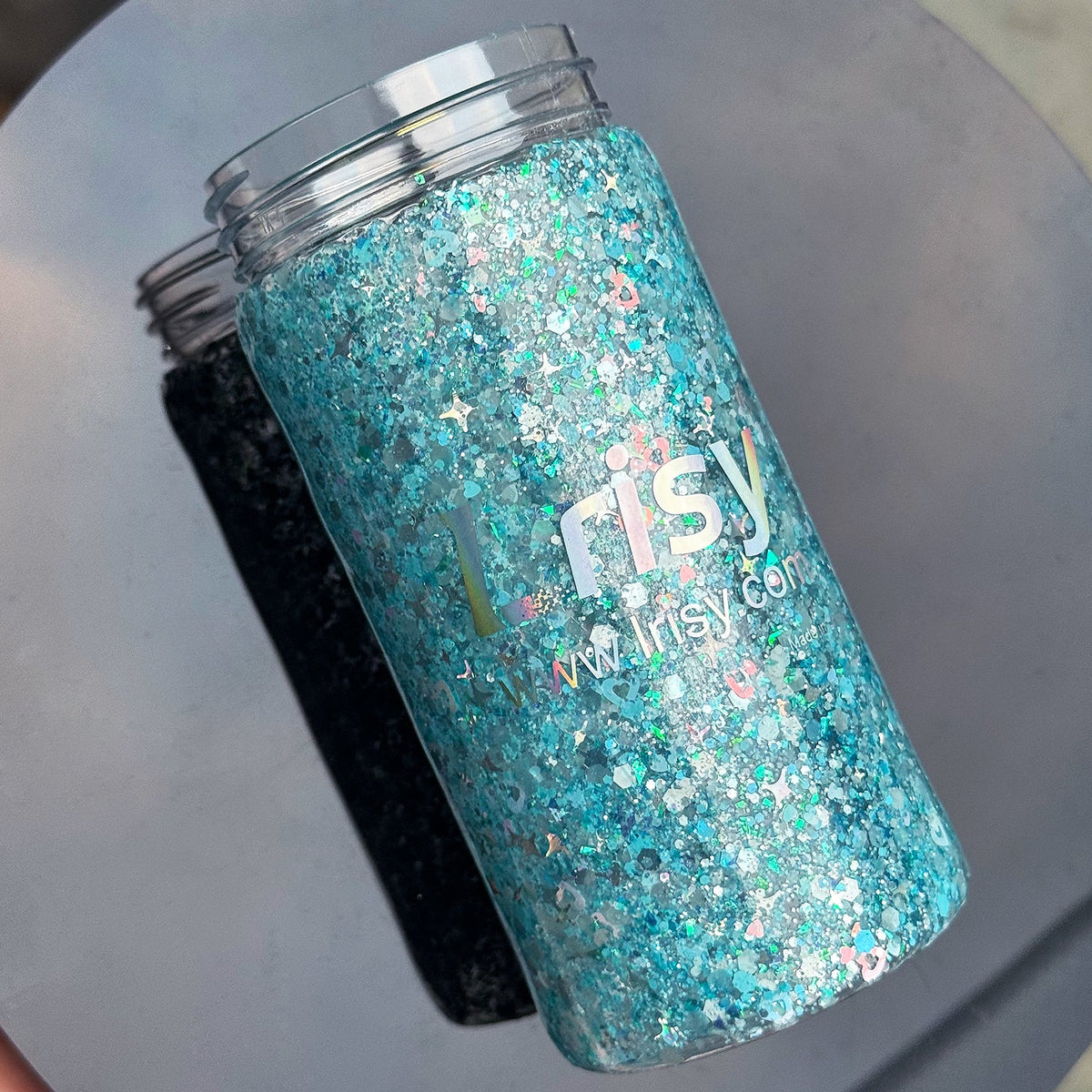

Quick Answer: Festival vendors in 2026 should stock cosmetic-grade glitter for body and face work — especially neon and UV-reactive lines for night events — plus chunky and shaped flakes for costume and accessory decoration, at $20–$45/kg for cosmetic-grade and $30–$80/kg for chunky/shaped wholesale. Buy seasonally: 60–70% of your glitter budget for Q2–Q3 (spring/summer festivals) and a separate Q4 stock for holiday markets. And add a certified biodegradable line, because many 2026 event organizers now require it. Eco compliance is becoming a vendor requirement, not a differentiator.
Here is the scenario every festival vendor should plan for. A customer's face glitter starts to flake and irritate under the heat, and the event organizer pulls the booth for two hours while they investigate. The glitter was labeled cosmetic-grade but contained craft-grade pigments with sharp cut edges. Two hours of lost sales at festival pace is roughly $900, and the vendor contract hangs on how the booth responds.
The fix is straightforward: switch to verified cosmetic-grade glitter with rounded edges, add a UV-reactive neon line, and rebuild the whole approach around what the event actually requires.
A festival booth rebuilt this way carries three distinct product lines: cosmetic body glitter, costume/chunky flakes, and eco-compliant biodegradable options, each with its own sourcing rules. This guide walks through what festival vendors need to buy bulk glitter well in 2026: the cosmetic-grade rules for skin work, the neon/UV trend driving demand, seasonal purchasing strategy, and the eco requirements event organizers are starting to enforce.
Key Takeaways
- Body and face glitter must be cosmetic-grade: FDA-compliant pigments and rounded edges. Craft-grade on skin is a safety risk and a vendor-contract risk.
- Neon and UV-reactive glitter is the 2026 festival volume driver: it performs best at night events and photographs well for social content.
- Buy seasonally, not yearly: 60–70% of glitter budget in Q2–Q3, with a separate Q4 holiday stock ordered by September.
- Wholesale pricing: $20–$45/kg cosmetic-grade, $30–$80/kg chunky/shaped, $35–$90/kg biodegradable. Retail pots cost 3–5x more per gram.
- Eco compliance is becoming a vendor requirement: more event organizers now mandate biodegradable glitter under EU-style microplastic rules.
- Pre-package your volume sellers and keep samples of every SKU: sampling is the #1 upsell tool at festivals.
Body Glitter Is a Service Business with Cosmetic-Grade Rules
The most profitable thing a festival vendor sells is an experience, and body glitter is the fastest, highest-margin service at the booth. But it is also the one with the strictest rules.
Why cosmetic-grade matters at festivals: body glitter sits on skin for hours in heat, sweat, and sun. Cosmetic-grade glitter uses FDA-compliant pigments and rounded particle edges designed for skin contact. Craft-grade uses industrial pigments and sharper cut edges that can flake, irritate, or leave a gritty residue. On a festival floor, one reaction is enough to lose a booth, so cosmetic-grade is not an up-sell, it is the entry ticket. The FDA cosmetic product guidance is the regulatory baseline, and the cosmetic-grade distinction in the glitter literature is the line between a service and a liability.
Your body-glitter line needs
- Cosmetic-grade, solvent-resistant fine glitter in 0.004–0.015 in sizes for skin application.
- FDA-compliant pigments with rounded edges. Verify the spec sheet says "cosmetic-grade," not just "non-toxic."
- UV-reactive and neon lines: the 2026 volume driver for night festivals.
- Adhesives and gels compatible with your glitter, a complete application kit is an up-sell on its own.
For the regulatory detail on what makes a glitter safe for skin, LRISY's cosmetic glitter regulations guide is the reference. And the cosmetic-grade lines in LRISY's glitter powder collection are a practical starting catalog for booth stock.
The service economics behind the line: a single body application uses 0.5–1g of fine glitter — under $0.05 of material at $20–$45/kg wholesale. At an $8–$20 service price, glitter is under 1% of the sale. That is the entire reason the body line, not the product line, is the profit engine of a festival booth: the margin is labor and demonstration, not material. It is also why the service line must never compromise on grade: the $0.05 saving of switching to craft-grade is a rounding error next to the booth-contract risk it creates.
Protect the service line, and the service line protects the season.
Neon & UV-Reactive Glitter: The 2026 Festival Driver
Neon and UV-reactive glitter is the fastest-growing segment in festival vending. Its appeal is simple: it pops at night, it photographs well, and it is visibly "festival" in a way regular metallic glitter is not.
Most festivals run night stages and black-light zones, and that is where UV-reactive glitter earns its keep. It is invisible in daylight and brilliant under UV, which makes it the perfect "moment" product: attendees discover it at the night stage and come back to your booth the next day. It also generates social content, which is free marketing for your booth. Stocking neon and UV lines converts your booth from a commodity seller into a destination.
What to stock: neon pink, neon green, neon yellow, and UV-reactive white in fine sizes for body work, plus neon chunky for costume accessories. LRISY's neon glitter wholesale category is built for this exact use case.
Neon and UV stock earns a higher per-application price for a practical reason: customers cannot test UV reaction in daylight, so they trust the vendor's demonstration; which means the demo is the sale. A booth that shows neon under a small UV torch at dusk creates a line, and that scarcity of demonstration is why neon lines support higher per-application pricing than standard metallic glitter.
Costume & Accessory Glitter: The Product Business
Beyond body work, festival vendors sell decorated accessories: hats, masks, signs, totems, and apparel. These are product sales with different rules: craft-grade is acceptable (nothing touches skin), and chunky/shaped flakes are the volume sellers because they create visible dimensional effects.
Costume glitter lines to stock
- Chunky flakes for tote bags, hats, and signs — visible from across the field.
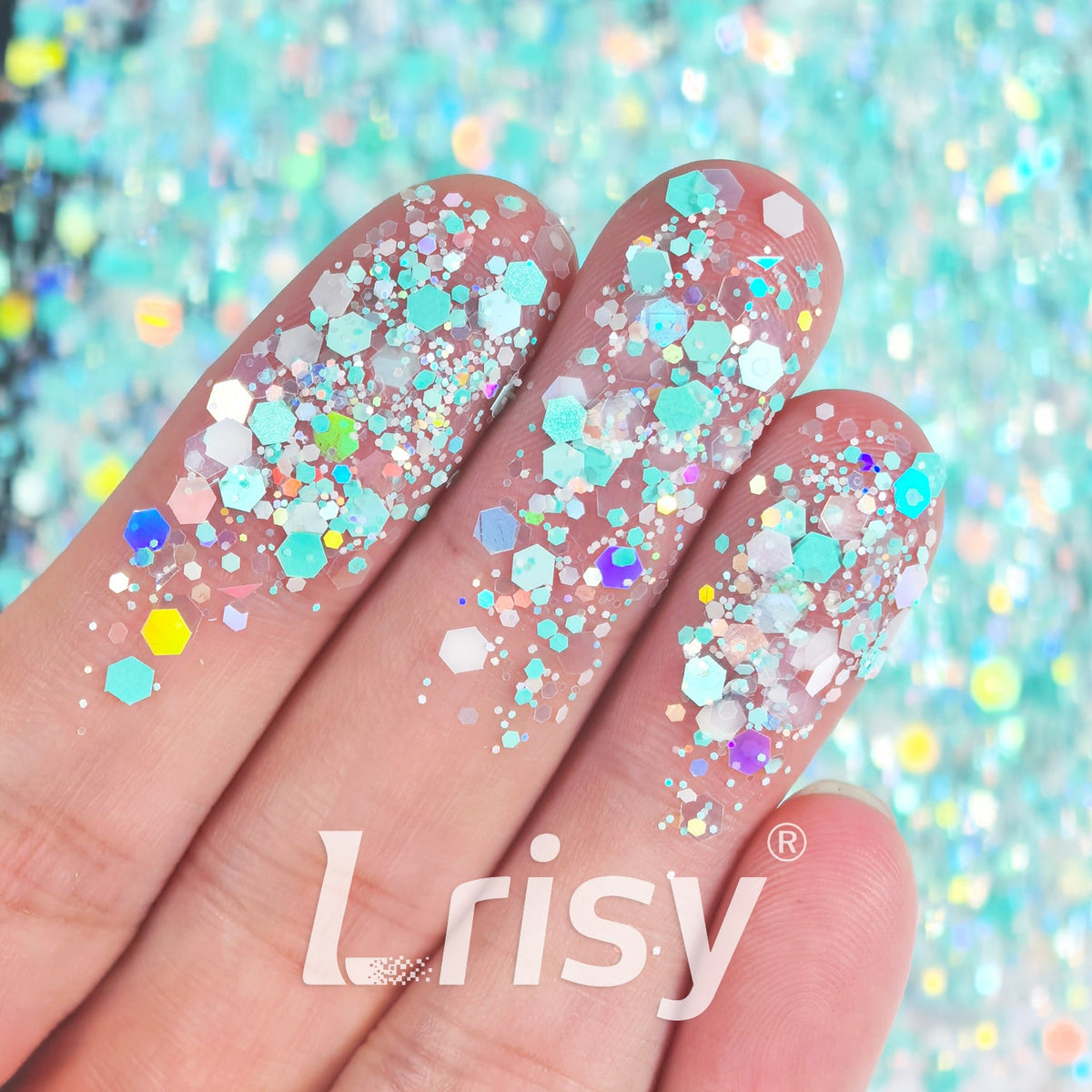
- Shaped flakes (stars, hexagons, hearts) for themed decorations. See LRISY's shaped chunky glitter range.
- Metallic and holographic for premium accessory upgrades.
- Apply-on products (glitter glue, spray, transfer) to attach flakes, another margin layer.
The chunky glitter wholesale range covers the dimensional flakes that drive costume sales. On costume pieces, chunky flakes beat fine glitter because of viewing distance: a hat or sign decorated with fine glitter reads as flat paint from a distance; chunky flakes catch light individually and register as texture. That is the difference between "decorated" and "wow."
Seasonal Buying: How to Time Your Bulk Orders
Festival vending is intensely seasonal, and buying timing is where vendors either build margin or burn cash on dead inventory.
Festival cash flow comes in two waves a year, and buying must match them: festival season runs roughly May through September (Q2–Q3), with a secondary holiday-market spike in November–December (Q4). Glitter suppliers' lead times mean a Q2 order must be placed by March to arrive in time. Buying seasonally (60–70% of your budget for spring/summer, a separate Q4 holiday stock) keeps cash out of dead inventory and ensures you are stocked exactly when demand peaks.
| Season | Order By | Stock Focus | Budget Share |
|---|---|---|---|
| Spring/Summer (Q2–Q3) | By March | Neon/UV body glitter, fine cosmetic core | 60–70% |
| Holiday markets (Q4) | By September | Gold, red, silver, chunky costume flakes | 20–25% |
| Year-round base | Any time | Core fine colors, eco-compliant line | 10–15% |
The March deadline is not arbitrary: production runs 7–15 days, sea freight adds 25–35 days, and Q2 demand is front-loaded; festivals book their vendor lineup early, and the booths that sell glitter on the first day are the ones that ordered in winter. The same logic applies to Q4: order holiday gold and red by early September or lose the Thanksgiving-to-Christmas window.
The cash-flow rule: treat your glitter budget as three separate pools, the Q2–Q3 core, the Q4 holiday stock, and a small contingency for mid-season reorders. A vendor who sells faster than planned should reorder from the same batch and lot by mid-season so colors stay consistent across the summer, not scramble in August when suppliers are backed up. This is the difference between a season that runs out of its best-seller and one that restocks it at the peak.
What a Festival Vendor Should Pay in 2026
Benchmark quotes against these wholesale ranges. Retail pots and pre-packed sachets cost 3–5x more per gram. Buying bulk and pre-packing your own volume sellers is where the margin comes from.
| Type | Wholesale (per kg) | Typical Retail (per 5–10g) | Best For |
|---|---|---|---|
| Cosmetic-grade fine | $20 – $45 | $6 – $12 | Body/face service line |
| Neon / UV-reactive | $25 – $50 | $8 – $15 | Night-stage volume driver |
| Chunky / shaped | $30 – $80 | $10 – $20 | Costume/accessory products |
| Biodegradable | $35 – $90 | $20 – $45 | Eco-compliant vendor lines |
Pre-packing is where bulk buying turns into retail margin: a 5g sachet at $8 retail is $1,600/kg equivalent. Buying cosmetic-grade at $30/kg and packing your own sachets converts a $0.15 material cost into an $8 retail sale: a margin no pre-packed wholesale product can match. For the full unit-cost and MOQ breakdown, see the bulk glitter pricing guide, and for the overall wholesale playbook, LRISY's complete wholesale glitter buying guide for business covers pricing, MOQs, and supplier vetting end to end.
The Eco Requirement: Why Biodegradable Is Becoming Mandatory
This is the 2026 shift that festival vendors cannot ignore: more event organizers are now requiring biodegradable glitter, and some large events have banned conventional plastic glitter outright on their grounds.
Festivals are turning to biodegradable for a waste-stream reason: conventional PET glitter is a microplastic, and festivals generate it by the kilogram; it washes into waterways from event grounds. The EU's Regulation 2023/2055 bans loose plastic glitter outright, and US organizers are following the momentum with venue-level bans. For a vendor, that means an eco-compliant line is no longer a differentiator; it is increasingly the price of a vendor contract.
What to verify before buying "biodegradable":
- Third-party certification: OECD 301, TÜV OK Compost, or EN 13432. "Bio-coated" PET glitter is a common greenwashing trap.
- Cosmetic-grade biodegradable for body work. Biodegradable does not automatically mean skin-safe.
- Booth-signal it: an "eco glitter" sign is a proven attendance driver at environmentally focused events.
For the certification details and sourcing specifics, LRISY's biodegradable glitter wholesale guide is the reference, and the bulk biodegradable glitter buying guide covers the sourcing process step by step.
Stock Plan for a Festival Season
Here is a practical stock plan for a single summer festival season (2–4 events), sized for a vendor doing both body services and accessory product sales.
| Line | Quantity | Use |
|---|---|---|
| Cosmetic fine core (silver, gold, pink) | 500g each | Body service volume line |
| Neon / UV-reactive | 500g each × 4–5 colors | Night-stage volume driver |
| Chunky / shaped | 250g each × 4 colors | Costume/accessory products |
| Biodegradable (cosmetic-grade) | 250g each × 3 colors | Eco-compliant vendor requirement |
| Pre-packaged sachets | Fill from above | Retail upsell at $5–$10 each |
The math behind this sizing is simple: a single body application uses 0.5–1g, so 500g is roughly 500–1,000 applications per color, enough for a 2–4 event season with a margin for re-stock. Chunky at 250g per color covers dozens of decorated accessories, and the biodegradable line is sized as insurance against an organizer requirement, not a volume seller. Start with LRISY's glitter sample sets to test colors and grades before committing to season-sized orders, especially for the neon and eco lines where demand varies by event.
Pricing Your Booth: Turning Bulk into Margin
The most common festival pricing mistake is charging per-application prices that reflect retail glitter costs. Once you buy bulk, your cost base collapses, and pricing should follow the service value, not the material.
- Body-glitter service: charge $8–$20 per application (face, collarbone, or under-eye accents). Material cost is under $0.05. The margin is your time and skill, not the glitter.
- Pre-packed sachets: retail at $5–$10 each, a 40–100x markup on the $0.15 material cost. Sachets turn idle booth time into sales.
- Decorative accessories: a hat or tote with chunky glitter accents supports a $5–$15 upcharge on the product price, the glitter cost is under $0.50.
- Neon/UV premium: add $3–$5 per application for UV-reactive lines; the demonstration value justifies it.
Why pricing on bulk cost beats pricing on retail: every dollar of material you save by buying bulk is a dollar of margin you can either keep or reinvest in demonstration and display. Vendors who price on retail habits leave 30–50% of their potential margin on the table every single event. For the unit-cost math that anchors this pricing, see the bulk glitter buying guide.
How to Demo and Sell Glitter at the Booth
The margin math only converts to cash if the booth actually sells, and at festivals, glitter sells through demonstration, not display. The vendors who sell out are the ones who turn the booth into a 60-second experience.
The demo kit that closes sales
- A UV torch for the night crowd. A $15 black-light torch transforms neon and UV-reactive glitter from "invisible in daylight" into the most exciting product at your booth. Demo it at dusk and the line forms itself.
- Mirrored trays and sample pots. Lay cosmetic-grade fine glitter on a mirror so customers see the true sparkle density, not a flat pile. Keep an open sample pot of every SKU: sampling is the #1 upsell tool at festivals.
- Before-and-after swatches. Pre-make small cards showing body application results so customers can see the finished look without committing.
- A fast service station. Body glitter application takes 60–90 seconds per customer. Queue management — one artist applying, one person taking payment and booking — is what turns a long line into maximum revenue.
Pricing anchors that work in the moment
- Body service: $8–$20 per application, priced by area (face, collarbone, under-eye accent). The material cost is under $0.05, so nearly every dollar is margin.
- Sachets: $5–$10 each, a 40–100x markup on the $0.15 material cost. Pre-packed sachets capture impulse buyers who do not want the service.
- Bundles: "$15 for a face sparkle + a sachet" beats selling each alone. Bundles raise average transaction value without discounting the service price.
- Neon premium: add $3–$5 per application for UV-reactive lines. The demonstration value justifies it, and the premium funds the torch and the demo.
Demonstration is the sales engine because glitter is a "see it to believe it" product — especially UV-reactive lines that customers cannot verify in daylight. Every dollar spent on demo (torch, mirrors, swatches, samples) multiplies itself in revenue, because it converts curiosity into a paid application in under a minute. The booth that demonstrates outsells the booth that displays, every single event. For the unit-cost math that anchors this pricing, see the bulk glitter buying guide.
Vetting a Festival-Glitter Supplier: The Checklist
Run every candidate through this checklist before committing a season's budget:
- Cosmetic-grade documentation? FDA 21 CFR pigments and rounded edges — in writing, for any glitter that touches skin.
- UV-reactive and neon verified? A UV test photo or spec that proves the line actually reacts under black light.
- Biodegradable certification? Third-party certificates (OECD 301, TÜV OK Compost, EN 13432), not just a "bio" label.
- Batch samples from the actual lot? Test the sample on skin and under UV before the season order.
- Pre-packaging support? Does the supplier offer sachet or jar packaging so you can build your retail line?
- Seasonal lead times? Confirm production and shipping time so a Q2 order placed in March actually arrives on time.
For the full vetting playbook, red-flag phrases and sample-testing technique, see LRISY's how to vet a wholesale glitter supplier guide.
FAQ: Bulk Glitter for Festival Vendors
What glitter should a festival vendor buy?
Cosmetic-grade glitter for body and face work (FDA-compliant pigments, rounded edges), neon/UV-reactive lines for night events, and chunky/shaped flakes for costume products. Add a certified biodegradable line as event organizers require it.
Is all festival glitter safe for skin?
No. Only cosmetic-grade glitter is designed for skin contact. "Non-toxic" is not the same as cosmetic-grade: verify the spec sheet before using any glitter on skin.
How much does bulk festival glitter cost?
Cosmetic-grade fine runs $20–$45/kg wholesale; neon/UV $25–$50/kg; chunky/shaped $30–$80/kg; biodegradable $35–$90/kg. Retail pots and sachets cost 3–5x more per gram.
Do I need biodegradable glitter for festivals?
Increasingly yes. Many 2026 event organizers require biodegradable glitter on their grounds under microplastic rules. Verify third-party certification, "bio-coated" PET glitter is a common greenwashing trap.
When should I order glitter for festival season?
Order Q2–Q3 festival stock by March, and Q4 holiday stock by September, to account for production and shipping lead times. Buy 60–70% of your glitter budget for the summer season.
How do I make money selling glitter at a festival?
Run two lines: body-glitter services (high margin, fast turnover) and pre-packaged sachets/accessories (retail at $5–$10). Keep samples of every SKU: sampling is the #1 upsell tool at festivals.
What is the best-selling glitter at festivals?
Neon and UV-reactive glitter is the 2026 volume driver; it pops at night and photographs well. Cosmetic-grade fine in silver, gold, and pink remains the everyday volume line.
📖 Reading Next
Continue exploring the LRISY glitter library:
- Complete Wholesale Glitter Buying Guide for Business — the end-to-end wholesale playbook.
- Biodegradable Glitter Wholesale — certifications and eco sourcing for event vendors.
- Bulk Glitter Pricing Guide — unit costs and MOQs for booth budget planning.
- Bulk Glitter Buying Guide — types, costs, and smart sourcing.
- How to Vet a Wholesale Glitter Supplier — red flags and sample-testing technique.
Conclusion
Festival glitter vending in 2026 is three businesses in one booth: a cosmetic-grade body service, a trend-driven costume product line, and a growing eco-compliant requirement. Stock cosmetic-grade fine for skin, neon and UV for the night stage, chunky and shaped for accessories, and certified biodegradable before an organizer asks.
Run it as a system, not a grab bag: buy seasonally, verify specs in writing, and pre-package your volume sellers. The vendors who do are the ones who sell out every event, because the margin is never in the glitter itself. It comes from sourcing discipline, seasonal timing, and a pricing structure that turns a $0.15 material cost into a $10 retail sale.
None of that structure pays off for a vendor working a single one-day booth, or a circuit that has not raised eco rules yet: one cosmetic-grade line and one chunky line, ordered once and priced on bulk cost, will serve you fine. The buying calendar and the three-line stock plan exist for vendors who plan to be back next weekend, and those are the vendors they reward.
Ready to stock your festival booth? Explore LRISY's neon glitter wholesale for UV-reactive lines, the chunky glitter wholesale for costume products, and start with a sample set to test colors before the season.


Leave a comment
All comments are moderated before being published.
This site is protected by hCaptcha and the hCaptcha Privacy Policy and Terms of Service apply.