
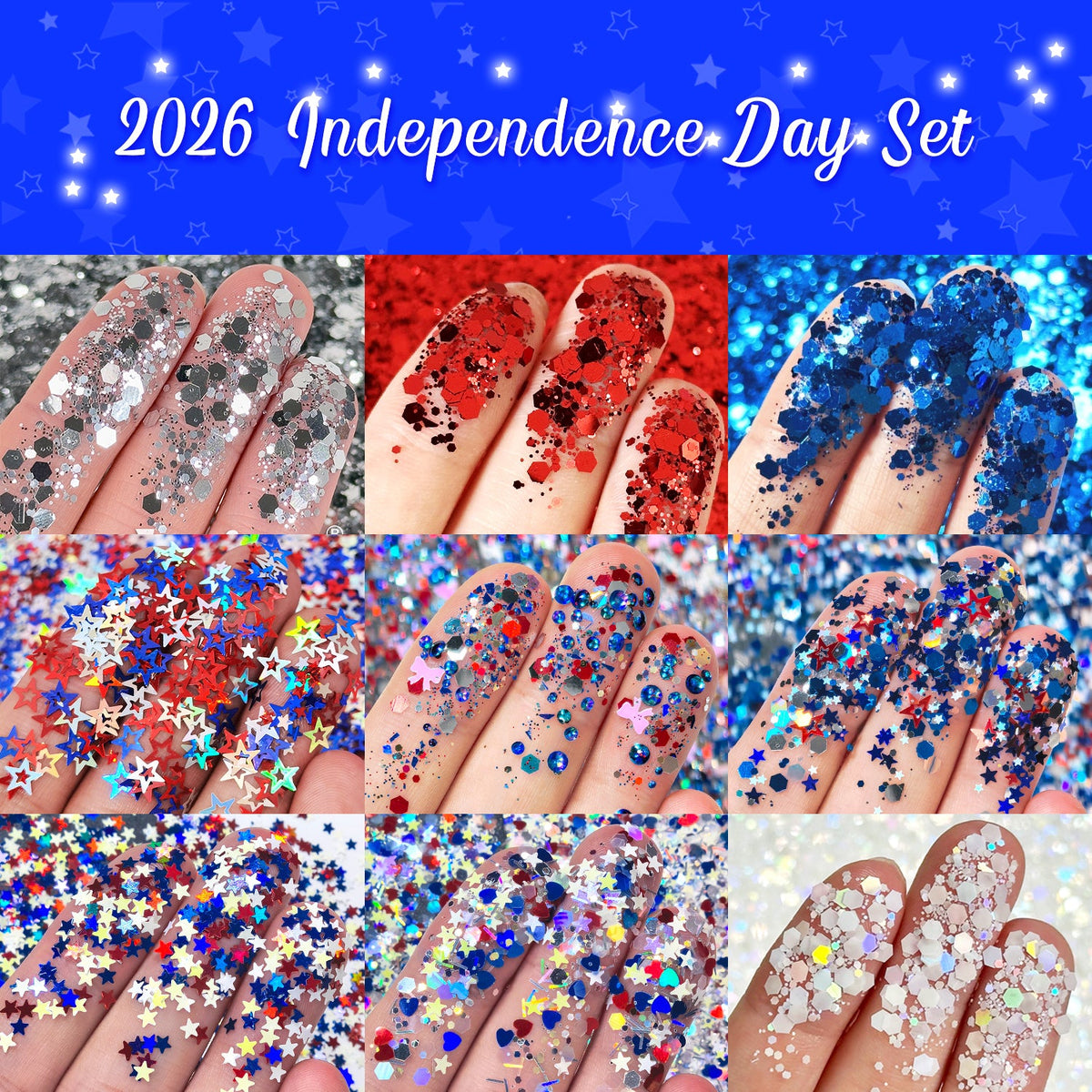
Quick Answer: Bulk glitter costs $3.50-$5.50 per pound factory-direct (roughly $8-$12/kg) versus $10.29-$18.20 per pound at retail — a 60-80% savings — but the right type, grade, and supplier matter more than the price. "Bulk glitter" draws about 8,100 searches per month and "wholesale glitter" another 5,400, making this one of the biggest commercial clusters in the craft-supply market. In 2026, biodegradable demand is rising under the EU microplastic ban, small businesses can now order from 1 kg with free samples, and the difference between a real manufacturer and a reseller is the single biggest financial decision you'll make in this market.
Daniel launched a small craft business selling glitter slime kits on Etsy. His first order: 200 assorted jars of "wholesale glitter" from a general marketplace listing — $119, free shipping. The kit arrived, and every color was mismatched. The "holographic" wasn't holographic, the particle sizes varied wildly between jars, and one color bled like ink in water. He refunded 40% of his first 60 orders before he cut his losses and found a real factory-direct supplier.
His story is common. "Wholesale glitter" is one of the most abused product labels in the craft-supply market. The word "wholesale" on a listing means almost nothing without verification of what's actually in the bag. Genuine wholesaling moves goods in volume at cost-plus margins; a reseller can call a repackaged retail jar "wholesale" and nothing stops them.
This guide walks through wholesale glitter pricing benchmarks, how MOQs really work, the grades and specs that matter, the retail-vs-wholesale cost math, and a vetting checklist you can run against any supplier — including the questions to ask before you commit.
Key Takeaways
- Bulk PET glitter runs $3.50-$5.50/lb factory-direct versus $10.29-$18.20/lb at retail — a 60-80% savings that only appears when you buy by weight.
- Biodegradable glitter costs $45-$65/lb wholesale (2-3x PET) but is the fastest-growing, highest-margin segment in the market.
- EU Regulation 2023/2055 has banned loose plastic glitter since Oct 2023, with cosmetics phasing out through 2035 — this is reshaping wholesale demand now.
- Real factory-direct MOQs start at 1-2 kg per color, not the "1 jar minimum" that marketplace resellers use.
- The four specs that define a usable wholesale lot: grade (cosmetic vs craft), solvent/heat resistance, particle-size consistency, and color fastness.
- Free sampling is now standard — order samples (often up to 20g free) and test them in your actual product before any bulk commitment.
Is "Wholesale Glitter" Actually Wholesale? How the Market Really Works
Here's the uncomfortable truth: most "wholesale glitter" listings on general marketplaces are repackaged retail products. A reseller buys a bulk bag from a factory, splits it into 100g jars, marks it up 4-5x, and labels it "wholesale." You're not getting factory pricing — you're getting retail pricing with a wholesale label.
How to tell the difference: A genuine factory-direct supplier quotes prices per kilogram, specifies MOQs per color, and can provide test documentation. A reseller quotes per jar, has no minimum, and can't show you a material spec sheet. Real wholesaling moves goods in volume at cost-plus margins; the per-unit price should drop measurably as quantity rises. Why this matters: the entire point of buying wholesale is the volume discount — if the price doesn't drop with quantity, the label is a lie.
The fix: Buy from the source. Factory-direct glitter manufacturers — like LRISY, which produces glitter and rhinestones in-house — quote per-weight pricing and supply test data because they control the production line. That's where the 3-5x retail markup collapses to a 20-40% wholesale margin. The deeper version of this analysis, including red-flag phrases and how to test a sample, is in the how to vet a wholesale glitter supplier guide.
Wholesale Glitter Pricing Benchmarks for 2026
Pricing varies by grade, particle size, finish, and quantity. Here are the 2026 reference ranges to benchmark any quote against — before you compare, convert everything to per-pound or per-kg.
| Grade / Finish | Wholesale (per lb) | Wholesale (per kg) | Typical Retail (per lb) | Notes |
|---|---|---|---|---|
| Standard craft PET | $3.50 - $5.50 | $8 - $12 | $10.29 - $18.20 | Basic colors, fine to medium particles |
| Cosmetic-grade | $9 - $20 | $20 - $45 | $26 - $55 | FDA-compliant pigments, rounded edges |
| Holographic | $11 - $23 | $25 - $50 | $33 - $66 | Rainbow diffraction finish |
| Iridescent / color-shift | $11 - $25 | $25 - $55 | $33 - $77 | Two-tone shift, premium positioning |
| Chunky / shaped (hex, star, heart) | $14 - $36 | $30 - $80 | $40 - $88 | Dimensional flakes, geode styles |
| Biodegradable | $45 - $65 | $99 - $143 | $88 - $180 | Certified cellulose/mica, fastest-growing |
How to read the table: If a supplier quotes $6/lb for "premium holographic glitter," the product isn't what it claims to be — real holographic wholesale doesn't go below roughly $11/lb at volume. Price is the fastest early-warning signal in this market. The bulk glitter pricing guide breaks down unit costs, MOQs, and hidden fees in more depth, and the bulk glitter cost per pound guide gives the per-pound math for every grade.
The Hidden Costs Most Buyers Miss
The per-pound price is only the starting point. These five costs routinely turn a "great deal" into a margin killer — and they're the ones resellers don't mention.
- MOQ per color, not per order — a 10kg order across 10 colors might mean a 1kg minimum per color, not 100g each. Why it hurts: you'll be forced to over-stock colors you don't need to get the colors you do.
- Sample costs — real factories charge for samples or shipping; free samples from marketplace resellers are often repackaged retail. Why it matters: a $20 sample that tells you the truth is cheaper than a $200 lot that doesn't.
- Custom color / custom cut fees — matching a Pantone color or making a custom particle size adds setup costs. Why: each custom run requires cleaning the line and mixing new pigment; the setup is real money.
- Certification documentation — cosmetic-grade and biodegradability certifications cost the supplier money; verify they're included or quoted separately.
- Shipping and duties — glitter is lightweight but bulky; freight quotes should always be FOB or CIF to avoid surprises, and the HS code for pigment glitter is 3206.50. Why landed cost matters: shipping, customs, and payment fees can add 20-40% to the total — the headline price is never the final price.
Why hidden costs are the real decision: two suppliers can quote the same per-kg price and differ by 30%+ in landed cost. Always calculate delivered cost per kilogram, not the quoted per-kg price.
MOQs Explained: What a Real Supplier Requires
MOQ (minimum order quantity) is where amateur buyers trip up. A genuine factory-direct supplier has real per-color minimums because production runs are batched by color and grade — and understanding why they exist turns a frustration into a negotiation lever.
Typical MOQ ranges in 2026
- Factory-direct standard glitter: 1-2 kg per color loose
- Custom colors / custom sizes: 100-500 kg per color
- Private label / custom packaging: 25kg+ or negotiated annual volumes
- Specialty finishes (biodegradable, metallic): 1-10 kg per color (5-50 lb for biodegradable)
- Micro-orders: from about $0.95 for product testing at some suppliers
Why MOQs exist: Each color run requires cleaning the production line, mixing new pigment, and re-calibrating the particle cut. Small runs cost more per unit — which is exactly why per-color minimums exist. If a supplier offers any color, any quantity, at a flat price, they're likely repackaging, not manufacturing. Why this is your signal: the MOQ structure is the clearest single indicator of whether you're talking to a factory or a middleman.
The negotiation lever: Order fewer colors at higher quantity per color. A 2kg order of one color negotiates far better than a 2kg order split across 10 colors, because the factory amortizes the setup over more product. Why this works: the setup cost is per color-run; concentrating your order into fewer runs gives the factory lower cost and you lower per-kg price.
For a full breakdown of how MOQs scale with volume, see the bulk glitter pricing guide.
The Four Specs That Define a Usable Wholesale Lot
Before you order anything in volume, confirm these four specs on paper. They're the difference between a profitable product line and a shelf of unusable inventory.
1. Grade (Cosmetic vs Craft)
Cosmetic-grade glitter uses FDA-compliant pigments and rounded edges — safe for skin, nails, and body application. Craft-grade is for decorations only. Why this matters for resellers: if you resell glitter for beauty use (nails, makeup, body), cosmetic-grade is non-negotiable — selling craft-grade as cosmetic is a liability, not a saving. If you sell craft and decor products, craft-grade is fine and cheaper.
2. Solvent and Heat Resistance
If your product touches resin, polish, or any solvent, the glitter must be solvent-resistant or the color bleeds. If it touches heat (resin curing, candle wax, tumblers), it must be heat-rated to at least 180°C. Why you must confirm both: these are invisible specs — the glitter looks identical until it fails inside your product, at which point the batch is ruined. LRISY's standard line is engineered for epoxy and polish compatibility.
3. Particle-Size Consistency
Batch-to-batch size consistency determines whether your final product looks uniform or patchy. Ask the supplier for their tolerance range and request a pre-shipment sample from the same batch you'll receive. Why consistency is a spec, not a detail: inconsistent lots cause predictable quality complaints — one batch of a "fine" glitter that arrives as mixed fine-and-chunky ruins every product it goes into.
4. Color Fastness
Does the color survive light, heat, and solvent exposure without fading or bleeding? A fastness test or supplier documentation is the proof. Why it matters: the cheapest glitter in the world is expensive if the color fades in a month. LRISY publishes epoxy and polish test results on product pages, so buyers can verify before committing.
Why these four specs are the filter: price tells you the market tier, but these four tell you whether the product will actually work in yours. Every failed wholesale purchase in this market traces to skipping one of them.
How to Vet a Wholesale Glitter Supplier: The Checklist
Run every candidate through this six-point checklist before ordering bulk. Each check targets one specific way resellers disguise themselves.
| Check | What a Real Factory Shows | What a Reseller Hides |
|---|---|---|
| 1. Factory or reseller? | Production-line tour, facility photos | Vague "warehouse" answers, no facility |
| 2. Pricing structure? | Per-kg quotes with per-color MOQs | Per-jar pricing, no minimum, flat price |
| 3. Material spec sheet? | Grade, PET thickness, heat/solvent ratings | No written specs, "trust us" answers |
| 4. Test documentation? | Epoxy tests, polish tests, certifications | No tests, no certificates, no citations |
| 5. Batch samples? | Sample from the actual batch you'll receive | Cherry-picked marketing pack only |
| 6. Return policy? | Written process for spec-mismatch lots | No policy, "all sales final" |
Why the checklist works: each column is a different failure mode — a reseller can fake one or two signals, but they can't fake all six consistently. The deeper version of this checklist — including red-flag phrases and how to test a sample — is in LRISY's how to vet a wholesale glitter supplier guide, and the how to choose a bulk glitter supplier guide has the certification and QA checklist.
The Retail vs Wholesale Math: When Bulk Actually Pays Off
Buying bulk is only smart when the math holds. Here's how to calculate whether wholesale actually saves you money — and the point where it doesn't.
The anchor: retail per-pound prices
Retail glitter jars anchor the comparison. Major craft retailers list 1 lb jars around $10.29-$18.20 — that's the price a consumer pays for a pound of standard PET glitter. Factory-direct bulk runs $3.50-$5.50/lb for the same material. Why the gap exists: retail price includes the jar, the retail markup, the shelf space, and the brand; factory-direct price is raw material plus manufacturing margin. The gap is the whole reason wholesale exists.
When bulk pays off
Bulk pays off when three conditions hold: you'll use the volume before it degrades, you can store it properly, and you have the cash to buy it. Why: glitter is inert and stores well for years, so the main risk isn't spoilage — it's dead inventory that your product line never uses.
The micro-order bridge
Between samples and a full bulk order, micro-orders let you test a color at commercial scale. Some suppliers offer micro-orders from about $0.95 for product testing. Why this matters for new businesses: it's the cheapest way to validate demand for a new color before committing to a 1-2 kg MOQ.
Why the math is the whole business: a tumbler maker switching from $3/oz retail to $0.50/lb factory-direct material cost changes the product's margin from marginal to healthy. The bulk glitter buying guide walks through the sizing trade-offs at wholesale scale, and the bulk glitter for small business guide covers the startup version of this math.
How Much Bulk Glitter Do You Need? Per-Project Reference
The "how much glitter do I need" question is the most common reason buyers over-order or under-order. Use this per-project reference to size your first bulk order — then scale after your product sells.
| Project | Glitter Needed | Type / Size | Notes |
|---|---|---|---|
| 30 oz resin tumbler | 0.3 - 0.5 oz | Fine | 0.2-0.3 oz extra-fine; 0.5-0.75 oz chunky |
| Set of 10 glitter manicures | 1 - 2 oz | Cosmetic-grade fine | Solvent-resistant, 0.004"-0.015" |
| Resin coaster (4-pack) | 0.5 - 1 oz | Fine to medium | Heat-rated 180°C+ |
| Festival booth (one weekend) | 8 - 16 oz | Mixed: chunky + body-safe | Body glitter must be cosmetic-grade |
| Private label launch (10 SKUs) | 5 - 20 kg | Per-color MOQ | 1-2 kg per color minimum |
Why per-project math beats guessing: over-ordering dead inventory is the #1 mistake new glitter businesses make; under-ordering forces emergency retail purchases at 3-5x cost. A simple quantity reference turns both risks into a formula. The how much glitter do I need guide has the full calculator and the resin-specific version is in the resin tumbler business guide.
Wholesale Glitter by Category: What to Stock
The most profitable wholesale orders are built around your end market, not around what's cheap. Here's how to map inventory to a business model.
Craft & Decor Business
Stock standard craft PET in fine-to-medium sizes across the core colors, plus a chunky line for statement pieces. Add holographic for the "premium" tier. LRISY's glitter powder collection is a good starting catalog.
Nail & Beauty Business
Stock cosmetic-grade, solvent-resistant glitter in 0.004"-0.015" sizes. Fine silver, pink, and holographic are the volume drivers. See the glitter for nails range for polish-compatible options, and the bulk glitter for nail salons guide for the per-client math.
Festival / Neon / Party Business
Neon and fluorescent glitters under UV light are a fast-growing 2026 segment. LRISY's neon glitter wholesale category covers the UV-reactive range that performs best at festivals and events, and the bulk glitter for festival vendors guide has the seasonal buying strategy.
Eco-Friendly / Sustainable Brand
Biodegradable glitter carries the highest wholesale price — and the highest margins, because end customers pay a premium for it. Demand is rising as EU microplastics regulation limits conventional glitter in Europe. LRISY's biodegradable glitter wholesale guide covers certification and sourcing, and the bulk biodegradable glitter buying guide compares the eco options in depth.
Private Label / Brand Builder
If you're building your own glitter brand, you need custom packaging, custom colors, and higher MOQs. The private label glitter brand guide walks through the full process from naming to packaging to launch, and the bulk glitter for private label brands guide covers the MOQ and setup math.
Eco-Friendly Bulk Glitter & the EU Microplastic Ban
The regulatory landscape changed the wholesale glitter market overnight — and it's still changing. Understanding the timeline is now a buying decision, not a news item.
What EU Regulation 2023/2055 means for glitter
The EU microplastics restriction (Regulation 2023/2055) banned the sale of loose, non-biodegradable plastic glitter from October 17, 2023. Cosmetics are phasing out on a schedule: rinse-off products by 2027, leave-on products by 2029, and makeup, lips, and nails by 2035, with labeling requirements from 2031. Why this matters for buyers: the restriction drives demand for biodegradable alternatives in every EU-facing market — and it makes "loose plastic glitter" a regulated material you need to track by jurisdiction.
The 2026 timeline in practice
By mid-2026, the ECHA reporting window (May 31, 2026) has passed for importers, and the cosmetics phase-out deadlines are close enough that EU brands are already switching supply chains. Why now is the moment to switch: the brands that transition to certified biodegradable glitter first lock in suppliers, pricing, and shelf placement before the 2027-2035 deadlines force everyone else to compete for the same limited certified supply.
Biodegradable vs "bio-coated" PET: verify the claim
Truly biodegradable glitter is made from cellulose or plant-based film that breaks down in composting environments. "Bio-coated" PET is standard plastic with a thin bio coating — a different material that does not meet the same eco standard. Why you must verify: the label gap between "biodegradable" and "bio-coated" is exactly where greenwashing hides. Look for OECD 301, TÜV OK Compost, or EN 13432 certification from brands like Bioglitter.
Is the 2-3x premium worth it? For EU-facing and eco-branded products, yes — it's the difference between a sellable product and a regulated one. For resin art and permanent crafts, standard PET remains the durable choice, and the eco line is a positioning play. The bulk biodegradable glitter buying guide walks through when the premium pays off.
Ordering Process: From Sample to Bulk
A reliable wholesale order follows a standard sequence. Deviating from it is how buyers get burned — every step exists to de-risk the next one.
- Request samples of the exact colors and grades you plan to order. Test them in your actual product (resin, polish, slime) before committing.
- Confirm the spec sheet in writing — grade, particle size range, heat/solvent ratings, certifications.
- Negotiate the per-kg price with the color-quantity structure that minimizes your per-unit cost.
- Place the bulk order with clear delivery terms (FOB/CIF, lead time, incoterms).
- Request pre-shipment inspection — a photo or video of the actual lot, or a small representative sample.
- Test the received batch against the spec sheet within the return window before using it in production.
Why the sequence matters: each step produces evidence — a sample, a spec sheet, a photo — that you can hold up against the next step. Skipping the sample to save $20 is how a $200 order becomes a $2,000 loss. LRISY offers glitter sample sets precisely so buyers can run this test before committing to bulk — the cheapest insurance a glitter purchase has.
FAQ: Wholesale Glitter
How much does bulk glitter cost per pound in 2026?
Factory-direct PET glitter runs $3.50-$5.50 per pound ($8-$12/kg), versus $10.29-$18.20 per pound at retail — a 60-80% savings. Biodegradable glitter runs $45-$65 per pound wholesale, a 2-3x premium over PET.
Is bulk glitter banned in the EU?
EU Regulation 2023/2055 banned loose, non-biodegradable plastic glitter from sale from October 17, 2023. Cosmetics are phasing out on a schedule: rinse-off by 2027, leave-on by 2029, and makeup, lips, and nails by 2035, with labeling from 2031.
What is the minimum order for bulk glitter?
Factory-direct MOQs start at 1-2 kg per color for loose glitter. Custom colors and custom cuts require 100-500 kg. Micro-orders from about $0.95 are available from some suppliers for product testing before you commit.
Can I get bulk glitter samples before ordering?
Yes — free or low-cost sampling is now standard. Many factory-direct suppliers offer free samples up to 20g across a set of colors, and paid sample packs run $20-$50. Always test the sample in your actual product before the bulk order.
Is wholesale glitter the same as cosmetic glitter?
No. "Wholesale" refers to quantity and pricing; "cosmetic-grade" refers to material safety. You can buy cosmetic-grade glitter wholesale, but not all wholesale glitter is cosmetic-grade. Verify the spec on the material sheet.
What certifications should a glitter supplier have?
For cosmetics and skin contact: REACH, FDA 21 CFR, and EN71-3. For general quality and production: ISO 9001 and ISO 22716. For biodegradable claims: OECD 301, TÜV OK Compost, or EN 13432. Ask for the certificates in writing before ordering.
How much glitter do I need for a 30 oz tumbler?
A standard 30 oz resin tumbler needs about 0.3-0.5 oz of fine glitter for even shimmer, or 0.5-0.75 oz of chunky glitter for a statement look. Extra-fine runs lighter at 0.2-0.3 oz.
What is the difference between biodegradable and bio-coated glitter?
Truly biodegradable glitter is made from cellulose or plant-based film that breaks down in composting environments. "Bio-coated" PET is standard plastic with a thin bio coating — it is not the same material and does not meet the same eco standard. Verify with OECD 301 or TÜV OK Compost certification.
📖 Reading Next
Continue exploring the LRISY glitter library:
- Wholesale Glitter: The Complete Buying Guide — the hub guide covering the full sourcing checklist.
- Bulk Glitter Pricing Guide — unit costs, MOQs, and hidden fees in depth.
- How to Vet a Wholesale Glitter Supplier — red-flag phrases and sample testing.
- Bulk Biodegradable Glitter Buying Guide — certification landscape and eco sourcing.
- How Much Glitter Do I Need? — per-project quantity calculations.
Conclusion
Profitable wholesale glitter buying comes down to three disciplines: buying by weight instead of by jar, verifying specs instead of trusting labels, and vetting the supplier instead of the price. The market is full of repackaged retail labeled "wholesale" — real factory-direct pricing, real MOQs, and real test documentation are how you separate the manufacturers from the middlemen. Add the 2026 regulatory context — the EU microplastic ban and the biodegradable premium — and you're not just buying glitter; you're positioning your product line for the next decade.
Why it matters: the wholesale glitter cluster carries 13,500+ combined monthly searches, and the educational buying-guide gap is still wide open in 2026. The buyer who does the math on grade, particle size, MOQ, and landed cost wins the margin — the buyer who trusts the label gets Daniel's refund problem. The discipline costs nothing and protects every order after it.
Ready to source wholesale glitter from a real factory? Browse LRISY's glitter powder collection, compare the neon wholesale range, and start with a sample set before your first bulk order.

Leave a comment
All comments are moderated before being published.
This site is protected by hCaptcha and the hCaptcha Privacy Policy and Terms of Service apply.