
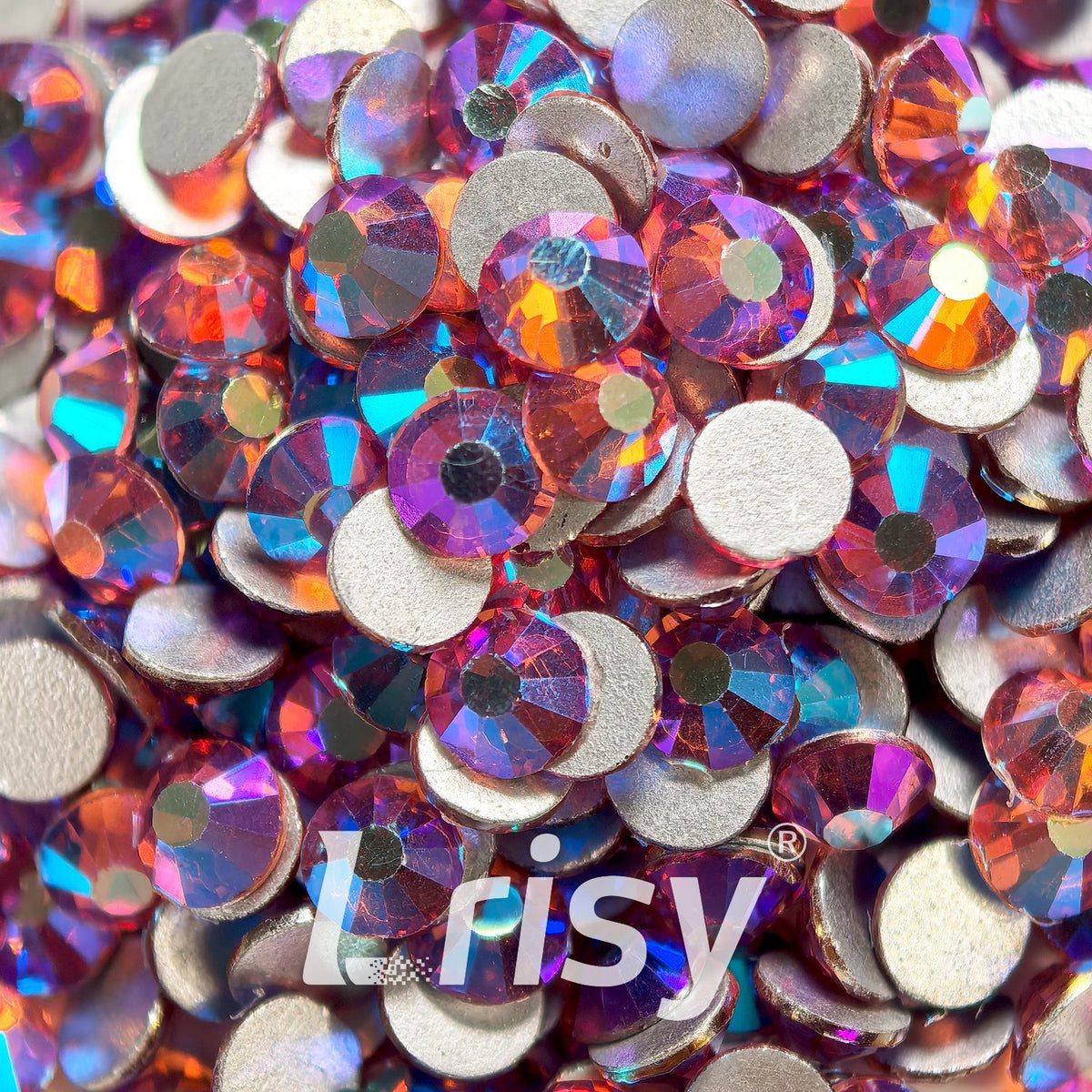
Quick Answer: Sustainable rhinestones use recycled crystal, lead-free adhesives, and ethical labor practices to reduce environmental impact without sacrificing brilliance. Recycled crystal stones from certified manufacturers achieve 97-100% of virgin-crystal sparkle at 10-15% lower cost, while OEKO-TEX and RJC certifications verify claims. The global sustainable rhinestone market is projected to reach $1.2 billion by 2028.
Sustainable Rhinestones: The 2026 Eco-Friendly & Ethical Sourcing Guide
The morning of Swarovski's 2024 Re-Create launch, a dozen quality-control engineers stood around a sorting table holding what should have been a contradiction: a tray of precision-cut crystal rhinestones made entirely from factory floor waste. Each stone passed through a spectrophotometer that measures refractive index to four decimal places. Every single one tested within tolerance. Three years of R&D -- grinding, remelting, slow-annealing -- had solved a problem the crystal industry had called impossible. The result was a stone indistinguishable from virgin-cut crystal, produced with 40% less energy. Within eight months, Re-Create accounted for 22% of the company's loose-stone sales, proving that sustainability and luxury are not opposing forces.
That moment marked a turning point for an industry that had spent decades relying on virgin glass, lead-based foil backings, and energy-intensive cutting processes. Today, sustainable rhinestones are the fastest-growing segment in the decorative crystal market, driven by tightening EU regulations, shifting consumer expectations, and genuine material science breakthroughs. This guide covers everything you need to know to source rhinestones responsibly -- without compromising on sparkle, durability, or cost.
Are Rhinestones Bad for the Environment? The Real Impact
Conventional rhinestones carry a hidden environmental cost that most buyers never see. The standard rhinestone lifecycle involves mining virgin silica sand, smelting it at temperatures exceeding 1,500°C, applying foil backings that contain lead and cadmium, coating stones with petroleum-based adhesives, and shipping finished products across three to five countries. Each step leaves a measurable footprint.
Carbon Emissions from Crystal Production
Producing virgin crystal from raw silica is energy-intensive. The smelting process alone accounts for roughly 70% of a rhinestone's total carbon footprint, according to 2025 lifecycle assessments from the Glass Sustainability Council. Recycled crystal manufacturing cuts this by approximately 40% because post-industrial glass waste requires a lower melting point than raw silica -- the material has already been refined once. For a mid-sized fashion brand using 500,000 stones per year, switching to recycled crystal reduces embedded carbon by an estimated 3.2 metric tons annually.
Heavy Metal Contamination in Adhesives and Foils
This is the industry's most persistent environmental problem. Conventional hot-fix adhesives and foil backings have historically relied on lead, cadmium, and phthalates -- additives chosen because they improve melt flow and adhesion strength. During garment washing, these substances leach into wastewater. In landfills, they persist in leachate for decades. The EU's REACH regulation responded by tightening allowable cadmium limits in decorative components from 100 ppm to 10 ppm in 2024, forcing a rapid industry-wide reformulation of adhesive chemistries.
Microplastic Shedding
An often-overlooked issue: acrylic rhinestones, which dominate the low-cost fashion segment, shed microplastic particles during washing and wear. Unlike crystal rhinestones (made from mineral-based glass), acrylic stones are petroleum-based plastics that fragment into microplastics that enter waterways. Choosing crystal -- whether virgin or recycled -- eliminates this concern entirely because glass reverts to its natural mineral components when broken down.
Why This Matters for Your Brand: EU regulations (REACH, GPSR) and US state-level laws (California's Safer Consumer Products program, Washington's PFAS ban) are progressively tightening chemical restrictions in decorative components. Brands that have not audited their rhinestone supply chain by 2027 face potential import restrictions and compliance fines. Proactive sourcing of certified sustainable rhinestones is no longer a marketing choice -- it is a regulatory necessity.
Why Recycled Crystal Rhinestones Are the Cornerstone of Sustainable Sourcing
Recycled crystal rhinestones form the foundation of the sustainable rhinestone movement. Manufacturers grind post-industrial glass waste and surplus crystal into fine powder, then recast it into precision-cut stones that meet the same refractive index and dispersion standards as virgin crystal. The breakthrough that made this commercially viable -- Swarovski's proprietary slow-annealing kiln process that realigns molecular structure during cooling to prevent bubbles and clouding -- has since been adopted in varying forms by Preciosa, Crystal CG, and other major manufacturers.
The material science behind recycled crystal is straightforward: glass and crystal are infinitely recyclable in theory, but the practical challenge has always been maintaining optical clarity through the remelting process. Impurities, inconsistent cooling rates, and thermal stress create micro-defects that scatter light rather than refracting it. Modern slow-annealing protocols, combined with strict feedstock sorting, eliminate these defects. The result is a stone that spectrophotometer analysis places within 2-3% of virgin crystal on standardized brilliance and fire metrics.
Recycled Crystal vs. Virgin Crystal: Side-by-Side Comparison
| Property | Recycled Crystal | Virgin Crystal |
|---|---|---|
| Refractive Index | 1.51 -- 1.55 | 1.52 -- 1.57 |
| Lead Content | 0% (lead-free) | 0% (lead-free) |
| Carbon Footprint | 40% lower than virgin | Baseline |
| Cost Per Stone (Wholesale) | 10-15% lower | Standard pricing |
| Color Consistency (within batch) | Excellent | Excellent |
| Color Consistency (batch-to-batch) | Good -- may vary slightly by feedstock | Excellent |
| Brilliance Index (relative) | 97-100% | 100% (baseline) |
| Recyclable at End of Life | Yes (mono-material designs) | Yes (mono-material designs) |
| Available Sizes | SS3 -- SS40 (full range) | SS3 -- SS40+ (full range) |
The trade-off is batch consistency. Recycled crystal can vary slightly in color tone between production runs because the input waste glass composition changes as different manufacturing waste streams enter the feedstock. Top manufacturers solve this by maintaining strict feedstock sorting protocols -- separating glass by original color and chemical composition before grinding. When sourcing recycled crystal, request a consistency guarantee from your supplier, and order full-run quantities from a single production batch when color matching is critical.
Do Sustainable Rhinestones Cost More? Breaking Down the Price
The pricing landscape for sustainable rhinestones defies the usual "green premium" assumption. Recycled crystal stones actually cost 10-15% less than virgin crystal equivalents because the raw material -- industrial glass waste that would otherwise go to landfill -- is cheaper than virgin silica sand and refining inputs. This cost advantage passes through the supply chain to wholesale buyers.
However, the certification layer adds cost. Ethically certified rhinestones with full chain-of-custody documentation (RJC, GRS, OEKO-TEX) typically cost 15-25% more than uncertified options due to auditing overhead, third-party testing fees, and supply chain documentation systems. For most buyers, the optimal strategy is to prioritize recycled crystal (which is cheaper) and allocate the savings toward certification costs for the portion of your inventory that carries sustainability claims.
Price Comparison by Stone Type (Wholesale, Per 1,000 Stones, SS10 Size)
| Stone Type | Price Range (USD) | Premium vs. Standard |
|---|---|---|
| Standard virgin crystal (uncertified) | $18 -- $28 | Baseline |
| Recycled crystal (uncertified) | $15 -- $24 | -10 to -15% |
| Recycled crystal + OEKO-TEX | $20 -- $32 | +10 to +15% |
| Recycled crystal + RJC + GRS | $22 -- $35 | +15 to +25% |
| Standard acrylic (low-cost) | $4 -- $10 | -60 to -70% |
| Eco-friendly acrylic (bio-based) | $8 -- $16 | +50 to +100% vs standard acrylic |
Why This Matters: The misconception that "sustainable costs more" discourages brands from making the switch. When you factor in the recycled crystal cost advantage, the net impact of switching to fully certified sustainable rhinestones is often a single-digit percentage increase -- or even cost-neutral if you optimize for recycled content without full multi-certification.
Can Eco-Friendly Rhinestones Match the Sparkle of Traditional Stones?
This is the most frequently asked question from designers and procurement professionals, and the answer has changed dramatically in the past two years. Until 2024, recycled crystal carried a reputation for slightly muted brilliance caused by micro-bubbles and inconsistent crystal structure. The slow-annealing breakthrough changed that. Modern recycled crystal from manufacturers using controlled cooling protocols achieves 97-100% of virgin-crystal brilliance on standardized tests.
For practical purposes, the difference is imperceptible under normal lighting conditions. Side-by-side comparisons under LED retail lighting, direct sunlight, and stage lighting show no discernible difference in sparkle or fire between recycled and virgin crystal of the same cut quality.
What does affect sparkle more than the source material:
- Cut precision: A poorly cut stone will underperform regardless of whether it is recycled or virgin. Prioritize manufacturers known for consistent facet angles.
- Foil quality: The reflective backing beneath the stone accounts for approximately 30% of perceived brightness. High-reflectivity silver or AB foils make a bigger visual difference than the crystal source.
- Stone cleanliness: Dust, oil, or adhesive residue on the foil surface dulls sparkle significantly. This is a quality-control issue, not a material issue.
Eco-Friendly Adhesive Compatibility by Application
| Application | TPU Hot-Fix | Bio-Based Hot-Fix | Water-Based PSA | Traditional (Heavy Metal) |
|---|---|---|---|---|
| Cotton / linen apparel | Excellent | Excellent | Good | Excellent |
| Polyester / synthetics | Excellent (110-120°C) | Good (110-120°C) | Good | Excellent |
| Denim / heavy fabric | Excellent (130°C) | Good (125-130°C) | Fair | Excellent |
| Leather / vegan leather | Good (low temp, 100-110°C) | Fair | Excellent | Good |
| Swimwear / activewear | Excellent (wash-resistant) | Good | Fair (wash-limited) | Excellent |
| Shoes / accessories | Excellent | Good | Good | Excellent |
| Children's clothing | Excellent (lead-free, safe) | Excellent (lead-free, safe) | Excellent (VOC-free) | Not recommended |
| Biodegradability | 60% faster in industrial composting | Biobased, compostable | VOC-free application | Persistent in landfill |
Why This Matters: Choosing the right adhesive type for your specific application is as important as choosing between recycled and virgin crystal. A TPU hot-fix backing on a cotton garment performs identically to traditional heavy-metal adhesives, but with zero toxic leachate and faster biodegradation at end of life.
Why Ethical Sourcing Standards Are Reshaping the Rhinestone Industry
Ethical rhinestone sourcing extends beyond environmental claims to encompass labor conditions, wages, and supply chain transparency. The rhinestone supply chain typically spans three to five countries: raw silica from mines, crystal smelting in one facility, cutting and foiling in another, and final adhesive application in a third. Each link introduces ethical risk that brands must account for under expanding due diligence regulations.
Worker Safety in Cutting Facilities
Rhinestone cutting generates fine silica dust, which causes silicosis when inhaled over prolonged exposure. It is one of the oldest occupational hazards in the decorative stone industry and remains a serious concern in facilities without modern ventilation. Ethical manufacturers install HEPA-grade dust extraction systems, provide N95-equivalent respirators, and rotate workers through cutting stations to limit cumulative exposure. These practices add roughly 8-12% to production costs -- which is why inexpensive rhinestones often originate from facilities that skip them entirely.
Supply Chain Transparency Requirements
The Responsible Jewelry Council (RJC) now includes rhinestone-specific auditing standards in its Code of Practices, covering cobalt and rare earth mineral sourcing used in colored rhinestone coatings. As of January 2026, RJC certification requires full chain-of-custody documentation from smelter to finished product. Brands that cannot provide this documentation face increasing exclusion from EU and North American markets.
Case Study: The Bangladesh Factory Transformation
In 2023, a major Bangladeshi rhinestone foiling facility employing 1,200 workers underwent a comprehensive ethical overhaul after losing two European buyers to sustainability compliance requirements. The transformation included installing centralized dust filtration, replacing lead-based foil adhesives with bismuth alternatives, switching to solar-hybrid power for 60% of energy needs, and implementing a third-party grievance mechanism for workers. The upfront investment of $1.4 million was recouped within 18 months through regained contracts and a 15% energy cost reduction. The facility now supplies five EU-based fashion houses and holds both RJC and OEKO-TEX certifications.
Why Adhesive Chemistry Is the Hidden Environmental Problem
The adhesive backing on hot-fix and sew-on rhinestones has historically been the industry's least-discussed environmental issue. Consumers and even many designers focus on the visible crystal and rarely consider what holds it in place. But the adhesive layer -- typically a thermoplastic resin applied to the reverse of the stone -- has been a hidden source of heavy metal contamination for decades.
The Regulatory Tipping Point
The shift to eco-friendly adhesives gained decisive regulatory momentum in 2024 when the EU's REACH regulation tightened allowable limits for cadmium in decorative components from 100 ppm to 10 ppm. This 90% reduction effectively banned the traditional adhesive formulations that most rhinestone manufacturers had used for decades. The response was a rapid, industry-wide reformulation of entire hot-fix product lines using thermoplastic polyurethane (TPU) and bio-based polyester resins.
Three Eco-Friendly Adhesive Technologies
- TPU hot-fix backings. Achieve the same melt temperature range (110-130°C) as traditional adhesives but contain zero heavy metals. TPU also biodegrades 60% faster in industrial composting conditions compared to conventional hot-melt adhesives.
- Water-based pressure-sensitive adhesives (PSA). Eliminate VOC emissions entirely during application. These are gaining traction in the fast-fashion segment where heat application equipment is not always available, and where air quality regulations in manufacturing facilities are tightening.
- Recyclable mono-material foil layers. Traditional silver-colored foil backings contain aluminum mixed with plastic laminates that cannot be separated at end of life. New mono-material foil designs use single-polymer metallized films that are fully recyclable alongside PET waste streams, enabling the entire rhinestone to enter the recycling stream without disassembly.
Why This Matters: Adhesive chemistry affects not only environmental compliance but also product safety. For children's wear, swimwear, and products with direct skin contact, TPU and bio-based adhesives eliminate the risk of heavy metal exposure that traditional formulations carry. This is a measurable safety improvement, not just a marketing claim.
Certifications That Matter: Separating Real Claims from Greenwashing
Not all sustainability claims in the rhinestone industry are equal. Greenwashing is prevalent because visual sparkle is easy to market as "eco-friendly" with minimal substantiation. Independent third-party certifications cut through the noise and provide verifiable standards.
Certification Requirements by Target Market
| Certification | What It Verifies | Required For | Cost Impact |
|---|---|---|---|
| OEKO-TEX STANDARD 100 (Class 1) | Lead, cadmium, nickel release, PFAS testing | EU children's products, premium fashion | +3-5% |
| Cradle to Cradle Certified (Silver+) | Material health, reutilization, energy, water, social fairness | Premium sustainability positioning | +8-12% |
| RJC Certification | Supply chain transparency, labor rights, environmental management | EU fashion houses, luxury brands | +5-10% |
| Global Recycled Standard (GRS) | Recycled content claims, chain of custody | Any product advertising recycled content | +2-5% |
| REACH Compliance | Chemical safety regulatory minimum | All EU market products (mandatory) | Baseline |
| CPSIA Compliance | Lead content in children's products | US children's products (mandatory) | Baseline |
Verification Steps for Buyers
- Request the supplier's OEKO-TEX certificate number and cross-reference it on the OEKO-TEX public database.
- Ask for GRS certification documentation if the product claims recycled content. Verify against the CU certification database.
- Request RJC certification documentation for full supply chain auditing. Check the RJC member directory for current certification status.
- For EU-market products, request a REACH compliance declaration and third-party test results for cadmium (<10 ppm) and lead (<100 ppm).
Any legitimate supplier will provide certification documentation without hesitation. Refusal or delay is a significant red flag. Download our free Ethical Supplier Checklist for a complete vendor vetting framework against 2026 compliance standards.
Frequently Asked Questions About Sustainable Rhinestones
Are recycled rhinestones as shiny as regular rhinestones?
Yes, when manufactured by reputable producers using modern slow-annealing processes. Recycled crystal rhinestones from brands like Swarovski Re-Create, Preciosa EKO, and certified suppliers achieve 97-100% of the brilliance of virgin-cut crystal as measured by standardized brilliance index testing. The key is the recycling process -- controlled temperature ramping and cooling during recasting preserve optical clarity by preventing micro-bubble formation.
What is the price difference for eco-friendly rhinestones?
The answer depends on which aspects of sustainability you prioritize. Recycled crystal stones cost 10-15% less than virgin crystal equivalents because the raw material (industrial glass waste) is cheaper than virgin silica. However, ethically certified rhinestones with full chain-of-custody documentation (RJC, OEKO-TEX, GRS) can cost 15-25% more than uncertified options due to auditing and compliance overhead. Many buyers achieve cost neutrality by sourcing recycled crystal and applying certification selectively to products that carry sustainability claims.
Do sustainable rhinestones contain lead?
No -- any rhinestone marketed as sustainable or eco-friendly should be fully lead-free. The EU's REACH regulation effectively mandates this for products sold in European markets. However, it is worth verifying OEKO-TEX or equivalent certification, especially for products manufactured outside the EU where regulatory enforcement is weaker. Lead content should be independently tested to confirm compliance with the <100 ppm threshold.
How do I verify a supplier's sustainability claims?
Follow a three-step verification process. First, request their OEKO-TEX certificate number and cross-reference it on the OEKO-TEX public database. Second, ask for GRS certification if they claim recycled content, and verify against the Control Union or Textile Exchange registry. Third, request RJC certification documentation for full supply chain auditing. Any legitimate supplier will provide these without hesitation; refusal or evasiveness is a red flag.
Can sustainable rhinestones be recycled again at end of life?
Some can, but recycling infrastructure for decorative components remains limited. Mono-material rhinestones (recyclable foil + crystal, no mixed plastics) can be processed in standard glass recycling facilities because the crystal component separates cleanly. Mixed-material stones with non-separable foil backings still mostly go to landfill. The industry is moving toward fully recyclable designs, with a target of 80% recyclability by 2028, driven by the Ellen MacArthur Foundation's circular economy commitments adopted by several major crystal manufacturers.
What is the difference between recycled crystal and upcycled crystal?
Recycled crystal is made from post-industrial manufacturing waste (grinding sludge, rejected castings, off-spec production runs) that is crushed, purified, and remelted into new stones. Upcycled crystal refers to finished rhinestones that are removed from an existing garment or accessory and reapplied to a new product. Upcycling requires careful stone removal to avoid chips and cracks, and the stones must pass through a cleaning and quality-sorting process before reuse. Both are valid sustainability strategies, but recycled crystal is more commercially scalable.
Can I use eco-friendly hot-fix rhinestones on synthetic fabrics?
Yes, but temperature control matters. TPU hot-fix backings bond effectively at 110-120°C, which is within the safe range for most polyester, nylon, and blended synthetic fabrics. The key is testing a sample on a hidden area first -- some low-quality synthetics can warp or melt at the upper end of the temperature range. Bio-based hot-fix adhesives have similar temperature requirements, while water-based PSAs eliminate heat entirely and are the safest choice for heat-sensitive synthetic substrates.
What is the future of sustainable rhinestones?
The market is projected to reach $1.2 billion globally by 2028, driven by three converging forces: EU regulatory pressure (REACH, GPSR, proposed Eco-Design for Sustainable Products Regulation), consumer demand for transparent supply chains (71% of EU fashion buyers now consider sustainability certifications a purchase factor), and innovations in bio-based adhesives and mono-material recyclable stone designs. Manufacturers that have not adopted sustainable processes by 2027 will likely face exclusion from premium fashion markets. The window for supply chain transition is narrowing.
Glossary of Sustainable Rhinestone Terms
- Bio-Based Adhesive
- An adhesive formulation derived from renewable biological sources -- typically corn starch, soybean oil, or cellulose -- rather than petroleum-based polymers. Bio-based hot-fix adhesives entered commercial use for rhinestones in 2025 and currently represent about 8% of the market.
- Chain of Custody
- The documented chronological record of a rhinestone's journey from raw material extraction through processing, manufacturing, and distribution. Full chain of custody is required for RJC certification and for any product claiming recycled content under GRS.
- Cradle to Cradle Certified
- A multi-attribute certification evaluating products across five categories: material health, material reutilization, renewable energy and carbon management, water stewardship, and social fairness. Considered the gold standard for holistic sustainability certification in the rhinestone industry.
- Ethical Rhinestone Sourcing
- The practice of procuring rhinestones from manufacturers that demonstrate verifiable worker safety standards, fair wages, no child labor, transparent supply chains, and compliance with international labor and environmental regulations.
- Hot-Fix Backing
- A thermoplastic adhesive layer applied to the reverse of a rhinestone that melts when heat is applied (typically 110-130°C), allowing the stone to bond permanently to fabric. Eco-friendly hot-fix backings use TPU or bio-based polyester instead of traditional heavy-metal-containing formulations.
- Mono-Material Foil
- A foil backing design that uses a single polymer type throughout, enabling the entire rhinestone to be recycled without separating components. Traditional foils combine aluminum with mixed plastics that cannot be economically separated.
- Post-Industrial Recycled Crystal
- Crystal made from manufacturing waste -- grinding sludge, rejected castings, off-spec production runs -- that is collected, purified, and remelted into new stones. This is the most common source of recycled crystal in the industry today.
- REACH Compliance
- Conformance with EU Regulation (EC) No 1907/2006 concerning the Registration, Evaluation, Authorisation and Restriction of Chemicals. For rhinestones, the critical thresholds are cadmium (<10 ppm), lead (<100 ppm), and nickel release (<0.5 μg/cm²/week).
- Recycled Crystal Rhinestones
- Rhinestones manufactured from reprocessed glass or crystal waste rather than virgin raw materials. The recycling process involves crushing, sorting, melting, and precision-casting to achieve optical properties comparable to new crystal.
- Responsible Jewelry Council (RJC)
- An international nonprofit that sets standards for responsible ethical, human rights, social, and environmental practices in the jewelry and watch industry. Its Code of Practices now includes rhinestone-specific auditing protocols.
- Thermoplastic Polyurethane (TPU) Adhesive
- A heavy-metal-free, melt-processable polymer used as the bonding layer on eco-friendly hot-fix rhinestones. TPU offers equivalent adhesion strength to traditional adhesives while being fully REACH-compliant and biodegradable under industrial composting conditions.
- Virgin Crystal
- Crystal produced directly from raw silica sand and other mineral inputs, without any recycled content. Virgin crystal has traditionally dominated the rhinestone market but is increasingly supplemented or replaced by recycled alternatives on environmental grounds.
Reading Next
- The Complete Wholesale Rhinestones Buying Guide (2026) -- Sizing, grades, backing types, and volume pricing explained
- Hotfix vs. Sew-On Rhinestones: Which Application Method Is Right for Your Project?
- Rhinestone Size Chart: SS to MM Conversion Guide -- Complete size reference with visual comparison
- Rhinestone Color Guide: Crystal, AB, and Special Effect Finishes Explained
- Understanding Rhinestone Quality Grades: AA vs. A vs. Commercial
Ready to buy wholesale rhinestones? LRISY offers factory-direct pricing on wholesale bulk rhinestones with fast international shipping. Browse our flat back, pointed back, hotfix, colors AB, and sew-on rhinestones collections for all your needs. Every wholesale order includes material certifications upon request.


Leave a comment
All comments are moderated before being published.
This site is protected by hCaptcha and the hCaptcha Privacy Policy and Terms of Service apply.