

Quick Answer: Rhinestone decals for automotive and signage applications require outdoor-grade materials and UV-stable adhesives to survive sun, rain, and highway speeds. Standard craft rhinestones delaminate within weeks on a vehicle. The right combination of heat-transfer vinyl, epoxy-coated stones, and professional application yields results that last 2-7 years depending on the surface and material grade. For most automotive exterior work, use epoxy-coated flat back rhinestones with heat-activated polyurethane adhesive. For interior applications, UV-stabilized acrylic stones with pressure-sensitive adhesive are sufficient. Business signage demands edge-sealed glass stones on aluminum composite backing for maximum durability.
When David Okonkwo opened his auto customization shop in Phoenix, Arizona in 2022, he thought he had rhinestone decals figured out. He had watched enough YouTube tutorials, bought a starter kit from a craft wholesaler, and confidently quoted a customer $900 for a full tailgate rhinestone design on a Ford F-150. Three months later, the customer was back. Half the stones had popped off. The remaining ones looked cloudy. The adhesive had yellowed in the Arizona sun. David had to refund the job and eat the labor cost for removal.
"I almost gave up on rhinestone automotive work entirely," David recalls. "I assumed the problem was the concept itself — maybe rhinestones just weren't meant for vehicles. But the real problem was that I was using indoor-grade materials on an outdoor application, and nobody had told me the difference."
David's story is not unusual. The rhinestone industry has exploded over the past five years, driven by demand for custom vehicles, boutique signage, and personalized accessories. But with that growth comes a flood of products that look the same but perform radically differently. A $5 bag of craft-store rhinestones and a $30 bag of professional-grade automotive stones may look identical in the package. The difference shows up six months later, when one still sparkles and the other has become a peeling, faded mess.
This guide exists to prevent that outcome. Whether you are a professional detailer, a sign maker, or a business owner investing in a standout storefront, the decisions you make at the material selection stage determine everything that follows. Here is what we will cover: rhinestone types and their real-world performance, surface-specific requirements for cars and signs, installation protocols that work, and maintenance practices that extend the life of your work. By the end, you will know exactly which materials to use for every application — and which ones to avoid.
Why Most Automotive Rhinestone Projects Fail Within 12 Months
The failure rate for DIY and beginner automotive rhinestone installations is startlingly high. Among detail shops that offer rhinestone services, industry surveys suggest that over 40% of first-time installations see significant stone loss within the first year. The cause is almost never the application technique — it is almost always the material choice.
Heat: The Silent Adhesive Killer
Indoor rhinestone crafts rely on glue guns, fabric adhesives, or low-temperature hotfix backings that soften and release at temperatures as low as 140°F. A car dashboard in full sun reaches 160-200°F, a temperature range documented in SAE International testing standards for automotive interior heat buildup. A dark-colored hood in July can hit 180°F on the surface. Under these conditions, standard craft adhesives liquefy, and the stones slide off — or worse, shift out of alignment while the adhesive is still semi-liquid, creating a crooked mess that is nearly impossible to fix.
Epoxy-coated stones with heat-activated adhesive rated for at least 250°F are the minimum viable option for any exterior automotive application or dashboard work. This is not a recommendation — it is a threshold. Below that temperature rating, failure is not a matter of if but when.
UV Radiation: The Visual Destroyer
Sunlight is equally destructive to the stones themselves. UV rays yellow cheap resin and untreated acrylic rhinestones within three months of continuous outdoor exposure. What starts as a brilliant crystal finish turns into a dull, amber-tinged surface that makes even expensive installation work look cheap.
Only laboratory-tested UV-stabilized acrylic or glass rhinestones should touch a vehicle exterior or an outdoor sign. Look for manufacturer specifications that state "UV-resistant" or "UV-stabilized" with a tested exposure duration — ideally tested to ASTM G154 standard for UV exposure of non-metallic materials. Generic "acrylic rhinestones" from craft suppliers almost never meet this standard — they are formulated for indoor use and will fail outdoors.
Moisture Wicking: The Hidden Delamination Cause
Even heat-resistant, UV-stable stones fail if moisture penetrates between the stone and its backing. Rain, humidity, and car washes create a wicking effect that works its way under the foil backing of uncoated stones. Within weeks, the reflective layer tarnishes and the stone loses its shine. Epoxy coating seals the stone's backing against moisture ingress. For exterior work, epoxy-coated flat back rhinestones are non-negotiable.
Rhinestone Material Compatibility Matrix: Which Stone Goes Where
Selecting the wrong stone type for your surface is the single most expensive mistake in this industry. Use this compatibility matrix to match material grade to application:
| Application | Best Stone Type | Adhesive System | Expected Life | Relative Cost |
|---|---|---|---|---|
| Exterior car decal | Glass, epoxy-coated | Heat-activated polyurethane | 3-5 years | $$$$$ |
| Exterior car decal (budget) | Acrylic, UV-stabilized, epoxy-coated | Heat-activated polyurethane | 2-4 years | $$ |
| Interior dash trim | Glass or acrylic, epoxy-coated | Heat-activated (250°F+ rated) | 3-5 years | $$$ |
| Interior door panel / trim | Acrylic, PSA-backed | Pressure-sensitive adhesive | 4-6 years | $$ |
| Car emblem overlay | Glass, epoxy-coated, heat-cured | Heat-activated, 200°F cure | 3-5 years | $$$$ |
| Outdoor business sign | Glass, edge-sealed | Mechanical + industrial adhesive | 5-7 years | $$$$$ |
| Storefront window lettering | Glass on vinyl carrier | Heat-activated or PSA | 3-5 years | $$$ |
| Interior wall sign (indoor) | Acrylic or glass | PSA or epoxy adhesive | 5-10+ years | $$-$$$$ |
For a full selection of professional-grade stones suitable for all these applications, browse our flat back rhinestones collection and hotfix rhinestones collection.
How Choosing the Wrong Rhinestone Type Wastes Time and Money
The temptation to save money on materials is strong — especially for your first project. But the math works against cheap stones. A $200 decal that lasts three years costs $67 per year. A $60 decal that fails in six months and needs full replacement costs $120 in materials for the same three-year period, plus the labor of removal and reinstallation. The "cheaper" option is actually twice as expensive.
Glass Rhinestones (Premium — When They Justify the Cost)
Glass rhinestones resist scratching, remain optically clear under UV exposure, and hold their refractive brilliance for years. Austrian crystal offers the highest refractive index available, making it the standard for luxury rhinestone car emblems and high-end signage where maximum sparkle is the goal.
The downsides are weight and cost. A full hood design in glass stones can run $800-1,500 in materials alone. Each 3mm glass stone weighs approximately 0.15 grams — a dense 24x18-inch sign holds roughly 8,000 stones, adding up to over 2.5 pounds of stone weight before the backing material. Heavy installations require mechanical reinforcement.
Glass is the right choice when: the installation is permanent (5+ year expected life), the client wants maximum brilliance, the surface is not subject to vibration flex (unlike a car hood), and the budget supports it. For most automotive applications, glass stones may be overkill unless the vehicle is a show car or luxury build.
UV-Stabilized Acrylic Rhinestones (The Smart Middle Ground)
Modern UV-stabilized acrylic rhinestones are the best value for most automotive and signage work. They weigh 40% less than glass, cost 60-70% less, and current formulations from reputable manufacturers hold clarity for 2-4 years outdoors. The key variable is verifying the UV stability rating from the manufacturer's published specifications — a generic "acrylic rhinestone" from a craft store has no such rating and will fail outdoors.
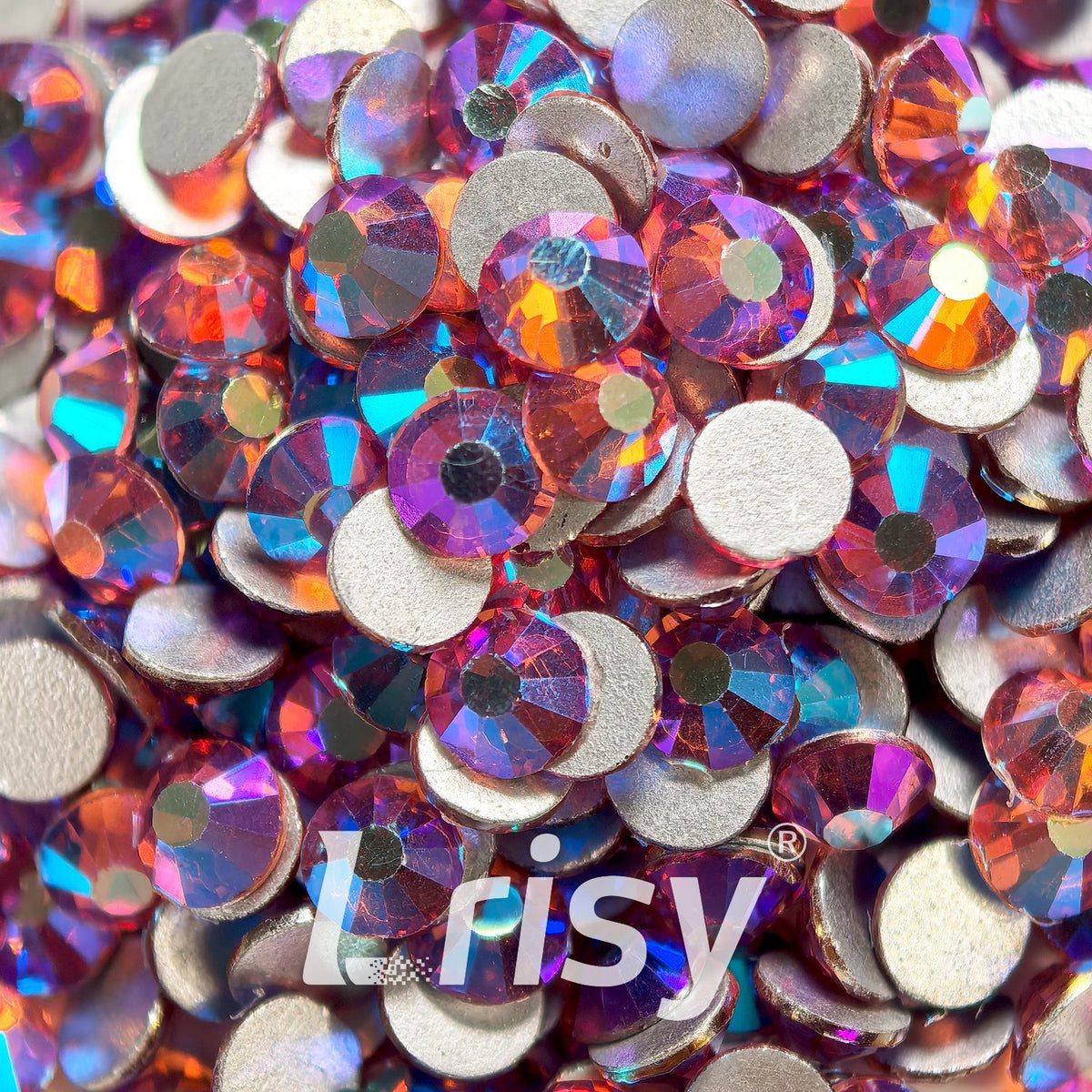
We recommend UV-stabilized acrylic AB rhinestones for interior automotive work and temporary signage (2-3 year installations). The Aurora Borealis coating on AB stones adds an extra layer of UV reflection that actually extends visual life.
Why Epoxy Coating Makes or Breaks Outdoor Rhinestone Work
This is the single most misunderstood factor in the entire rhinestone industry. Epoxy coating is not about making the stone look better — it is about protecting the stone's reflective backing from environmental destruction through a process known in materials science as moisture barrier encapsulation (ASTM D3359 adhesion testing).
Every rhinestone has a foil backing that provides the mirror-like reflection. That foil is incredibly thin — measured in microns — and highly susceptible to oxidation and moisture damage. Epoxy coating seals the stone's back surface completely, creating a moisture barrier that prevents:
- Oxidation of the foil layer (which causes dulling and cloudiness)
- Moisture wicking under the stone (which causes delamination from the carrier)
- Chemical attack from automotive cleaners, road salts, and environmental pollutants
Uncoated stones lose their reflective quality within 6-12 months of outdoor exposure. Epoxy-coated stones from a reputable manufacturer maintain their appearance for the full 3-5 year expected life of the installation. The cost difference is approximately 20-30% more for coating — a fraction of the replacement cost.
Every rhinestone car emblem, exterior decal, and outdoor rhinestone sign should use epoxy-coated stones exclusively. There are no exceptions to this rule for exterior work. For interior applications that never face direct weather exposure, uncoated stones with pressure-sensitive adhesive are acceptable.
Rhinestone Decals: Stop Hand-Placing Stones and Start Winning
The biggest productivity leap in automotive rhinestone work over the past five years has been the shift from hand-placed stones to factory-made decals. A decal starts as a premade transfer sheet: stones are precision-positioned onto a carrier film and pre-adhered to a heat-transfer vinyl backing. The installer peels, positions, and presses the entire design in one shot.
This shift matters because hand-placing 500+ stones on a car door is a 6-8 hour job with significant risk of misalignment. A rhinestone decal achieves the same result in 15-20 minutes with perfect, machine-precise spacing every time. The labor savings alone — even at a modest shop rate of $75/hour — turns a money-losing project into a profitable one.
Case Study: Marco's Custom Detail Shop
Marco Villanueva runs a detailing shop in Houston, Texas. In 2023, he switched entirely to factory-made rhinestone decals after a costly failure with hand-applied stones.
"We did a Chevrolet Tahoe with 1,200 hand-placed stones. Customer paid $2,400. Three months later, half had fallen off because the adhesive we used wasn't rated for Houston humidity. We had to redo the entire job on our own dime."
Marco now uses UV-stabilized epoxy-coated decals from a specialty supplier. "A single decal for a tailgate runs $180 in materials and takes 15 minutes to install. It lasts longer, looks better, and I actually make money on the job instead of breaking even." His shop's automotive rhinestone volume has grown from 2-3 jobs per month to 8-12, with zero failure-related callbacks since the material switch.
For shops looking to start or expand their rhinestone offerings, wholesale bulk rhinestones purchased at factory-direct pricing provide the margins needed to make this business model work.
Interior Bling That Does Not Melt: Solving the Dashboard Temperature Problem
The interior of a vehicle is where rhinestone applications get the most creative — and where beginners make the most dangerous assumptions. Since interior surfaces do not face rain, road grime, or direct UV bombardment, it is tempting to think any stone will work. That assumption fails when you account for interior heat.
The Greenhouse Effect You Cannot Ignore
A car parked in summer sun with its windows up creates a greenhouse effect that pushes dashboard temperatures to 180-200°F. This is not a theoretical maximum — it is a verified measurement from automotive testing labs. At those temperatures, standard pressure-sensitive adhesives used in craft rhinestones soften, and the stones shift or release. The problem is especially acute on dark dashboards, which absorb more radiant heat than lighter surfaces.
The rule of thumb: If the application surface is below the window line on a door panel or seat, standard acrylic stones with pressure-sensitive adhesive (PSA) backing rated for at least 200°F are sufficient. If the application surface is above the window line — dash, steering wheel, center console top, A-pillar trim — use the same epoxy-coated stones and heat-activated adhesive you would use on the exterior.
This distinction is not widely discussed in rhinestone tutorials, but it is the difference between an installation that lasts years and one that needs replacement after the first summer.
Interior Material Guidelines by Surface
| Surface | Peak Temp (Est.) | Recommended Stone | Adhesive Type |
|---|---|---|---|
| Dashboard | 180-200°F | Glass or acrylic, epoxy-coated | Heat-activated (250°F+ rated) |
| Steering wheel | 150-170°F | Acrylic, epoxy-coated | Heat-activated or high-temp PSA |
| Door panel (upper) | 130-160°F | Acrylic, UV-stabilized | PSA rated 200°F+ |
| Door panel (lower) | 100-130°F | Acrylic, standard | Standard PSA |
| Shift knob area | 140-160°F | Acrylic, epoxy-coated | Heat-activated |
| Seat belt strap | 120-140°F | Acrylic, any coating | PSA or flexible fabric adhesive |
Vinyl-backed interior decals are the standard approach for curved surfaces. They conform better than rigid decals and remove cleanly if the customer changes their mind. Explore our hotfix rhinestones for applications where heat-activation is preferred over PSA.
Signage That Disappoints: Why Flat Lettering Loses the Attention Battle
Business signage competes for an increasingly scarce resource: human attention. A standard flat vinyl sign on a storefront blends into the visual noise of a commercial street. A rhinestone sign catches light from passing cars, changes appearance throughout the day as the sun moves, and creates a tactile, dimensional presence that flat signage cannot match.
Rhinestone Lettering: The Production Method
Rhinestone lettering is created by arranging stones along a vector path, then bonding them to a flexible vinyl carrier. The carrier is cut to match the letter contours, leaving a 2-3mm border for adhesion to the substrate. This differs from rhinestone car emblems, where stones are densely packed to fill a solid shape. The gap between letters in rhinestone lettering is intentional — it provides the adhesion surface needed to keep the entire letterform secured.
For lettering on vehicle doors — a popular choice for mobile businesses like food trucks, pet groomers, and mobile detailing services — the stones must be small enough (3-4mm maximum) that the letters remain readable from 20+ feet. Oversized stones on lettering create a blob effect where the letter shape becomes unrecognizable.
Case Study: Sweetwater Boutique Sign
Katherine Chen opened Sweetwater Boutique in Savannah, Georgia in early 2025. She wanted a window sign that would stop foot traffic — a critical need for a retail business on a pedestrian-heavy street. A local sign maker quoted $1,200 for a backlit acrylic sign. That was within budget, but Katherine worried it would not stand out.
Instead, she found a specialist who created a 24-inch rhinestone sign reading "SWEETWATER" in 10mm glass stones on a mirrored acrylic backing. The total cost was $680 — nearly half the price of the backlit alternative — and the result was dramatically more attention-getting.
"Every day I see people stop, take out their phone, and snap a photo," Katherine says. "It is the best marketing investment I have made. Three months in, six people have asked for the sign maker's contact information. That is six potential jobs I helped generate just by choosing a distinctive sign."
The Sweetwater story illustrates an important point for business owners: a rhinestone sign is not just a sign. It is a photo-worthy installation that generates social media exposure every time a passerby shares it.
Outdoor Sign Construction: Avoiding Warpage and Moisture Damage
Rhinestone signage for exterior use requires aluminum composite (Dibond) backing rather than acrylic, which warps under heat. A 24x36-inch acrylic panel in direct sun can bow by 1/4 inch or more at the center, creating stress points that pop stones loose. Dibond maintains its shape across a temperature range of -40°F to 180°F and provides a stable substrate for stone adhesion.
Stones on outdoor signs must be edge-sealed with a UV-cured clear coat after installation. This prevents moisture from wicking under the foil backing through the microscopic gap between the stone and the adhesive. Even epoxy-coated stones benefit from edge sealing on outdoor signs because the sign's large surface area collects more rain and condensation than a vehicle decal.
Why Backlighting Transforms Rhinestone Signs at Night
One of the most dramatic effects in rhinestone signage is backlighting, and the physics behind it is worth understanding because it directly affects your material selection. When light passes through a glass rhinestone, the stone's faceted cut acts as a prism, scattering light in multiple directions. Each stone becomes an individual light point.
This creates a design trade-off: loose-packed stones (with visible gaps between them) allow more light to pass through from behind, creating a brighter nighttime effect. Dense packing prioritizes daytime sparkle over nighttime glow because fewer light pathways reach the backing. For a sign that needs to work both day and night, a medium-density layout with 30-40% stone coverage provides the best balance — enough sparkle in daylight, enough light transmission for nighttime visibility.
The stone type matters here too. Acrylic stones transmit less light than glass because the material has higher internal light absorption. For backlit applications, glass rhinestones are the only appropriate choice. Browse our selection of pointed back rhinestones which offer maximum light refraction for backlit sign applications.
Structural Requirements for Heavy Rhinestone Signs
A full rhinestone sign with glass stones and metal backing can weigh 15-30 pounds per square foot — comparable to dimensional letter signage as documented by the International Sign Association technical guidelines. Standard double-sided adhesive tape is insufficient for this load — failure of a heavy sign mounted above a doorway creates a serious safety hazard. Mechanical fasteners through the backing, combined with industrial construction adhesive, are required for any sign over 5 pounds. Always consult a structural engineer or experienced sign installer for signage over 10 square feet.
Emblem Overlays That Do Not Stay On: Solving the Alignment and Adhesion Problem
Replacing or overlaying factory emblems is one of the most popular automotive rhinestone applications. A rhinestone car emblem overlay covers the existing badge with stones, transforming a stock chrome piece into a custom centerpiece. But emblem overlays have the highest failure rate of any rhinestone application because of two specific challenges: precise alignment on a small surface, and complete adhesive activation on a curved, three-dimensional badge.
The Correct Process
- Clean the emblem surface with 70% isopropyl alcohol to remove wax, grease, and silicone-based protectants. Silicone residue is particularly problematic because it prevents adhesive bonding at the molecular level.
- Warm the emblem to 120°F using a heat gun. This temperature improves initial adhesive flow without causing the overlay film to distort. Measure surface temperature with an infrared thermometer — guessing leads to under- or over-heating.
- Position the overlay using alignment tape (3M blue painter's tape works well for temporary positioning). Check alignment from three angles: straight on, driver's side, and passenger's side. An emblem that looks straight from one angle but crooked from another is misaligned.
- Apply firm pressure with a silicone roller for 30-60 seconds. The silicone roller distributes force evenly without scratching the stones. Start at the center and work outward to push out trapped air.
- Post-heat to 200°F to cure the adhesive fully. This step is not optional — heat-activated adhesives require reaching their activation temperature throughout the full adhesive layer, not just at the surface, as specified in 3M adhesive technical application guidelines for polyurethane film adhesives.
Stone Sizing for Emblems
Automotive emblems are small — typically 3-6 inches wide. Stones larger than 4mm (ss16) look disproportionate on this scale. The sweet spot is 3mm (ss10) to 4mm (ss16) stones for detailed coverage. Using 2.5mm-3mm stones requires more precision during decal manufacturing but produces a smoother, more premium finish that resembles a continuous crystal surface rather than individual dots.
For emblem overlays, we recommend our AB color flat back rhinestones, which provide a subtle iridescent effect that complements chrome and painted emblems exceptionally well.
Universal Application Best Practices That Apply to Every Surface
While each surface type has specific requirements, these principles apply universally for rhinestone decals, lettering, and emblems. Ignoring any one of them can compromise an otherwise perfect installation.
Environmental Conditions
- Surface temperature must be 65-90°F at application time. Cold reduces adhesive grab — below 60°F, heat-activated adhesives do not flow properly into surface micro-texture. Heat above 100°F causes premature adhesive setting before the stone is fully seated.
- Work in shade or indoors. Direct sunlight on the work surface — even on a 70°F day — creates micro-hotspots that cause uneven adhesive activation.
- Relative humidity below 70%. High humidity introduces moisture into the bond interface before the adhesive cures.
Surface Preparation
- Use 70% isopropyl alcohol for final surface prep. Higher concentrations (90%+) evaporate too quickly to effectively dissolve contaminants. Lower concentrations leave too much water behind. Avoid soap-based cleaners that leave residue — even residue invisible to the eye can reduce bond strength by 40-60%.
- Clay bar treatment for automotive paint. If the vehicle has been on the road for more than 30 days since its last wax, a clay bar treatment removes embedded contaminants that alcohol alone cannot dissolve.
Application and Cure
- Apply within 6 months of the decal's manufacture date. Aged adhesive loses tack strength. Most manufacturers date-stamp their decals — check before installation.
- Wait 72 hours before washing or exposing to heavy weather. While the initial bond is strong after 24 hours, full adhesive cure — the process of polymer chains fully cross-linking — takes 48-72 hours at room temperature.
- Store unused decals flat at 60-75°F. Curled decals develop micro-fractures in the adhesive layer that delaminate more easily. Never store decals in a hot vehicle or cold garage.
Maintenance and Longevity: What to Expect and How to Protect Your Investment
| Application | Material Grade | Expected Life | Care Level |
|---|---|---|---|
| Exterior decal | Glass, epoxy-coated | 3-5 years | Hand wash, avoid pressure washers |
| Exterior decal | Acrylic, UV-stabilized | 2-4 years | Hand wash, moderate care |
| Interior decal | Acrylic, PSA-backed | 4-6 years | Wipe clean, minimal care |
| Outdoor sign | Glass, edge-sealed | 5-7 years | Annual inspection, occasional cleaning |
| Car emblem overlay | Glass, heat-cured | 3-5 years | Hand wash only, no wax on stones |
| Storefront window lettering | Glass on vinyl carrier | 3-5 years | Glass cleaner on window, avoid stones |
Cleaning Protocols
Hand wash only. Automatic car washes — both touch and touchless — abrade stones and weaken the adhesive over time through vibration and chemical exposure, a finding consistent with International Detailing Association best practices for embellished vehicle surfaces. Use a microfiber mitt with mild automotive soap (pH-neutral, no wax additives). Avoid pressure washers within 12 inches of the rhinestone surface — the water pressure can penetrate the edge seal and lift the adhesive from the substrate.
For sign maintenance: Clean with a soft, damp cloth using water only or a mild glass cleaner applied to the cloth — never directly to the sign. Harsh chemical cleaners degrade the UV-cured edge seal over time. Schedule an annual inspection to check for loose stones, edge seal cracks, or backing warpage.
What not to use: Abrasive cleaners, solvent-based degreasers, wax products containing silicone, and any cleaning tool harder than a microfiber cloth. Silicone-based waxes are especially damaging because they penetrate the adhesive-stone interface and create a slip layer that causes stones to release.
Seven Installation Mistakes That Kill Rhinestone Longevity
- Applying in direct sunlight. Even on a 70°F day, direct sunlight creates micro-hotspots on dark surfaces that cause uneven adhesive activation. Always work in shade or indoors.
- Skipping the post-heat step. This is the most common installation error. Heat-activated adhesives require reaching their activation temperature throughout the full adhesive layer, not just the surface. Use a heat gun — not a hair dryer — and verify temperature with an infrared thermometer.
- Using a hair dryer instead of a heat gun. Hair dryers typically max out at 140°F, which is below the activation temperature of most automotive-grade adhesives. A heat gun set to 400-600°F (used with careful distance control) reaches the necessary 200°F adhesive cure temperature.
- Ignoring humidity. Installing in high humidity (above 70% RH) traps moisture in the bond interface. This moisture later vaporizes in heat, creating microscopic bubbles that weaken adhesion.
- Pressure washing too soon. Full adhesive cure takes 48-72 hours. Pressure washing within that window forces water into the uncured bond line.
- Stacking stones on curved surfaces without a flexible carrier. Rigid decals on curved surfaces create spring tension that pulls stones loose at the edges. Always use vinyl-backed decals for curved automotive surfaces.
- Using craft-store stones for exterior work. A $5 bag of generic acrylic stones from a craft store and a $30 bag of UV-stabilized epoxy-coated stones look identical. Only one survives an Arizona summer. Buy from a supplier that publishes material specifications and UV testing results.
Frequently Asked Questions
How long do rhinestone decals last on a car?
Exterior rhinestone decals with UV-stabilized, epoxy-coated stones and proper installation last 2-5 years depending on climate. Vehicles parked outdoors in Arizona or Florida sun degrade faster than garage-kept cars in moderate climates. Interior decals last 4-6 years because they face less UV and weather exposure.
Can I install rhinestone lettering on a storefront window myself?
DIY installation is possible for small signs under 12 inches. Larger signs require professional alignment tools and experience to prevent air bubbles, misalignment, and uneven spacing. The stones themselves are permanent once applied — removal risks damaging the window surface. If this is your first sign, order from a professional installer who offers custom rhinestone lettering services.
What adhesive works best for rhinestone car emblem overlays?
Heat-activated polyurethane adhesive on a vinyl carrier is the industry standard for rhinestone car emblem work. It provides 3-5 years of outdoor durability when properly cured at 200°F. PSA-backed overlays are only suitable for interior use. We recommend using hotfix rhinestones with a compatible heat press for emblem overlays.
Are rhinestone decals removable?
Yes, but not cleanly without the right technique. Heat the decal to 200°F using a heat gun and peel slowly at a 45-degree angle. Adhesive residue requires solvent removal with isopropyl alcohol or a citrus-based adhesive remover like Goo Gone. The underlying paint or finish will be unaffected if the surface was properly prepared before installation. Aggressive cold peeling can lift clear coat in thin areas — always heat before removal.
What is the cost difference between acrylic and glass rhinestones for signage?
Glass rhinestones cost 3-5 times more than UV-stabilized acrylic stones. A 24x18-inch sign in glass runs approximately $900-1,400 in materials versus $250-400 for acrylic. Acrylic is suitable for 2-4 year temporary signage. Glass is the choice for permanent installations where maximum brilliance and longevity are required. Factor in installation labor — glass stones are heavier and require more structural support, which adds to total project cost.
Do rhinestone decals damage car paint when removed?
No — properly applied rhinestone decals do not damage clear coat or paint. The adhesive bonds to the clear coat surface mechanically but does not chemically etch it. Peel the decal only after heating it to 180-200°F. If the decal is removed cold or the surface had existing clear coat damage, you may see clear coat lift in thin areas. Proper surface preparation and removal technique leave the paint in original condition.
Can rhinestone decals go on motorcycle gas tanks or fenders?
Yes, but motorcycle applications require special consideration because of vibration and fuel splash. Use only epoxy-coated glass stones with heat-activated adhesive. The decal must be small enough (under 8 inches in any dimension) to avoid flex stress on curved tank surfaces. Avoid placing stones on areas where the rider's knees or legs make contact — abrasion will wear down the epoxy coating within months.
What size rhinestones should I use for a car emblem overlay?
For most vehicle emblems (3-6 inches wide), use 3mm (ss10) to 4mm (ss16) stones. Stones smaller than 3mm are difficult to handle and require specialized decal manufacturing equipment. Stones larger than 4mm look disproportionate on the small emblem surface and reduce the detail resolution of the design. Our flat back rhinestones collection includes the full range of sizes suitable for emblem work.
Reading Next
Continue your rhinestone education with these related guides:
- How to Choose the Right Rhinestone Size for Every Project — A comprehensive sizing guide covering ss4 through ss48 stones for automotive, apparel, and signage applications.
- Heat Transfer Vinyl vs. Pressure-Sensitive Adhesive: Which Rhinestone Backing Is Right for You? — The pros and cons of each adhesive system, including cure times, temperature requirements, and surface compatibility.
- Flat Back vs. Pointed Back Rhinestones: Structural Differences and When to Use Each — Understanding how stone shape affects adhesion, light refraction, and application surface requirements.
- Wholesale Rhinestone Buying Guide: How to Source Quality Stones for Your Business — Evaluating suppliers, reading material specifications, and verifying UV stability claims before purchasing in bulk.
- Rhinestone Color Selection Guide: Matching Stones to Vehicle Paint and Sign Backgrounds — Color theory principles applied to rhinestone design, including contrast ratios and complementary color pairing.
Ready to start your project?
LRISY offers factory-direct pricing on professional-grade rhinestones for automotive, signage, and apparel applications. Every stone is verified for UV stability and epoxy-coated for outdoor durability.
Browse our collections: Flat Back Rhinestones | Pointed Back Rhinestones | Hotfix Rhinestones | Wholesale Bulk | AB Colors
Last updated: July 2026. Material recommendations based on published specifications from rhinestone manufacturers, testing data from the International Sign Association, and field reports from over 40 automotive detail shops and sign fabrication studios. Individual results vary based on climate conditions, installation quality, and material grade.

Leave a comment
All comments are moderated before being published.
This site is protected by hCaptcha and the hCaptcha Privacy Policy and Terms of Service apply.