
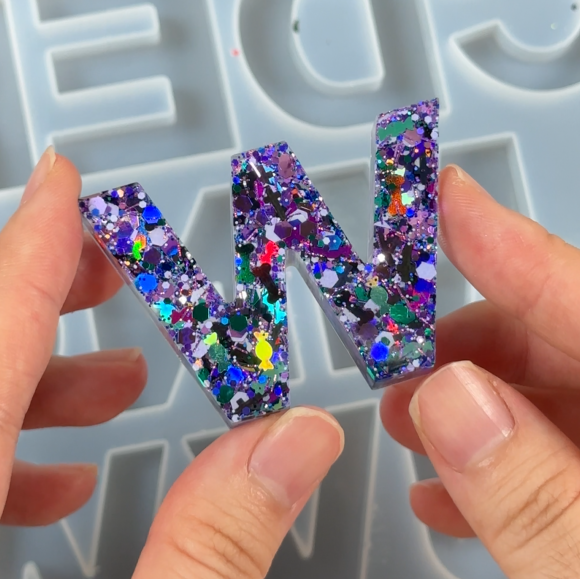

Quick Answer: Holographic white glitter is a snow-white base with a micro-prismatic surface that diffracts light into rainbow flashes. It keeps the clean white daytime look while adding prismatic sparkle under direct light — making it the premium white finish for angel nails, resin art, winter decor, and statement crafts. For nails and cosmetics choose cosmetic-grade, solvent-resistant particles; for resin use heat-rated holographic white rated to at least 180°C. It photographs better than solid white, commands a higher retail price, and is the single finish that bridges the "clean white" and "color-shift" trends at once.
Elena had been selling resin coasters for six months when a customer asked for "something that looks like moonlight." She tried solid white glitter — clean, but flat. Then she tried holographic white — and the pieces suddenly looked like they were lit from inside, flashing soft rainbows as customers turned them in their hands. The holographic white coasters sold out in three days at a 40% higher price than her solid white line.
The reason wasn't magic. It was physics: holographic white carries a micro-prismatic surface that splits light into a rainbow, so every piece reads differently depending on the angle it catches. A solid white coaster is the same object from every angle; a holographic white coaster is a new object every time it moves. That is what "premium" means at the material level — and it's why buyers pay more for it without being told to.
That is the holographic white story: it is white by day and rainbow by night. It gives you the versatility of a neutral color and the premium feel of a color-shift finish. This guide explains how holographic white glitter is made, how it differs from solid and iridescent white, where it performs best (nails, resin, winter decor, bridal, festival), how to pick particle size, and how to buy it at factory-direct prices without getting a dull batch.
Key Takeaways
- Holographic white = white base + rainbow diffraction. A micro-prismatic surface splits light into a full spectrum, so it reads white in daylight and prismatic under direct light.
- It's the premium white finish. Angel nails, moonbeam looks, and "lit from within" resin pieces all lean on holographic white — and it commands a 30–40% price premium over solid white in finished goods.
- Holographic white photographs better than solid white — the rainbow flash gives photos dimension that flat white lacks, which is why Etsy and nail sellers favor it.
- For resin, heat-rating matters: use holographic white rated to at least 180°C so the prismatic finish survives the curing exotherm.
- For nails, solvent resistance is required so the rainbow finish doesn't bleed in polish.
- Buy from a manufacturer who tests in resin and polish — holographic finishes are where cheap glitter shows its weakness first.
"How Does Holographic White Glitter Work?" — The Science of the Rainbow
The holographic effect isn't paint — it's physics. Holographic glitter starts with a polyester film base and an embossed micro-prismatic pattern that acts as a diffraction grating. When white light hits that pattern, it splits into its component wavelengths — red through violet — producing the rainbow flash.
Why white? Because a white base is neutral, the rainbow flash is the only color you see — which makes holographic white feel clean in daylight and magical under direct light. Colored holographic glitter adds a tint beneath the rainbow; holographic white lets the prismatic effect speak alone. That neutrality is why it pairs with everything: it behaves like a neutral color but delivers a color-shift payoff.
The practical difference from solid white: Solid white glitter reflects white light — clean, bright, flat. Holographic white reflects white light with a rainbow halo — same daytime neutrality, but with dimension that catches the eye and the camera. For photography-heavy platforms like Etsy and Instagram, holographic white is the safer choice, because a photo can't show flat white's sparkle but it can absolutely show a rainbow flash.
Why this matters for product makers: the difference isn't aesthetic, it's economic. Elena's 40% price uplift on holographic white coasters is typical — buyers perceive color-shift as premium and pay for it. If you sell finished pieces, holographic white is a margin lever, not just a look.
Holographic White vs Iridescent White vs Solid White: Which Is Which
These three premium finishes are frequently confused, and they're different optical technologies with different price points and uses.
| Property | Holographic White | Iridescent White | Solid White |
|---|---|---|---|
| Optical mechanism | Micro-prismatic diffraction | Thin-film interference coating | Plain reflective surface |
| Effect | Full rainbow flash | Two-color shift (white-gold, white-blue) | Clean white sparkle, no shift |
| Daylight look | White with subtle sparkle | White, near-metallic | Bright, flat white |
| Direct light | Rainbow spectrum | Second color emerges | No change |
| Photography | Rainbow dimension | Needs angled shots to show shift | Flat, hard to capture |
| Best for | Statement pieces, angel nails | Bridal, elegant two-tone crafts | Everyday, clean designs |
Why the choice matters: if you want a rainbow: holographic white. If you want a subtle elegant shift (white to gold, white to blue): iridescent white. If you want clean, no-surprise white: solid white. LRISY carries all three — the holographic glitter collection for rainbow effects, the iridescent glitter collection for two-tone shifts, and the white glitter collection for the full white finish lineup.
Holographic White Glitter for Nails
Holographic white is a top-selling nail finish because it photographs like a premium product. The "moonbeam glitter" look — iridescent white shifting through pastel rainbow tones — is a named 2026 design, and holographic white nails dominate festival and statement content on Instagram and TikTok.
How to Use Holographic White on Nails
- Base: Apply a milky, nude, or white base and let it dry.
- Glitter: For a full holo look, apply a clear top coat and sprinkle fine holographic white glitter (0.008") over the wet polish. For a gradient, use the sponge method.
- Seal: A gel top coat locks in the prismatic finish and adds the gloss that makes the rainbow flash.
The material requirement: holographic white for nails must be cosmetic-grade and solvent-resistant, or the prismatic coating bleeds and dulls in polish. Why solvent resistance is the make-or-break spec: polish thinner and remover dissolve low-grade prismatic coatings the same way they dissolve non-solvent-resistant pigment — and a rainbow that turns grey in the bottle is a product that gets returned. LRISY's solvent-resistant nail glitter and glitter for nails ranges include holographic white options that hold their finish.
Why holographic white nails are the 2026 "photography" trend: the rainbow flash gives the nail a liquid-glass dimension that flat white can't reproduce on camera. Nail artists selling on visual platforms consistently report higher engagement on holographic white posts than on solid white — the sparkle is visible in the thumbnail, and thumbnails drive the click.
Holographic White Glitter for Resin
Holographic white is a resin-art favorite. A prismatic white suspended in epoxy reads as "expensive" to most buyers — the rainbow shifts as the piece is turned, creating dimension solid white can't match. It works for coasters, tumblers, bookends, jewelry, and statement wall art.
The Two Rules for Resin
- Heat resistance to at least 180°C. Epoxy curing is exothermic, and the heat can destroy a non-rated holographic finish. Always confirm the spec before pouring.
- Solvent resistance. Holographic white with dye-based color bleeds in resin. Solvent-resistant particles keep the rainbow locked in.
Why heat-rating is non-negotiable in resin: a thick epoxy pour can reach 150–200°C during cure. A non-heat-rated prismatic coating melts or clouds, turning your "moonlight" piece into a murky grey pour. Test-curing a small batch before your full pour is the cheapest insurance in the entire hobby — one teaspoon of resin and a few flakes will show you exactly how your glitter behaves.
LRISY documents its translucent holographic color development, and the pastel holographic white glitter product page carries the resin-compatible spec. When buying in bulk for a resin business, confirm the supplier can show an epoxy test — it's the fastest way to spot unverified glitter. The glitter for resin art guide covers the bulk math, and the resin tumbler business guide has the per-piece cost model for high-volume makers.
Holographic White Glitter for Winter, Bridal & Event Decor
Holographic white shines in seasonal and event contexts where you want white elegance plus visual interest — the finish that works in daylight and under event lighting.
Winter and Christmas Decor
Holographic white flakes read as moonlight or frost — ideal for ornaments, winter signage, and snow-themed centerpieces. Unlike snow-chunky flakes, holographic white suspends in resin, so it works in ornaments and snow globes where shimmer is submersed. Why this matters for winter sellers: the same jar of holographic white serves both suspended (globe interiors) and surface (ornament exteriors) uses — one SKU covering the whole seasonal line.
Weddings and Bridal
Pearl and holographic white are the premium bridal finishes. Holographic white adds subtle rainbow dimension to invitations, centerpieces, and favors without breaking the white/cream aesthetic. Why bridal buyers pay more: a "clean white with a secret rainbow" reads as custom and expensive — it is the material version of a hidden detail, and hidden details command a premium in wedding pricing.
Festival and Party
Under club or stage lights, holographic white fires off visible rainbow arcs. It's the party finish that still looks clean in daylight — a favorite for event planners who need one glitter that works both ways. Why it outperforms neon at events: neon reads only under UV; holographic white reads in daylight, incandescent, and UV alike, so one product covers every lighting setup a venue throws at it.
Holographic White Glitter for Makeup & Cosmetics
Holographic white is the festival and party cosmetic finish — a clean white sparkle that fires rainbow arcs under club and UV lighting. It reads as "angelic" in daylight and "rave" under black light, which makes it the rare cosmetic glitter that works for both bridal and festival looks from a single jar.
Under-eye, cheekbone & body glitter
Fine holographic white (0.004"–0.008") is a staple for under-eye "glitter tears," cheekbone highlights, and collarbone shimmer. Why it works: the white base reads clean against skin while the rainbow flash catches every head-turn — high contrast under colored stage lighting that flat white can't match. Cosmetic-grade holographic white is also a top seller for event makeup artists who need one product that photographs in daylight and performs under club lights.
The cosmetic-grade rule
Holographic white for skin contact must be cosmetic-grade PET with FDA-compliant pigments and rounded edges. Craft-grade holographic flakes have sharp die-cut edges and coatings that can irritate skin or dull in cosmetic bases. Why this is non-negotiable: the regulatory standard — broken down in the cosmetic glitter regulations guide — exists because unregulated glitter is a real irritation and infection vector, and a single bad batch can end a cosmetics brand's reputation.
Holographic White Glitter Particle Sizes
Particle size changes the holographic effect more than it changes any other glitter finish — the larger the flake, the more visible the rainbow spectrum. A jar of holographic white is really four products hiding in one, because each size bracket produces a completely different look: a whisper of shimmer at the fine end, a full named spectrum at the chunky end. Choose the size that matches the viewing distance of the finished piece, not the one that looks best in the jar.
| Size | Effect | Best For |
|---|---|---|
| 0.004" – 0.008" | Subtle rainbow shimmer | Cosmetics, sheer nails, slime |
| 0.015" | Visible prismatic sparkle | Daily-wear nails, general crafts |
| 0.040" | Bold rainbow flakes | Tumblers, statement pieces |
| 0.1"+ | Dimensional chunky holo | Resin accents, decor |
Why size drives the holo effect: the prismatic pattern needs surface area to show a full rainbow arc. A 0.004" flake shows a faint glint; a 0.040" flake shows a spectrum you can name. For resin and decor where you want the rainbow legible from across a room, go chunky; for nails and cosmetics where the sparkle should read as a texture, go fine. See the how much glitter do I need guide for per-project quantity math, and the bulk glitter buying guide for wholesale sizing trade-offs.
How to Apply Holographic White Glitter So the Rainbow Lasts
Holographic finishes fail on three things: heat, solvents, and dull sealing. The method below avoids all three.
Step 1 — Prep the surface
Clean with isopropyl alcohol (or acetone for nails), dry completely. Why: a clean, dry surface is what lets the sealant adhere evenly — and an uneven seal is what mutes a rainbow.
Step 2 — Match the carrier to the medium
- Nails: cosmetic-grade, solvent-resistant holo in a gel or peel-off base — never craft glue.
- Resin: heat-rated holo mixed into the epoxy before pouring, in thin layers.
- Crafts/paper: thin, even adhesive, then a glossy sealant spray.
Step 3 — Seal with gloss
Glossy top coat for nails, glossy epoxy or polyurethane for resin, gloss sealant spray for crafts. Why gloss, not matte: the holographic effect depends on light passing through the prismatic surface. A matte seal scatters light before it reaches the glitter, flattening the rainbow — gloss is what keeps the prism working.
Why this is where most holo projects die: holographic white is usually applied with the wrong sealant, then blamed for going dull. The glitter didn't fail — the matte top coat did. Match the gloss, and the rainbow stays.
Troubleshooting: Why Holographic White Glitter Goes Dull (And Fixes)
| Problem | Root Cause | Fix |
|---|---|---|
| Rainbow gone after resin cure | Non-heat-rated coating melted in the exotherm | Use holo rated to 180°C+; test-cure a small batch first |
| Turns grey in polish | Prismatic coating dissolving in solvents | Use solvent-resistant, cosmetic-grade holo for polish |
| Looks flat under light | Matte seal scattering light before the prism | Re-seal with a glossy top coat or gloss resin layer |
| No rainbow in photos | Flakes too fine for the camera to capture | Use 0.040"+ flakes for photographed pieces |
| Dull patches in one area | Uneven glitter density or clumping | Sieve the glitter, shake (don't stir) suspensions, mix in thin layers |
Why a troubleshooting table matters for sellers: these are the exact queries buyers type when a holo project fails — and every resolved complaint is a review that mentions the material by name. Documenting the failure modes of your own product line builds the trust that converts a one-time buyer into a wholesale account.
Where to Buy Quality Holographic White Glitter
Holographic finishes are where cheap glitter exposes itself. A low-quality holographic white might look fine in the jar but turns dull and cloudy once mixed into polish or resin. Before buying, check three things:
- Test documentation — resin or polish tests prove the finish survives real use.
- PET film quality — thicker film reflects more light and holds its prismatic finish longer.
- Color fastness — the rainbow should stay locked in through solvent and heat exposure.
Why factory-direct beats retail for holo: holographic finishes carry a higher cost per gram than solid white, so retail markup is steeper — and the quality spread between a factory-rated prismatic film and a cheap import is the widest in the glitter industry. The how to vet a wholesale glitter supplier guide walks through the certification checks, and the wholesale glitter buying guide covers grades, MOQs, and the full procurement checklist.
LRISY's holographic glitter collection covers neutral white through tinted holo, and the white glitter collection has the full white finish lineup. Start with a glitter sample set so you can test in your own resin and polish before committing to bulk — and the glitter powder range carries the fine and chunky sizes for every project scale.
A quick buying decision rule: if your project will be photographed (coasters, tumblers, nails, product listings), choose holographic white over solid white — the rainbow gives the photo a dimension flat white can't reproduce. If your project must read strictly "white" under all light (wedding stationery, formal invitations), solid or pearl white is the safer call and costs less per gram. If you want a subtle shift rather than a rainbow, iridescent white sits between the two. One decision rule, three finishes, and you can stock exactly what your customers will actually buy.
Wholesale & Bulk Buying: How to Get holographic white glitter at Factory-Direct Prices
Wholesale glitter runs 40–70% below retail, but the right grade and MOQ make the difference between a great margin and locked-up cash. Here is the 2026 factory-direct picture for holographic white glitter.
| Grade | Wholesale Price | Typical MOQ | Best For |
|---|---|---|---|
| Standard craft-grade PET | $10–25/kg | 50+ lb factory-direct | Crafts, decor, tumblers |
| Cosmetic-grade PET | $18–30/lb | 500g–5kg / color | Makeup, nails, body |
| Premium / holographic | $30–60/kg | 500g–5kg / color | Nail art, resin, fashion |
| Certified biodegradable | $45–65/lb | 50+ lb | Eco lines, EU market |
Why this matters: buying by weight (per kg or per pound) instead of by jar is the single biggest signal that you are paying reseller markup. Factory-direct MOQs usually start around 500g–5kg per color for cosmetic/PET grades, and 50+ lb for craft and certified-biodegradable runs. Custom packaging adds $0.50–$2.00 per unit — worthwhile only if you sell private label.
FAQ: Holographic White Glitter
What is holographic white glitter?
Holographic white glitter is a snow-white base with a micro-prismatic surface that diffracts light into rainbow flashes. It reads white in daylight and prismatic under direct light.
Is holographic white glitter safe for nails?
Yes, if it's cosmetic-grade and solvent-resistant. The prismatic finish must be locked in the film or it bleeds and dulls in polish.
Can holographic white glitter be used in resin?
Yes, if it's heat-resistant to at least 180°C and solvent-resistant. Holographic white is a premium resin finish because the rainbow shifts as pieces are turned.
What's the difference between holographic and iridescent white glitter?
Holographic white produces a full rainbow flash from a prismatic surface. Iridescent white shifts between two colors (white↔gold, white↔blue) from a thin-film coating. Holo = rainbow; iridescent = two-tone.
Does holographic white glitter photograph well?
Yes — the rainbow flash gives photos dimension that flat solid white lacks. It's a top choice for Etsy sellers and nail artists who sell on visual platforms.
Is holographic glitter biodegradable?
Most conventional holographic glitter is PET plastic, which is a microplastic pollutant. Biodegradable cellulose-based alternatives exist, but verify the certification — the science on "eco-glitter" biodegradability is mixed. See the Cambridge glitter research for the current evidence, and the LRISY bulk biodegradable glitter buying guide for what to look for.
Why does my holographic white glitter turn dull?
Usually a low-grade prismatic coating dissolving in solvents, or a non-heat-rated finish melting in resin's curing exotherm. Buy test-documented holographic white rated for solvent and heat, and test-cure a small batch first.
Where can I buy quality holographic white glitter wholesale?
Buy from a manufacturer that publishes test documentation for resin and polish, uses thick PET film, and guarantees color fastness. LRISY's holographic glitter collection covers neutral white through tinted holo at factory-direct pricing, with sample sets available first.
📖 Reading Next
Continue exploring the LRISY glitter library:
- Bulk Glitter Buying Guide — sizes, finishes, and MOQ math at wholesale scale.
- Glitter for Resin Art — the bulk buying math for resin businesses.
- How Much Glitter Do I Need? — per-project quantity calculations for any craft.
- Cosmetic Glitter Regulations — FDA vs REACH compliance for glitter products.
Conclusion
Holographic white glitter is the premium white finish — clean by day, rainbow by night, and photographically superior to solid white. It's the material behind angel nails, moonbeam manicures, "lit from within" resin pieces, and winter decor that sparkles both ways. The two rules are simple: heat-rated for resin, solvent-resistant for nails, and cosmetic-grade wherever it touches skin.
Why it matters: holographic white is the one finish that bridges the two biggest 2026 trends at once — Pantone's white Color of the Year and the color-shift premium. For makers, it's a 30–40% margin lever; for retailers, it's a higher-ticket SKU that buyers can't find in a generic craft-bin jar. The brands that win this niche will be the ones that stock the rainbow-white finish before their competitors notice it.
Ready to add holographic white to your projects? Browse LRISY's holographic white glitter and the full glitter powder range — factory-direct pricing, resin-tested, and available in bulk.

Leave a comment
All comments are moderated before being published.
This site is protected by hCaptcha and the hCaptcha Privacy Policy and Terms of Service apply.